Five conditions that shape a Washington site plan
Washington layers a state framework over local administration, and that framework decides more of the site plan than it does in most states. Five conditions change what a Washington plan must show and how fast it moves.
1. The urban growth area line decides what a parcel can become
The Growth Management Act (GMA, RCW 36.70A) requires the most populous and fastest-growing counties, and their cities, to designate Urban Growth Areas (UGAs) and adopt comprehensive plans with consistent development regulations [6]. Urban-scale development (dense residential, most commercial, public sewer) is directed inside UGAs; land outside is held to rural densities and resource-land protections, with no urban services and heightened critical-areas and water-availability review [6]. GMA also requires transportation concurrency and authorizes impact fees for roads, parks, schools and fire under RCW 82.02.050 [6]. The first line of a Washington site data table is whether the parcel sits inside the UGA.
2. Local permit decisions run on statutory clocks
SB 5290, enacted in 2023 and amending Chapter 36.70B RCW, requires GMA-planning jurisdictions to issue a final decision within 65 days for permits that need no public notice, 100 days for permits that need public notice, and 170 days for permits that need both notice and a hearing [1]. The clock runs from the determination of completeness and excludes applicant-caused delays, and it replaced the historic 120-day clock [1]. Building permits are excluded, and jurisdictions over 20,000 population report annual permitting performance to Commerce [7]. Seattle implemented SB 5290 through Ordinance 127300, effective November 24, 2025 [8]. Washington also vests a project to the regulations in force when a complete application is filed: when the 2021 building codes took effect on March 15, 2024, complete applications submitted before that date vested to the 2018 codes [9]. Completeness starts the decision clock and fixes the rules, so the first submittal carries weight. Read more on why your permit clock starts later than you think.
3. The architect seal line sits at 4,000 square feet
RCW 18.08.410 sets out what is not the practice of architecture. In the Attorney General's words, that covers "design work for residential buildings with four or fewer dwelling units, design work for farm buildings, design work for buildings not exceeding four thousand square feet, and interior design services not affecting public health or safety" [2]. AGO 2022 No. 3 adds that "Washington law provides no bright line rule for distinguishing between design documents that must be completed by an architect and those that must be completed by an engineer," and that "It is primarily up to local building officials to determine which types of documents are required or sufficient" [2]. Submittal checklists therefore vary, and some jurisdictions require a stamped site plan or civil set below the state architect exemption.
4. Stormwater and critical areas come off the buildable area first
Ecology requires Construction Stormwater General Permit coverage when a project disturbs one or more acres and discharges to surface waters, or is part of a larger common plan disturbing one acre or more [3]. Ecology's manuals set nine Minimum Requirements, from MR1 Stormwater Site Plan to MR9 Operation and Maintenance, generally triggered at 2,000 sq ft of new plus replaced hard surface for the lower requirements and 5,000 sq ft for the higher ones, which include runoff treatment and flow control [10]. Low impact development must be used "where feasible," and on-site stormwater management (MR5) is a compulsory pathway [10]. Every GMA jurisdiction must also adopt critical areas ordinances protecting wetlands, fish and wildlife habitat conservation areas, streams, geologically hazardous areas, frequently flooded areas and critical aquifer recharge areas, using "best available science," with wetland buffers keyed to category (I to IV) and habitat score under the Washington State Wetland Rating System [11]. Buffers, and the area the engineer of record needs for flow control and treatment, come off the site before the layout is drawn. See how detention and retention reshape a site.
5. Shorelines and water supply are state gates
Shoreline jurisdiction under the Shoreline Management Act (RCW 90.58) extends 200 feet landward from the ordinary high water mark, plus associated wetlands and floodplains [4]. Development over the substantial development threshold, $8,504 effective July 1, 2022 (WSR 22-11-036), needs a Substantial Development Permit, and shoreline conditional use permits and variances require Ecology approval [4]. Inland, RCW 19.27.097 requires evidence of an adequate water supply before a building permit issues [12]. The 2016 Whatcom County v. Hirst decision halted some rural development; ESSB 6091 (effective January 19, 2018) then removed individual impairment review for permit-exempt wells in most basins, with the Skagit and Yakima basins treated differently [12].
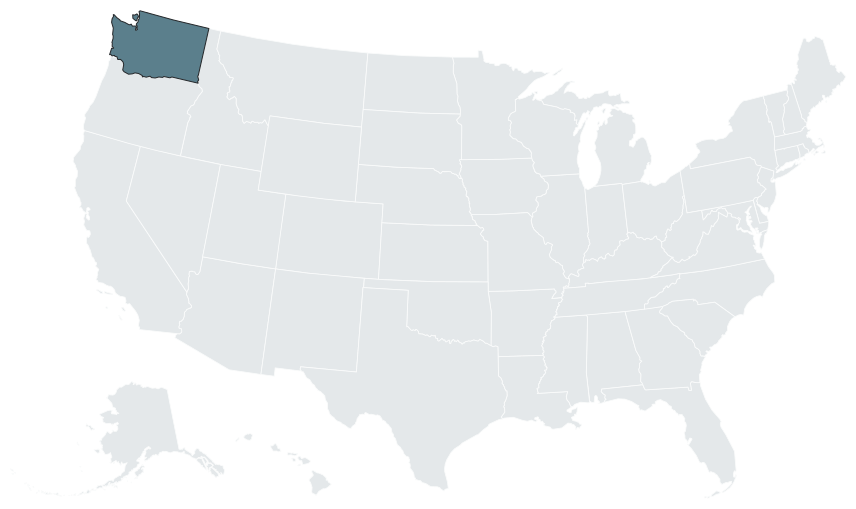

Approval layers: state, county and city
| Layer | Body | What it decides | Authority |
|---|---|---|---|
| State | Department of Ecology | Construction stormwater coverage; approval of shoreline conditional uses and variances; water resource rules | [3, 4, 12] |
| State | State Building Code Council | Building, fire and energy codes, with state amendments | RCW 19.27 [13] |
| State | WSDOT | Access connection permits on managed access highways outside cities and towns; traffic impact review | RCW 47.50 [14] |
| State | Department of Health | Transient accommodation licenses | RCW 70.62 [15] |
| State | DNR and WDFW | Aquatic lands leases; Hydraulic Project Approvals for work in or near water | RCW 79.105; RCW 77.55 [16] |
| County | County departments (King County Local Services, Snohomish PDS, Pierce Planning and Public Works, Clark Community Development) | Zoning, site plan review, plats, critical areas and SEPA in unincorporated areas | County codes |
| City | City planning and building departments | Their own codes inside municipal boundaries | City codes |
| Courts | Superior court under LUPA | Review of land use decisions; petition filed and served within 21 days | RCW 36.70C.040 [5] |
Jurisdictions typically type permits from Type I (ministerial, staff, no notice) through Type V (legislative: rezones and comprehensive plan amendments), with Type III quasi-judicial decisions made by a Hearing Examiner after a hearing. Pierce County codifies tiers in PCC 18.30.020: site plan review and short plats are Tier 2 administrative decisions, while preliminary plats, conditional use permits and variances go to a Hearing Examiner hearing at Tier 3 [17]. Everett defaults land use decisions to REV I minor administrative review, with REV II and III for preliminary plats and discretionary actions (EMC 15.02.060) [18]. In Chandrruangphen v. City of Sammamish (February 12, 2026), the Washington Supreme Court held that the three-day mailing extension does not apply to decisions sent by email, so the LUPA clock runs from the send date, and that service must be on the properly designated official [19].
Who prepares and seals what
Washington does not put a blanket seal on every site drawing. It sets thresholds, and then leaves the final call to the local building official [2].
| Document | Who seals it | Rule |
|---|---|---|
| Building design above the RCW 18.08.410 exemptions | Washington-registered architect, or engineer where the work is engineering | RCW 18.08.410; AGO 2022 No. 3 [2] |
| Engineered stormwater (MR1 Stormwater Site Plan, flow control, treatment), public infrastructure, significant grading, structural design | Professional engineer | Ecology CSWGP [3] |
| Boundary and topographic surveys, records of survey, plats and short plats | Professional land surveyor | RCW 58.09; RCW 58.17; WAC 332-130 [20] |
| A licensee's final documents | Seal, signature and date of the licensee "who prepared or directly supervised the work" | WAC 196-23-020 [20] |
| A licensee's preliminary documents | Stamped, but need not be signed or dated | WAC 196-23-020 [20] |
RCW 18.43.070 requires plans, specifications, plats and reports prepared by a registrant to be signed, dated and stamped [21], and under WAC 196-23-010 every Washington PE or PLS uses a board-authorized seal [22]. The CSWGP SWPPP and stormwater site plans are engineering deliverables [3].
Our preliminary site plan is unsealed: the layout, buildings, internal roads, drive aisles, parking, pads and units, and the yield, with a site data table that carries UGA status, zoning, density against the cap, setbacks, buffers and parking required against provided. You use it to choose a site, raise capital, brief a lender, get a contractor's price and take it to a pre-application conference (see where unsealed site plans are accepted). The engineer, architect and surveyor of record then build the sealed set on it. That is the same split a site plan consultant or site plan architect works within; for the general rules, see who prepares a site plan, do I need an architect for a site plan and preliminary vs final site plan.
Statewide overlays
| Overlay | Rule | Source |
|---|---|---|
| Building codes | 2021 editions, effective March 15, 2024; local amendments may not reduce minimum performance standards | RCW 19.27 [13, 23] |
| Construction stormwater | Coverage at one acre with discharge to surface waters; apply at least 60 days before discharging; CESCL inspections on sites of one acre or more | Ecology CSWGP [3] |
| Erosivity waiver | Available for one to five acres of disturbance; not available above five acres | Ecology CSWGP [3] |
| Minimum Requirements | MR1 to MR9, triggered at 2,000 and 5,000 sq ft of new plus replaced hard surface, plus a 1-acre disturbance threshold | SWMMWW; SWMMEW [10] |
| Municipal stormwater permits | Phase I and II permits push the manual into local codes, so the MRs bind private projects | Ecology [24] |
| Critical areas | Mitigation sequencing (avoid, minimize, mitigate); buffers by wetland category | GMA; Ecology [11] |
| Shorelines | 200 feet from the ordinary high water mark; $8,504 threshold; some fish-passage and habitat projects exempt | RCW 90.58; RCW 90.58.147 [4, 16] |
| Water supply | Evidence of adequate water before a building permit | RCW 19.27.097; RCW 90.94 [12] |
| On-site septic | Administered by local health jurisdictions | WAC 246-272A |
| SEPA | Environmental checklist; DNS, MDNS or EIS | RCW 43.21C; WAC 197-11 [25] |
The 2021 codes were delayed twice from July 1, 2023, first to October 29, 2023 and then to March 15, 2024, partly because of the 9th Circuit's California Restaurant Association v. Berkeley decision [26].
SEPA. WAC 197-11-800 exempts minor new construction below thresholds. GMA-planning jurisdictions may adopt flexible thresholds by ordinance: residential exemptions at any level between 4 and 30 dwelling units in the UGA, and commercial buildings between 4,000 and 30,000 sq ft; where no ordinance is adopted, the minimum levels apply [25]. The base exemption covers four detached single-family units, four multifamily units and agricultural structures up to 10,000 sq ft, excluding feedlots [27]. Raising thresholds takes 60-day notice to tribes, agencies, Ecology and the public, plus WSDOT consultation [25]. Each jurisdiction's adopted threshold decides whether a project needs a checklist, and a threshold determination and its appeal can add months.
State highway access. WSDOT is the access permitting authority for managed access highways outside incorporated cities and towns. Managed access highways have five classes, from Class 1 (most restrictive) to Class 5 (least restrictive), and four access connection permit categories; limited access highways do not receive access connection permits [14]. A traffic impact analysis is triggered under Design Manual Ch. 1130.09 when a proposal adds 10 or more AM or PM peak-hour trips to an individual approach or intersection leg, or 25 or more to a state highway segment or intersection, or degrades the level of service below the applicable threshold [28]. Local jurisdictions set their own thresholds inside their boundaries.
Ground and climate. The Cascadia Subduction Zone and crustal faults, including the Seattle Fault, put site class, liquefaction analysis and geotechnical reports on larger projects. Mount Rainier lahar hazard zones drive Pierce County planning. Puget lowland glacial till, perched groundwater and landslide-prone coastal bluffs drive geologically hazardous areas review. West of the Cascades, high rainfall drives the stormwater regime; east of the Cascades, wildfire risk is significant and the Eastern Washington manual governs.
Top jurisdictions
| Jurisdiction | Portal | Pre-application | Decision body | Fees |
|---|---|---|---|---|
| Seattle (SDCI) | Seattle Services Portal | Pre-Application Site Visit $192.75 plus 5% technology fee [29] | SDCI staff and Director; Master Use Permits for design review, conditional uses, variances | 2026 base hourly rate $292; land use review $551 per hour, plus 5% technology surcharge [30, 31] |
| Unincorporated King County | MyBuildingPermit.com; Accela | Optional | Permitting Director; Hearing Examiner for discretionary permits [32] | County fee schedule |
| Snohomish County (PDS) | PDS Permit Portal | Required for Urban Center development (SCC 30.34A); separate 30.66B traffic pre-submittal [33] | PDS Director; Hearing Examiner | Valuation based (SCC Table 30.86.440) |
| Pierce County | PALS+ | Tiered or optional | Tier 2 site plan review administrative; Tier 3 Hearing Examiner [17] | County fee schedule |
| Tacoma | Tacoma Permits (Accela) | PRE request required for certain actions [34] | Staff; Hearing Examiner for CUPs, plats, rezones | City fee schedule |
| Clark County | ePlan Review (ProjectDox) | Mandatory before a Type II or III submittal, or an approved waiver [35] | Responsible Official; Hearing Examiner for Type III and appeals | CUP submittal $1,069; SEPA checklist review $2,174 [36] |
| Vancouver | Online Permit Center; Avolve ePlans | Optional; no-cost Request for Utility Services [37] | Building Official and Director | Valuation based (VMC 17.08.130); card processing fee 2.65% [38] |
| Spokane (city) | Accela Citizen Access | Intake Meeting mandatory for new construction, additions and changes of use [39] | Staff; Hearing Examiner for land use | Schedule effective 1/22/2025 [40] |
| Spokane County | SmartGov | Required for most land use applications, non-refundable fee [41] | Building and Planning staff; Hearing Examiner | 2026 Land Use Fee Schedule |
| Spokane Valley | Online Permit Portal | Mandatory for commercial building applications; land use pre-application per SVMC 17.80.080 [42] | Staff; Hearing Examiner | City fee schedule |
| Bellingham | eTRAKiT | Required for a defined list in BMC 21.10.170 [43] | Planning staff; Hearing Examiner | City fee schedule |
| Bellevue | MyBuildingPermit.com | Optional: fee-based Predevelopment Services Review or free Preapplication Conference [44] | Land Use Division; Hearing Examiner | City fee schedule |
| Everett | eTRAKiT | Optional | REV I administrative by default (EMC 15.02.060) [18] | 2026 Land Use Fee Schedule |
Clark County. Fees effective 1/1/2026 include a Planning fee of $10,097 at Fully Complete, $8,291 where a hearing is requested, Fire Marshal Review at $434, Hearing Examiner appeals at $2,064 and a Boundary Line Adjustment base of $664 [36]. The County Council approved significant land-use fee increases for 2025 and 2026 [45].
Bellingham. The pre-application list under BMC 21.10.170 includes projects with more than 5,000 sq ft of new or replaced impervious surface, buildings of four or more stories, conditional uses and rezones, with a written planning-director waiver available [43].
Asset registries
| Asset | State layer | Local layer |
|---|---|---|
| RV parks | Water supply and sewage disposal reviewed by the local health jurisdiction [46]; on-site sewage systems under WAC 246-272A | Local zoning |
| Campgrounds and glamping | Camps under WAC 246-376 [47]; three or more units rented for under 30 days are transient accommodations under WAC 246-360 [48] | Clallam County treats glamping cabins as an unlisted use needing a conditional use permit (CCC 33.05.010) [49] |
| Hotels | DOH license under RCW 70.62 and WAC 246-360 for three or more lodging units rented for under 30 days [15] | Set locally |
| Fuel retail | Ecology UST program under WAC 173-360A, effective October 1, 2018; a license for each tank (WAC 173-360A-0200) [50] | Set locally |
| Car washes | Ecology Pub. 95-056 washwater practices [51] | Spokane requires oil/water separators and sand traps [52] |
| Marinas | Shoreline permits, DNR aquatic lands lease (RCW 79.105), WDFW Hydraulic Project Approval (RCW 77.55), typically USACE Section 10/404 [16] | Set locally |
| Self storage and industrial | SEPA exemption for commercial buildings set between 4,000 and 30,000 sq ft by each jurisdiction [25] | Local zoning, critical areas and stormwater review |
RV parks and campgrounds. No state RV park design standard (density, site size or separation) has been verified for Washington; water supply and sewage disposal are reviewed by the local health jurisdiction [46]. The RV park site plan, campground site plan and glamping site plan hubs carry the layout standards from the states that publish them.
Fuel retail. Ecology's UST rule, WAC 173-360A, took effect October 1, 2018, replacing the repealed Chapter 173-360. Ecology regulates more than 8,500 tanks at more than 3,400 facilities, and installation and site assessment require certified service providers [50]. See the gas station site plan hub for canopy, dispenser and circulation layouts.
Car washes. Washington has no single statewide car wash rule; the constraint is washwater. Ecology Pub. 95-056 calls for a wash pad that extends at least 4 ft past the vehicle, grit traps inspected daily and cleaned at least weekly, and API separators cleaned above 3 in of oil, and storm-drain discharge may need an NPDES permit [51]. Those dimensions belong on the car wash site plan from the first draft.
Hotels and marinas. A hotel site plan answers to the DOH transient accommodation license [15]. A marina site plan needs shoreline permits, an aquatic lands lease, an HPA and typically a Corps permit [16]; see marina permitting across USACE, coastal and local overlays.
Growth, timelines and bottlenecks
Per OFM's April 1, 2026 estimates, over 62% of population growth occurred in the five largest metropolitan counties: Clark, King, Pierce, Snohomish and Spokane [53]. Franklin (2.6%), Adams (2.1%) and Benton (1.6%) were the fastest-growing counties by percentage, and the incorporated cities and towns reached 5,396,145, up 0.8% [53]. From April 2025 to March 2026 Washington added 41,000 housing units, 62% of them multifamily, and King County led with 14,160 new units, 35% of the state total [54]. Clark County grew by roughly 7,600 to about 550,000, second in the state for numeric growth [55].
The recurring stalls are SEPA threshold determinations and appeals; critical-areas review, with wetland delineations, buffers and mitigation reports from qualified professionals; stormwater review under the Minimum Requirements, especially LID feasibility and flow control; transportation concurrency and traffic impact analysis; and water or utility availability. Resubmittals most often follow incomplete stormwater site plans, missing geotechnical or critical-areas reports, and conflicts with the comprehensive plan or zoning. The first Annual Permitting Performance Report under SB 5290, released September 2025 and covering 2024, gives emerging benchmarks; early Pierce County data showed construction permits averaging well within the 120-day deadline, with some final subdivisions behind schedule [7].
Proof points
- Statutory clocks in force. Seattle Ordinance 127300 implemented SB 5290 effective November 24, 2025 [8].
- Strict appeal service. Chandrruangphen v. City of Sammamish, decided February 12, 2026, runs the 21-day LUPA clock from an email send date [19].
- Glamping by conditional use. A Clallam County Hearing Examiner decision treats glamping cabins as an unlisted use that needs a conditional use permit [49].
- Housing output. King County added 14,160 units in the year to March 2026, 35% of the state total [54].
- Code vesting. Complete applications filed before March 15, 2024 vested to the 2018 codes [9].
What the engineer of record adds
The preliminary plan fixes the program, the layout and the yield. The Washington engineer and architect of record add the MR1 stormwater site plan, the SWPPP, flow control and treatment design, grading, utilities and the structural and seismic design, and seal the permit set. The land surveyor adds the boundary, topography and any plat. Qualified professionals add the wetland delineation and critical-areas reports, and the geotechnical engineer adds the site class and liquefaction work. For the full scope, see site plan services; compare the neighboring state, Oregon, or see service areas and start a project.
Frequently asked questions
Do I need a licensed architect to stamp my site plan in Washington?
Not necessarily. Buildings of 4,000 sq ft or less, residential buildings with four or fewer dwelling units, and farm buildings are outside the statutory practice of architecture (RCW 18.08.410), but a local building official may still require sealed documents [2].
Can a drafter prepare a site plan in Washington?
Yes, for exempt structures and for work prepared under the direct supervision of a licensed professional who seals the final documents (WAC 196-23-020) [20]. The preliminary site plan is the unsealed draft the engineer and architect of record build the sealed set on.
When do I need a Construction Stormwater General Permit?
When the project disturbs one acre or more, or is part of a larger common plan disturbing one acre or more, and discharges to surface waters. Apply at least 60 days before discharging [3].
How long does a city or county have to decide a land use permit?
How long do I have to appeal a land use decision?
What is the shoreline permit threshold?
Development over $8,504 in cost or fair market value within 200 feet of a shoreline generally requires a Substantial Development Permit [4].
Is a pre-application conference mandatory?
It depends on the jurisdiction. It is mandatory in Clark County before a Type II or III submittal, for Spokane Valley commercial building applications, for most Spokane County land use applications and for a defined list in Bellingham; it is optional in Bellevue, Everett and Vancouver [35, 42, 41, 43, 44, 18, 37].
What triggers a traffic impact analysis on a state highway?
WSDOT treats a proposal as significant when it adds 10 or more AM or PM peak-hour trips to an individual approach or intersection leg, or 25 or more peak-hour trips to a state highway segment or intersection [28].
Sources
- 1)SB 5290 development timelines (MRSC Insight, August 2024), Municipal Research and Services Center. Accessed 2026-08-02.
- 2)AGO 2022 No. 3, authority of engineers and architects to stamp and sign drawings for building permits (RCW 18.08.410), Washington State Office of the Attorney General. Accessed 2026-08-02.
- 3)Construction Stormwater General Permit, Washington State Department of Ecology. Accessed 2026-08-02.
- 4)Shoreline permits and enforcement (RCW 90.58; WSR 22-11-036), Washington State Department of Ecology. Accessed 2026-08-02.
- 5)RCW 36.70C.040, land use petition: filing and service, Washington State Legislature. Accessed 2026-08-02.
- 6)Growth Management Act (RCW 36.70A) and impact fees (RCW 82.02.050), Washington State Legislature. Accessed 2026-08-02.
- 7)SB 5290 compliance report, 2024, Master Builders Association of Pierce County. Accessed 2026-08-02.
- 8)Permit review improvements (Ordinance 127300), Seattle Department of Construction and Inspections. Accessed 2026-08-02.
- 9)Updates expected to the city's building codes, March 15, 2024, City of Port Townsend. Accessed 2026-08-02.
- 10)Stormwater Management Manual for Western Washington, Minimum Requirements, Washington State Department of Ecology. Accessed 2026-08-02.
- 11)Wetland rating systems, Washington State Department of Ecology. Accessed 2026-08-02.
- 12)The Hirst decision and the Streamflow Restoration Act (ESSB 6091), Washington State Department of Ecology. Accessed 2026-08-02.
- 13)Revised effective date for the 2021 codes: March 15, 2024, Washington State Building Code Council. Accessed 2026-08-02.
- 14)Design Manual M22-01, Chapter 1340, access connections, Washington State Department of Transportation. Accessed 2026-08-02.
- 15)Transient accommodations (hotels and motels): licensing, Washington State Department of Health. Accessed 2026-08-02.
- 16)RCW 90.58.147, shoreline permit exemptions, Washington State Legislature. Accessed 2026-08-02.
- 17)PCC 18.30.020, permit tiers, Pierce County. Accessed 2026-08-02.
- 18)EMC 15.02.060, land use review processes, City of Everett. Accessed 2026-08-02.
- 19)Washington Supreme Court on strict LUPA service requirements (February 2026), Davis Wright Tremaine. Accessed 2026-08-02.
- 20)WAC 196-23-020, seal and stamp usage, Washington State Legislature. Accessed 2026-08-02.
- 21)White Paper 2, sealing documents (RCW 18.43.070), Washington Association of Building Officials; Structural Engineers Association of Washington. Accessed 2026-08-02.
- 22)WAC 196-23-010, seal, Washington State Legislature. Accessed 2026-08-02.
- 23)2021 IBC insert pages (local amendment authority), Washington State Building Code Council. Accessed 2026-08-02.
- 24)Municipal stormwater permit guidance: stormwater management program, Washington State Department of Ecology. Accessed 2026-08-02.
- 25)SEPA guide for lead agencies: exemptions, Washington State Department of Ecology. Accessed 2026-08-02.
- 26)New 2021 Washington State Building Code to become effective March 15, 2024, City of Medina. Accessed 2026-08-02.
- 27)WAC 197-11-800, categorical exemptions, Washington State Legislature. Accessed 2026-08-02.
- 28)Design Manual M22-01, Chapter 1130, development services, Washington State Department of Transportation. Accessed 2026-08-02.
- 29)Pre-application site visit request, Seattle Department of Construction and Inspections. Accessed 2026-08-02.
- 30)2026 Fee Subtitle, Seattle Department of Construction and Inspections. Accessed 2026-08-02.
- 31)Land use application fees, 2025, Seattle Department of Construction and Inspections. Accessed 2026-08-02.
- 32)Permits, Department of Local Services, King County. Accessed 2026-08-02.
- 33)Pre-applications, Snohomish County Planning and Development Services. Accessed 2026-08-02.
- 34)Application services, City of Tacoma. Accessed 2026-08-02.
- 35)Pre-application conference, Clark County Community Development. Accessed 2026-08-02.
- 36)Conditional use permit: application fees, Clark County Community Development. Accessed 2026-08-02.
- 37)Residential building permits, City of Vancouver. Accessed 2026-08-02.
- 38)VMC 17.08.130, fees, City of Vancouver. Accessed 2026-08-02.
- 39)Commercial permit process, City of Spokane. Accessed 2026-08-02.
- 40)Development Services resources and fee schedule, City of Spokane. Accessed 2026-08-02.
- 41)2026 Land Use Fee Schedule, Spokane County. Accessed 2026-08-02.
- 42)Commercial building permits, City of Spokane Valley. Accessed 2026-08-02.
- 43)BMC 21.10.170, pre-application conference, City of Bellingham. Accessed 2026-08-02.
- 44)Land use permits, City of Bellevue. Accessed 2026-08-02.
- 45)Clark County Council OKs significant increases to fees for land use reviews for 2025, The Columbian. Accessed 2026-08-02.
- 46)Washington Administrative Code, Title 246, facility standards and licensing, Washington State Department of Health (via Justia Regulations). Accessed 2026-08-02.
- 47)Chapter 246-376 WAC, camps, Washington State Legislature. Accessed 2026-10-09.
- 48)Chapter 246-360 WAC, transient accommodations, Washington State Legislature. Accessed 2026-10-09.
- 49)Hearing Examiner decision PCUP2024-00020 (CCC 33.05.010), Clallam County. Accessed 2026-10-09.
- 50)Underground storage tanks (WAC 173-360A; Chapter 70A.355 RCW), Washington State Department of Ecology. Accessed 2026-08-02.
- 51)Vehicle and Equipment Washwater Discharges Best Management Practices Manual (Pub. 95-056), Washington State Department of Ecology. Accessed 2026-10-09.
- 52)Industrial Pretreatment Program, City of Spokane. Accessed 2026-10-09.
- 53)April 1, 2026 population estimates, press release, Washington Office of Financial Management. Accessed 2026-08-02.
- 54)Washington's population continues to grow, Washington Office of Financial Management. Accessed 2026-08-02.
- 55)Clark County 2nd for population growth, remains 5th most populous, The Columbian. Accessed 2026-08-02.