What changes a site plan in South Carolina
Five South Carolina conditions shape a site plan before any local code is read. Each one adds a line, a row in the site data table or a reviewer to the drawing.
The seal is broad, and it attaches at filing. Section 40-22-270(3) requires plans, specifications, plats and reports prepared by a licensee, or under a licensee's direct supervision, to carry the licensee's seal when they are filed with public authorities [5]. The engineering exemption in Section 40-22-280 covers farm buildings, buildings that need no permit, and one- and two-family dwellings built to the IRC; assembly, business, educational, factory and industrial, high-hazard, institutional, mercantile, storage and utility occupancies are not exempt regardless of size [6]. A building official must refuse a permit for plans that would need an engineer's seal unless the applicant shows they were prepared by a licensed engineer or are exempt (Section 40-22-270(8)) [5]. A fuel, storage, retail or industrial building therefore reaches its permit with a sealed set, and the preliminary plan is the draft the engineer of record builds that set on.
Disturbed acreage sets the stormwater tier. Land disturbance of 1 acre or more, or less than 1 acre within a larger common plan, requires coverage under the NPDES construction general permit [1]. Sub-acre sites file a Notification (SCDES Form 2628 for non-coastal sites) [7]; sites of 1 to 2 acres file a simplified SWPPP under R.72-300 [8]; and at 2 acres or more the Comprehensive SWPPP "must be prepared by a licensed South Carolina Professional Engineer, Landscape Architect, Tier B Land Surveyor, or a Federal Government Employee" [1]. Coastal-zone sites within one-half mile of a coastal receiving water face heightened requirements and BCM coastal zone consistency review. Disturbed area is a row in the site data table from the first sketch.
Eight coastal counties add a state permit. The SCDES Bureau of Coastal Management, the former OCRM, covers Beaufort, Berkeley, Charleston, Colleton, Dorchester, Georgetown, Horry and Jasper counties [9]. Critical areas are coastal waters, tidelands, beaches and beach/dune systems, and all alterations require authorization [10]. A critical area permit is required to alter a critical area directly, and a coastal zone consistency certification is required where a separate state or federal permit is sought for an activity in the eight counties [9]. The setback line equals 40 times the average annual erosion rate, with a minimum of 20 feet landward of the baseline (Section 48-39-280; Regulation Chapter 30) [3], and a certified Critical Area Line may be valid up to 5 years and is often required by municipalities for building setbacks [9]. Both lines are drawn on the plan before pads and buildings are placed.
Permit homes moved on July 1, 2024. DHEC was dissolved into SCDES for environmental programs and DPH for health [11]. Onsite wastewater under R.61-56 now sits with SCDES [11], as do underground storage tanks under R.61-92 Part 280 [12], construction stormwater, drinking water and wells, air and the coastal program. Many regulations and agency pages still carry the DHEC name until they are amended.
Lowcountry ground constrains the layout. The 1886 Charleston earthquake is the source of the greatest seismic risk in the region [13], and USGS scenario modeling near Summerville shows high liquefaction hazard next to rivers and marshy areas and low hazard away from them [14]. A high water table limits septic systems and infiltration-based stormwater, and R.61-56 sets onsite system setbacks that include 75 feet from the delineated critical area line [15]. The preliminary plan places buildings and pads against those lines; the geotechnical and civil engineers of record design the foundations, septic systems and stormwater.
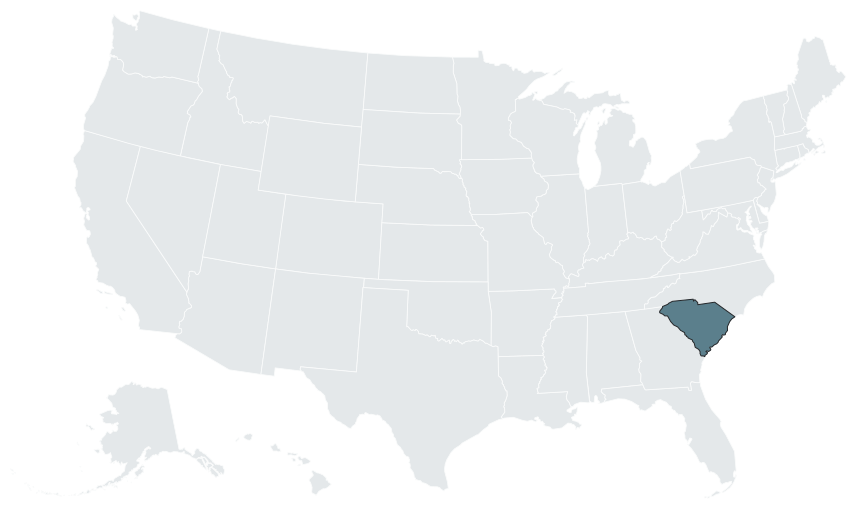

Approval layers: state, county and city
South Carolina delegates land use power through one statute: the Local Government Comprehensive Planning Enabling Act of 1994, codified at Title 6, Chapter 29 (1994 Act No. 355) [16]. It authorizes counties and municipalities to create planning commissions, adopt zoning ordinances and land development regulations, and create boards of zoning appeals and boards of architectural review [16]. Municipalities govern inside corporate limits, counties govern unincorporated areas, and a parcel is subject to only one general-purpose zoning jurisdiction. Some counties historically had limited or no zoning in rural areas, so subdivision and stormwater regulations may still apply where zoning does not.
| Layer | Who acts | What it decides for a site plan |
|---|---|---|
| State | SCDES, SCDOT, the SC Building Codes Council, the licensing boards | Stormwater, septic, UST and coastal permits; state road access; building codes; who seals |
| Staff or technical review committee | Planning, engineering and fire staff | Most commercial site plans |
| Planning commission | Appointed commission | The comprehensive plan, reviewed at least every 5 years and updated at least every 10 years (Section 6-29-510) [17]; subdivisions and planned development master plans |
| Board of zoning appeals | Appointed board | Variances, special exceptions and appeals of administrative decisions (Sections 6-29-780 et seq.) [18] |
| Council | City or county council | Ordinances, rezonings and planned development districts (Section 6-29-740) [18], typically by three readings |
In Charleston, the Technical Review Committee coordinates Planning, Fire, Stormwater, Traffic and Transportation and other departments in one review [19]. Subdivision review governs the division of land, site plan review governs development of a single parcel, and a land disturbance or land development permit governs grading and stormwater; the three usually run concurrently.
Who prepares and seals what
South Carolina separates drafting a plan from taking professional responsibility for it. Section 40-3-20 defines responsible charge in the architecture act as the architect's direct control and personal supervision of the work [20], and Act 259 of 2016 added language under which a licensee's seal and signature certify that the document was prepared by the licensee or the licensee's agent [21]. The preliminary site plan is the unsealed first draft; the client's engineer, architect and surveyor of record build the sealed set on it. For the division of work in plain terms, see who prepares a site plan and the site plan architect page.
| Deliverable | Prepared or sealed by | Rule |
|---|---|---|
| Preliminary site plan: layout, pads, drives, parking, yield, site data table | Site planning studio; unsealed draft | Drafting is open; sealing follows Title 40, Chapters 3 and 22 [5] |
| Recordable map, plat or survey | Professional surveyor's signature and impression seal; the clerk of court or register of deeds must refuse one dated after July 1, 1977 without it | Section 40-22-270(7) [5] |
| Comprehensive SWPPP, 2 acres or more | SC Professional Engineer, Landscape Architect, Tier B Land Surveyor or federal employee | SCDES construction stormwater [1] |
| Subdivision erosion control and storm drainage plans with no structural design | A Tier B land surveyor may prepare them | Section 40-22-20 [22] |
| Engineered onsite wastewater (Standard 610; combined peak loading over 1,500 gpd) | SC-licensed professional engineer | R.61-56 [23] |
| Buildings in non-exempt occupancies | Professional engineer or registered architect | Sections 40-22-280 and 40-3-290 [6, 2] |
| City of Charleston TRC site plans | Certified by an SC-registered architect, engineer, landscape architect or surveyor | TRC process [19, 24] |
If the documents are signed by authors with their true occupational titles, the architecture act does not apply to farm buildings; to buildings of less than three stories and fewer than 5,000 square feet of total floor area, except assembly, institutional, educational and hazardous occupancies regardless of area; or to one- and two-family dwellings, including townhouses, within the prescriptive SC Residential Code (Section 40-3-290) [2]. The 2021 amendment (S.500, effective May 17, 2021) narrowed the dwelling exemption to that prescriptive scope [25], and joint board guidance requires a design professional for any assembly building regardless of size [26]. Section 40-22-280(C) preserves any local ordinance that independently requires a sealed plan [6].
Statewide overlays
| Overlay | Rule | What appears on the plan |
|---|---|---|
| Building and fire codes | The 2021 SC codes, based on the 2021 I-Codes with SC modifications, were adopted October 6, 2021 and took effect January 1, 2023; for the 2024 cycle, the 180-day modification comment period ran February 3 to August 4, 2025 [4]. The SC Fire Code is based on the 2018 IFC with SC modifications [27] | Footprints, egress, fire access |
| Construction stormwater | Coverage at 1 acre; a Notification under 1 acre; a simplified SWPPP for 1 to 2 acres; a C-SWPPP at 2 acres or more [1, 7, 8] | Disturbed area, SWPPP tier |
| State road access | SCDOT encroachment permit under the Access and Roadside Management Standards (ARMS), 2008 edition with errata updated July 2025 [28, 29]; ARMS classifies driveways by trip generation and sets when a traffic impact study is required, and an SCDOT permit does not relieve stricter local requirements [30] | Driveway location and class |
| Wetlands | Corps wetland permits through the USACE Charleston District; state water quality certification by SCDES | Delineated wetlands |
| Floodplain | SCDNR runs the SC Flood Mitigation Program as state NFIP coordinator [31]; freeboard above BFE is set by local ordinance, the 2021 SC Building Code Section 1612 and SC Residential Code Section R322 added Coastal A Zone requirements, and the City of Charleston requires 2 feet of freeboard above BFE [32] | Flood zones, finished floor elevations |
| Coastal zone | Critical area permits, consistency certifications and the beachfront setback line in the eight coastal counties [9, 3] | Critical area line, setback line |
| Onsite wastewater | R.61-56, effective July 1, 2022 [33]; setbacks include 75 feet from the delineated critical area line [15] | Septic setback lines |
Under the Beachfront Management Act, BCM reviews the baseline and the 40-year setback line every 7 to 10 years, and the current statewide review runs in three geographic areas from 2024 through 2027 [34]. Myrtle Beach keeps a policy of retreat based on erosion and amends its own baseline and setback line when BCM amends the state line [35].
Top jurisdictions
Digital submittal is standard in the larger jurisdictions, but the platforms differ: Tyler EnerGov in Charleston, Berkeley, Columbia and Spartanburg County; eTRAKiT in Greenville County; Click2Gov in the City of Greenville; OPAL in Mount Pleasant; CitizenServe in Summerville.
| Jurisdiction | Portal | Review body | Published fee or timeline |
|---|---|---|---|
| City of Charleston | Tyler EnerGov Customer Self Service [36] | Technical Review Committee; Board of Architectural Review in the historic districts [19, 37] | BAR-Small reviews projects under 10,000 sq ft, BAR-Large over 10,000 sq ft [37, 38] |
| Charleston County | Tyler EnerGov CSS [39] | Building Inspection Services; the Planning Commission has final authority over preliminary subdivision plats and PD development plans [39] | Not stated |
| Berkeley County | Tyler EnerGov E-Review | Concurrent Plan Review Committee | Expedited review $2,500 per department, two rounds; a third resubmittal reverts to standard timelines [40] |
| City of Columbia | Tyler EnerGov Access Portal | Development Center | No plan review fee due at first commercial submission [41] |
| Lexington County | BluePrince (building) | Development Services and Land Development | Commercial plan review $2,385 plus $210 per acre; additional reviews or resubmittals $310 to $600 (effective July 1, 2025) [42] |
| City of Greenville | Click2Gov | Technical Review Committee pre-development conference every Monday at 3 p.m., before submission [43] | Not stated |
| Greenville County | eTRAKiT, for Site Plan Review in the PD, FRD, NC and POD districts [44] | Zoning Administration | Not stated |
| Spartanburg County | Tyler EnerGov CSS, with concurrent submittal to Planning, Engineering and Building Codes [45] | Planning and Development | Commercial building plan review is one-half of all permit fees [45] |
| Horry County | Not confirmed | Planning and Zoning, under the Land Development Regulations (Municode Chapter 18) [46]; Planning Commission | Not stated |
| City of Myrtle Beach | Not confirmed | Construction Services and Zoning | Plan-check fee 60 percent of the permit fee, payable at application; commercial stormwater plan review $250.00 [47] |
| York County | Online permitting | Development Services Center | Preliminary plat $350; subdivision construction plans $500 plus $20 per lot; plat comments in about two weeks [48] |
| Town of Mount Pleasant | OPAL (Oracle Permitting and Licensing) | Development Review Team: conceptual, preliminary and technical review | Plan review lead time 4 to 6 weeks, no expedited option [49] |
| Town of Summerville | CitizenServe | Building, Planning and Engineering | Plan review fee 50 percent of the permit fee; maximum review time typically three weeks [50] |
| City of Rock Hill | Not confirmed | Development Plan Review | Comments in about 10 business days [51] |
City of Charleston. The Technical Review Committee coordinates multi-department review of site plans and subdivisions for code compliance; plans are uploaded to the CSS portal for eReview, and each plan must be certified by an SC-registered architect, engineer, landscape architect or surveyor [19, 24]. The Board of Architectural Review reviews all new construction, alterations and renovations visible from the public right-of-way in the historic districts, and all demolitions of buildings 50 years or older south of Mount Pleasant Street [37, 38].
Asset registries
Where a row gives no state rule, the rule is set by the county or city. No state RV park design rule has been verified for South Carolina: the state layer found is onsite wastewater, and the density and site size examples below are local ordinances.
| Asset | State rule | Numbers that shape the plan | Local layer |
|---|---|---|---|
| RV parks | SCDES onsite wastewater, R.61-56: campgrounds are named as large-system users, and "dwelling" includes park model RVs and RVs [33] | One dump station per 100 sites (R.61-56.103) [52]; density and site size set locally | Duncan (Spartanburg County): 5 acres minimum, 12 units per physical acre [53]. Pickens County: 5 acres minimum, 4 sites per acre, 690 sq ft per site, a 100 ft perimeter setback, no individual septic system per site, master-metered utilities [54, 55]. Horry County: rezoning to DP Destination Park [46] |
| Campgrounds and glamping | The same wastewater rule [33]; classification set locally | Set locally | Local zoning |
| Gas stations and c-stores | SCDES UST program, R.61-92 Part 280 (SUPERB Act, Section 44-2-10) [56] | Phased SCDES inspections (tank, piping before backfill, post-application), an as-built map accurate to within one foot, and a Permit to Operate before fueling [57] | Zoning set locally |
| Car washes | Set locally | Set locally | Local zoning |
| Hotels | Hotel pools: SCDES R.61-51 covers Type B pools at hotels, motels, condos and apartments [58] | Set locally | Local zoning |
| Marinas | SCDES BCM critical area permit, the Corps and Section 401 certification, under Regulation Chapter 30 and the CZMA [3] | Critical area line, setback line | Local zoning |
| Self storage | Set locally; storage occupancies are not exempt from the engineering seal regardless of size [6] | Set locally | Local zoning |
| Industrial | Set locally; factory and industrial occupancies are not exempt from the engineering seal regardless of size [6] | Set locally | Local zoning |
For density arithmetic against local caps like these, see RV sites per acre. Asset detail sits on the national hubs for RV parks, campgrounds, glamping, gas stations, car washes, hotels, marinas, self storage and industrial sites.
Timelines and bottlenecks
Where a South Carolina jurisdiction publishes its own review time, these are the figures: Rock Hill returns development plan comments in about 10 business days [51], York County returns plat comments in about two weeks [48], Summerville's maximum review time is typically three weeks [50], and Mount Pleasant's plan review lead time is 4 to 6 weeks with no expedited option [49]. Berkeley County sells expedited review at $2,500 per department for two rounds [40]. Rezonings and planned development districts go to council, typically by three readings.
The resubmittal causes that recur across South Carolina:
- Stormwater plan deficiencies, and a C-SWPPP preparer without one of the qualifying licenses on a site of 2 acres or more [1].
- SCDOT encroachment sequencing and traffic impact study scoping under ARMS, which can run on a separate clock from local review [28].
- Critical Area Line determinations; a certified line is valid up to 5 years and is often a prerequisite for local setbacks [9].
- Wetland delineation timing with the Corps Charleston District.
- Septic feasibility in the Lowcountry, given the high water table and R.61-56 setbacks such as 75 feet from the critical area line [15].
- Board of Architectural Review aesthetic review in Charleston across conceptual, preliminary and final stages.
- Water and sewer capacity and tap availability.
Each item can be checked on the concept, before the engineer of record starts design.
Proof points
Recent outdoor hospitality cases on the Horry County coast show the rezoning path for RV parks:
- Waccamaw River destination park, Highway 905. On September 3, 2024, the Horry County Planning Commission approved rezoning a 34.47-acre tract on Highway 905 near Highway 22 to DP Destination Park, planned for about 200 campsites and 35 cabins on the Waccamaw River [59].
- Second Highway 905 proposal. A separate 98-acre Highway 905 proposal for 158 RV sites advanced through the Planning Commission, with three council readings required [60].
- Existing comparable. Sun Outdoors Myrtle Beach (formerly Carolina Pines) on Highway 90 operates in the same submarket [60].
Model projects in other states, including RV parks and resorts, are under case studies.
What the preliminary plan carries in South Carolina
A preliminary site plan from the studio is a detailed first draft of the project without the engineering layer: site layout, buildings and floor plans, internal roads and drive aisles, parking, pads and units, and the yield, organized with a site data table. In South Carolina that table carries the rows reviewers check first: disturbed acreage against the 1 and 2 acre stormwater tiers, the critical area line and setback line in the eight coastal counties, onsite wastewater setbacks, SCDOT frontage, and zoning and density against the local cap.
Stormwater design and the C-SWPPP, onsite wastewater engineering, utility design, SCDOT access design and the sealed building set are not included; the client's engineer, architect and surveyor of record produce and seal them on top of the preliminary plan. Developers take the plan to the county or city at concept and pre-application (see where unsealed site plans are accepted), to a lender, and to a general contractor for pricing. The preliminary versus final site plan guide shows where the handoff falls, and the site plan consultant and site plan services pages describe the work. Background reading: stormwater as a site plan variable, coastal zone requirements for waterfront projects and the RV park regulatory matrix.
Neighboring state pages: Georgia and North Carolina. York and Lancaster counties draw growth from the Charlotte metro. All covered states are listed under service areas.
Frequently asked questions
What land disturbance triggers a stormwater permit in South Carolina?
Who must prepare the SWPPP for a site of 2 acres or more?
A licensed South Carolina Professional Engineer, Landscape Architect, Tier B Land Surveyor, or a federal government employee [1].
When does a plat need a surveyor's seal?
Any recordable map or plat within the definition of surveying needs a professional surveyor's signature and impression seal, and the clerk of court or register of deeds must refuse one dated after July 1, 1977 without it (Section 40-22-270(7)) [5].
Can a licensee seal work drafted by an unlicensed employee?
Which agency handles septic systems and fuel tanks now?
What is the coastal setback line?
40 times the average annual erosion rate, with a minimum of 20 feet landward of the baseline [3].
Do I need an SCDOT permit for a driveway on a state road?
Does Charleston's Board of Architectural Review see my project?
Yes if it is new construction or an alteration visible from the public right-of-way in a historic district, or a qualifying demolition [37].
Sources
- 1)Stormwater construction activities, greater than 2 acres of land disturbance, South Carolina Department of Environmental Services. Accessed 2026-08-02.
- 2)S.C. Code Section 40-3-290, exemptions from the architecture practice act, State of South Carolina (via LawServer). Accessed 2026-08-02.
- 3)S.C. Code of Regulations, Chapter 30 (coastal regulations), South Carolina Legislature. Accessed 2026-08-02.
- 4)Building codes adoption, South Carolina Building Codes Council (LLR). Accessed 2026-08-02.
- 5)S.C. Code Section 40-22-270, seals, plat recording and permits, State of South Carolina (via Justia). Accessed 2026-08-02.
- 6)S.C. Code Section 40-22-280, exemptions from the engineering and surveying practice act, State of South Carolina (via Justia). Accessed 2026-08-02.
- 7)Stormwater construction activities, less than 1 acre of land disturbance, South Carolina Department of Environmental Services. Accessed 2026-08-02.
- 8)Stormwater construction activities, 1 to 2 acres of land disturbance, South Carolina Department of Environmental Services. Accessed 2026-08-02.
- 9)Coastal zone staff application: coastal counties, critical area permits and consistency certification, South Carolina Department of Environmental Services. Accessed 2026-08-02.
- 10)Critical Area Permitting fact sheet, South Carolina Department of Environmental Services. Accessed 2026-08-02.
- 11)DHEC restructuring, South Carolina Department of Environmental Services. Accessed 2026-08-02.
- 12)Underground storage tank regulation, South Carolina Department of Environmental Services. Accessed 2026-08-02.
- 13)Comment on The 1886 Charleston, South Carolina, Earthquake, Seismological Society of America (GeoScienceWorld). Accessed 2026-08-02.
- 14)External grant report G19AP00022, liquefaction hazard near Summerville, U.S. Geological Survey. Accessed 2026-08-02.
- 15)S.C. Code Regs. 61-56.200, onsite wastewater setbacks, State of South Carolina (via Justia Regulations). Accessed 2026-08-02.
- 16)S.C. Code Title 6, Chapter 29, Local Government Comprehensive Planning Enabling Act of 1994, South Carolina Legislature. Accessed 2026-08-02.
- 17)S.C. Code Section 6-29-510, comprehensive plan, State of South Carolina (via Justia). Accessed 2026-08-02.
- 18)S.C. Code Title 6, Chapter 29 (2018 Code of Laws), South Carolina Legislature. Accessed 2026-08-02.
- 19)Technical Review Committee (TRC), City of Charleston. Accessed 2026-08-02.
- 20)S.C. Code Section 40-3-20, definitions for the architecture practice act, State of South Carolina (via Justia). Accessed 2026-08-02.
- 21)Engineers and Surveyors Practice Act changes in Act 259, South Carolina Society of Professional Engineers. Accessed 2026-08-02.
- 22)S.C. Code Section 40-22-20, definitions for the engineering and surveying practice act, State of South Carolina (via Justia). Accessed 2026-08-02.
- 23)S.C. Code Regs. R.61-56.200, State of South Carolina (via Cornell LII). Accessed 2026-08-02.
- 24)TRC Manual, City of Charleston. Accessed 2026-08-02.
- 25)Change to Practice Act (S.500), South Carolina Board of Architectural Examiners (LLR). Accessed 2026-08-02.
- 26)Building Official Manual, with Section 300 revised, Edgefield County. Accessed 2026-08-02.
- 27)Notice to Construction Industry, City of Charleston. Accessed 2026-08-02.
- 28)Access management, South Carolina Department of Transportation. Accessed 2026-08-02.
- 29)Access and Roadside Management Standards (ARMS), 2008 edition with July 2025 update, South Carolina Department of Transportation. Accessed 2026-08-02.
- 30)Access and Roadside Management Standards (ARMS 2008), permits copy, Lexington County Public Works. Accessed 2026-08-02.
- 31)Flood mitigation program, information for floodplain managers, South Carolina Department of Natural Resources. Accessed 2026-08-02.
- 32)Floodplain Development, City of Charleston. Accessed 2026-08-02.
- 33)Regulation 61-56, Onsite Wastewater Systems, South Carolina Department of Environmental Services. Accessed 2026-08-02.
- 34)State beachfront jurisdictional lines, South Carolina Department of Environmental Services. Accessed 2026-08-02.
- 35)City of Myrtle Beach local comprehensive beachfront management plan resolution, South Carolina Department of Environmental Services. Accessed 2026-08-02.
- 36)Permit Center, City of Charleston. Accessed 2026-08-02.
- 37)Board of Architectural Review (BAR-L, BAR-S), City of Charleston. Accessed 2026-08-02.
- 38)Board of Architectural Review, Charleston Inside Out (secondary). Accessed 2026-08-02.
- 39)Zoning and Planning Department, Charleston County. Accessed 2026-08-02.
- 40)Plan review fees, Berkeley County. Accessed 2026-08-02.
- 41)Residential projects, plan review fees, City of Columbia Planning and Development Services. Accessed 2026-08-02.
- 42)Land Development Fees 2025-26, Lexington County. Accessed 2026-08-02.
- 43)Fees, City of Greenville. Accessed 2026-08-02.
- 44)Site Plan Review, Greenville County. Accessed 2026-08-02.
- 45)Development Services, Spartanburg County. Accessed 2026-08-02.
- 46)Code of Ordinances, Appendix B, Zoning, Horry County (Municode). Accessed 2026-08-02.
- 47)Residential Permit Procedures packet, City of Myrtle Beach. Accessed 2026-08-02.
- 48)Fees, York County. Accessed 2026-08-02.
- 49)Permit, Town of Mount Pleasant. Accessed 2026-08-02.
- 50)Building Permit Process, Commercial, Town of Summerville. Accessed 2026-08-02.
- 51)Code of Ordinances, Appendix A, Fee Schedule, City of Rock Hill (Municode). Accessed 2026-08-02.
- 52)S.C. Code Regs. R.61-56.103, State of South Carolina (via Cornell LII). Accessed 2026-08-02.
- 53)Town of Duncan campground ordinance (Spartanburg County), Town of Duncan. Accessed 2026-10-09.
- 54)Planning Commission workshop packet, Pickens County. Accessed 2026-10-09.
- 55)Article 3, Standards for Certain Uses, Pickens County. Accessed 2026-10-09.
- 56)Regulation 61-92, Part 280, Underground Storage Tanks, South Carolina Department of Environmental Services. Accessed 2026-08-02.
- 57)Underground storage tanks, permits for new installation, South Carolina Department of Environmental Services. Accessed 2026-08-02.
- 58)Regulation 61-51, Public Swimming Pools, South Carolina Department of Environmental Services. Accessed 2026-08-02.
- 59)New RV park gets initial OK from planning commission, My Horry News. Accessed 2026-08-02.
- 60)Proposed RV park in Horry County could include 158 sites, Modern Campground. Accessed 2026-08-02.