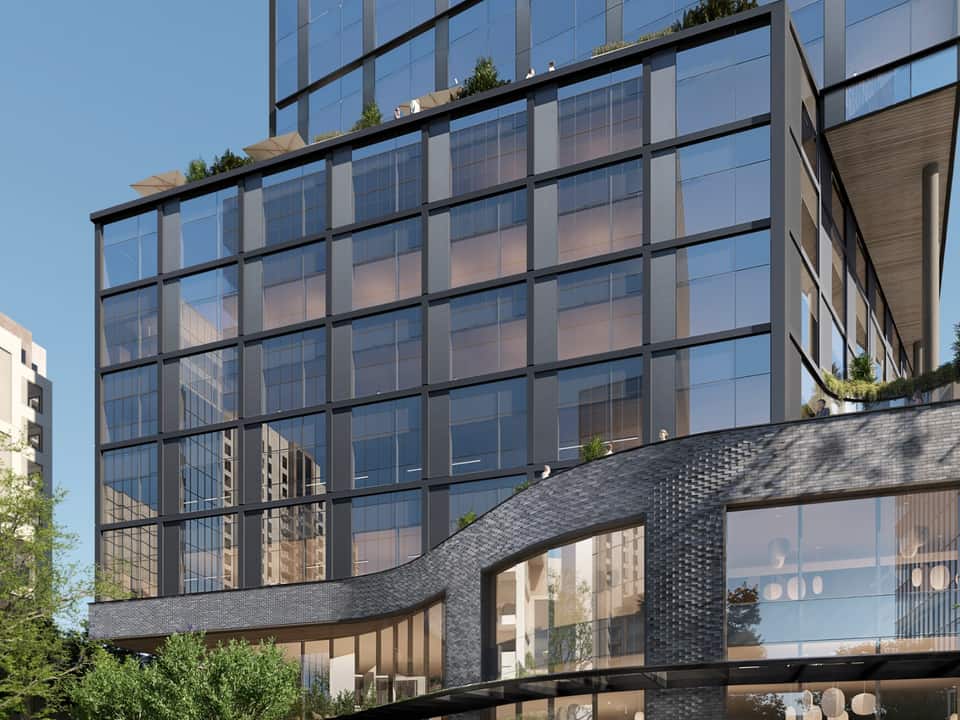
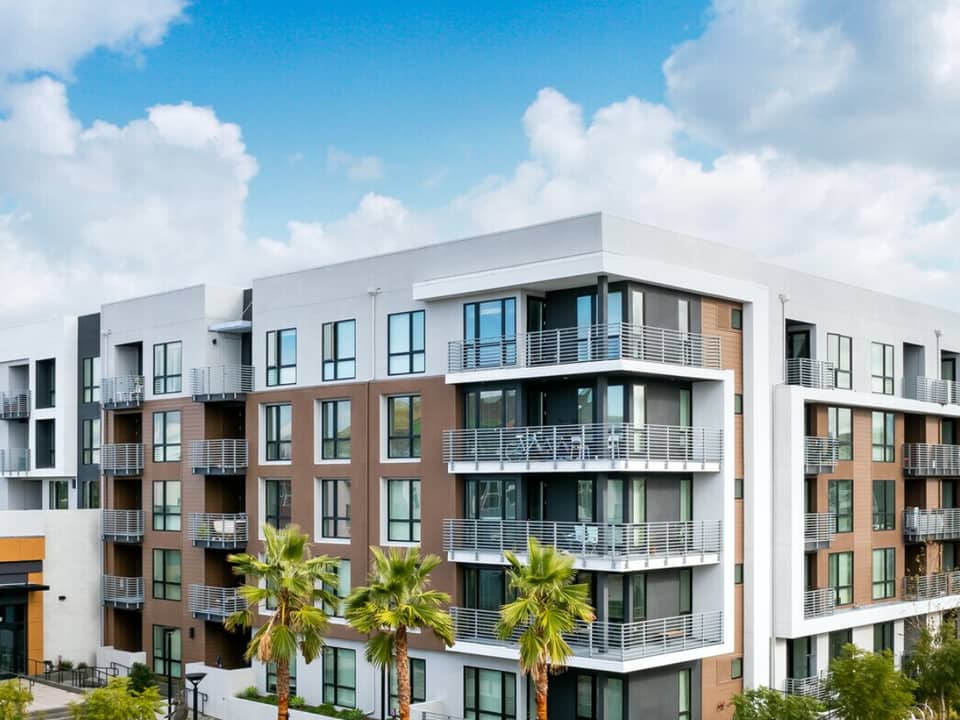
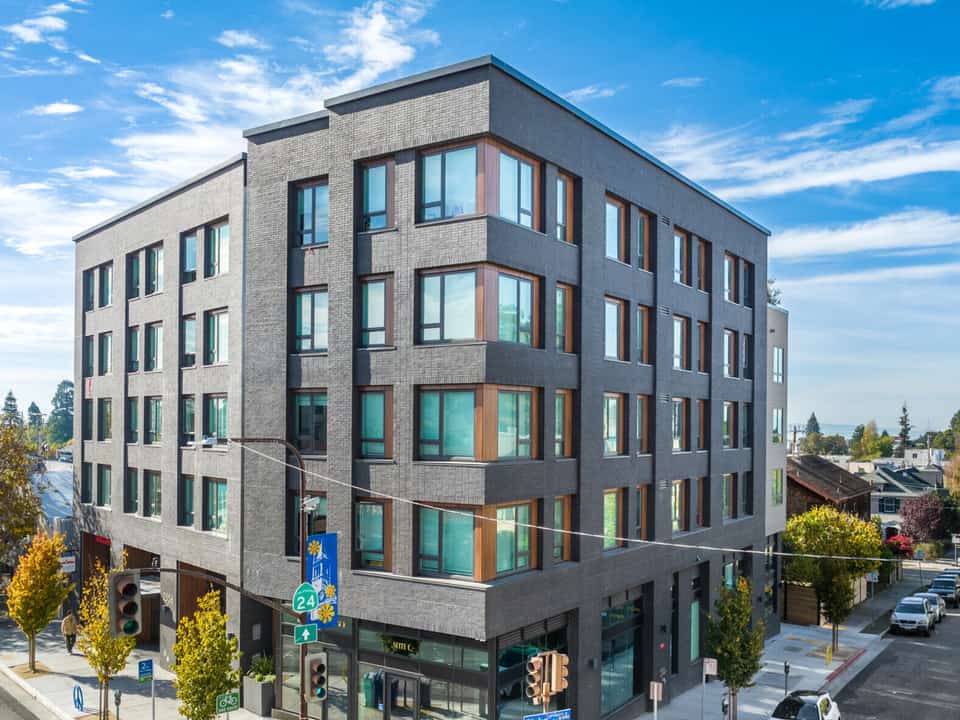
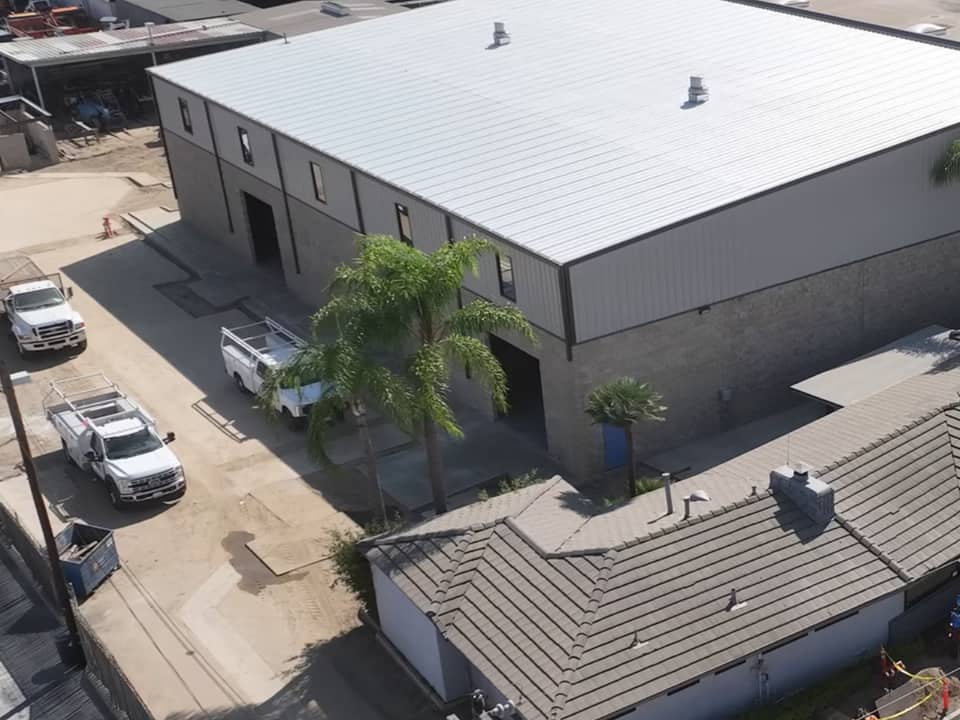
A site plan shows what a parcel can hold and how it is arranged. This page sets out the studio's site plan service for developers, then routes you by asset class to the rules that drive each layout, the model projects and the guides.
Roof above 30 ft: a 26 ft lane, 15 to 30 ft from one entire side [2]
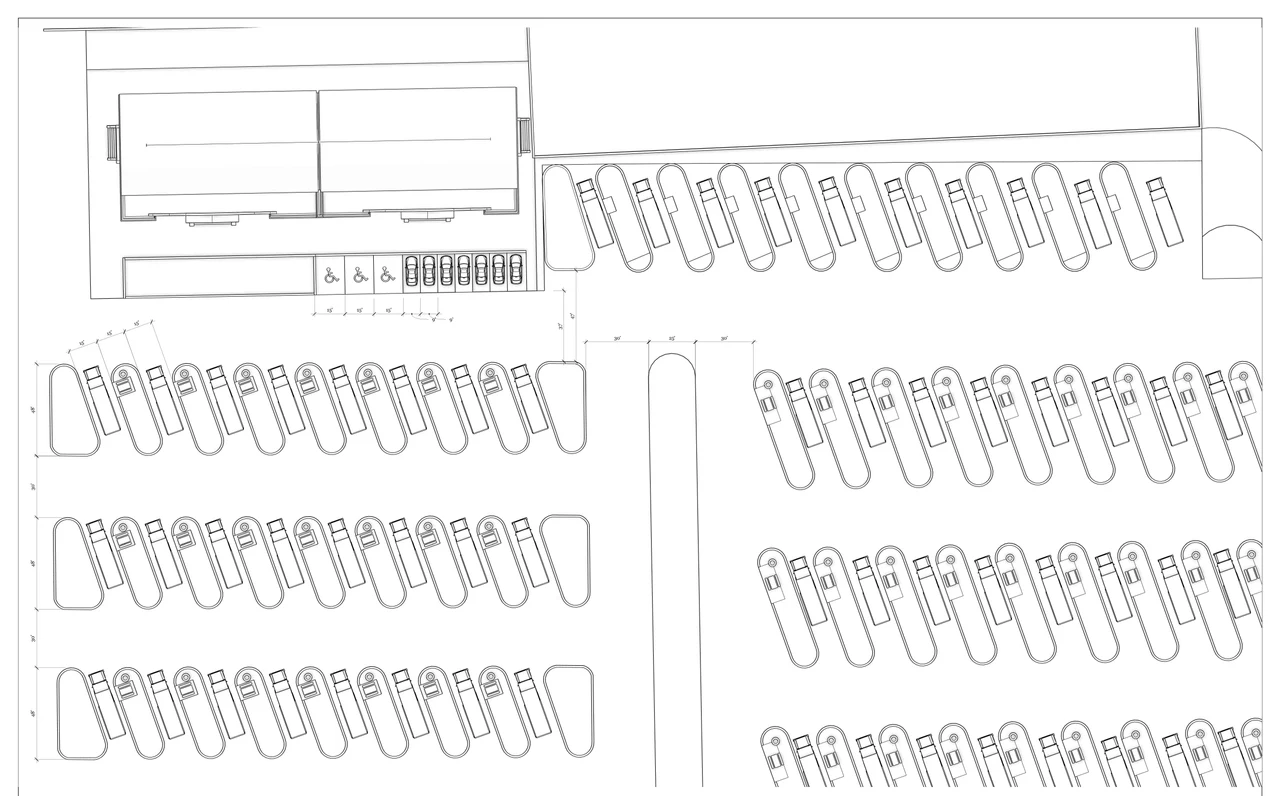
Studio drawing: RV pad layout, top view close-up.
What a site plan is
A site plan is the drawing of a parcel as it is to be developed: the boundary, the buildings, the access points and internal roads, the parking and circulation, the landscaped and open areas, and the figures that show the layout meets the code. It is the document a planning body reviews before a project may proceed; in New Jersey, approval of a site plan by resolution is a statutory condition for a construction permit (N.J.S.A. 40:55D-37) [3]. A commercial site plan carries more of those figures than a residential one: parking against the requirement, density against the cap, setbacks, fire access, and the rules each asset class adds. The elements are covered in what is a site plan.
The studio's site plan service
Innowave Studio is a US site planning and 3D visualization studio for real estate developers. The core of the work is the preliminary site plan: a detailed, real first draft of the project, deliberately without the engineering layer. It carries the site disposition and layout, the buildings with their rooms and floor plans, amenities, internal roads and drive aisles, parking, pads, sites and units, and the yield, organized on the sheet with a site data table: acreage, zoning, density against the cap, setbacks, parking required against provided, and unit mix. It leaves out sewer and water pipe design, electrical and utility engineering, and grading and drainage engineering. The studio holds no stamp; engineering is done by your engineer of record.
Developers use the plan at the concept or pre-application stage, which many cities and counties accept without a seal; with a lender; with a general contractor, who prices it; to decide on a site and raise capital; and as the base the engineer and architect of record build the sealed set on. Which review stages take an unsealed plan, and where a seal is required early, is set out on the preliminary site plan page.
Every asset class has a short list of rules that decide the layout before anything else does. One rule for each, with its source; the hub pages carry the full standards:
Bathhouses are placed by count and walking distance: Georgia, for example, requires a toilet, a lavatory and a shower per sex for every 10 non-permanent structures, within 200 ft (Rule 511-6-2) [5]
The unit's classification sets the plan: in California a camping cabin must be under 400 sq ft, hard-sided, relocatable and without plumbing (HSC 18862.5) [6]
Separation distances fix the canopy: Virginia's adopted fire code keeps dispensing at least 10 ft from adjoining buildable lot lines and 5 ft from building openings (13VAC5-52-280) [8]
Covered area triggers review: in Montgomery County, Texas every open or enclosed canopy needs its own permit, and more than 15,000 sq ft of covered area, parking included, requires a drainage plan [10]
Apex, North Carolina requires 21 ft one-way and 30 ft two-way drive aisles, a 3 acre minimum lot, and perimeter buildings designed to look like two-story offices [11]
Above 30 ft of roof height, an aerial fire apparatus access road 26 ft wide must run 15 to 30 ft from the building, parallel to one entire side (IFC D105, as adopted, for example, by Lincolnton, North Carolina) [2]
Each building needs fire apparatus access within 150 ft of all portions of its exterior, at least 20 ft wide (IFC 503.1.1) [15], and a building over 62,000 sq ft gross needs two separate access roads (IFC Appendix D) [16]
Drive-thru pads are sized by the stacking lane: Pembroke Pines, Florida, for example, requires lanes at least 10 ft wide with 20 ft of length per required vehicle, plus escape lanes (155.611) [18]
Lot count decides access: in Walla Walla, Washington, 14 or fewer lots on a cul-de-sac of 400 ft or less may have one access point, and 15 or more lots need two [19]
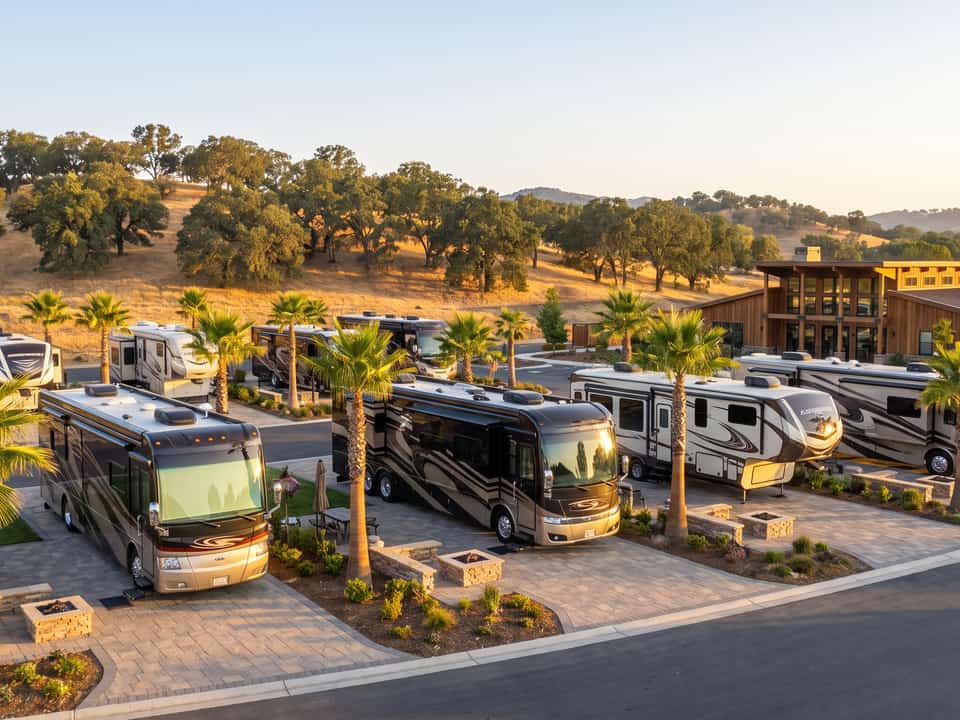
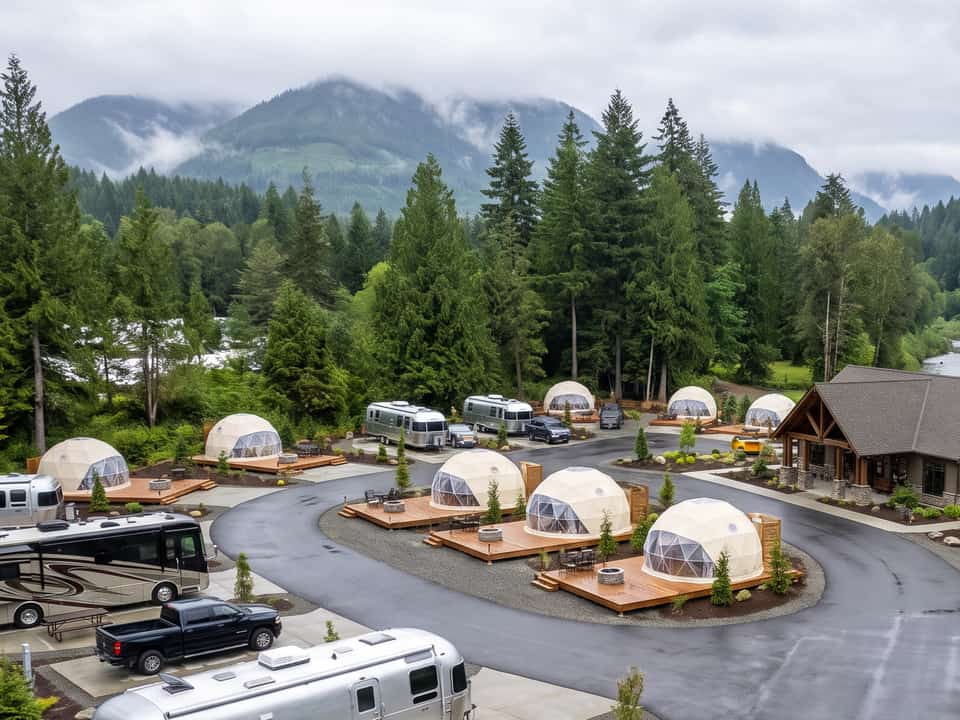
RV park site plans for developers: pad types and dimensions, state density caps, road and separation standards, the NEC 551 electrical mix, wastewater sizing and the approval path, each tied to its code section.
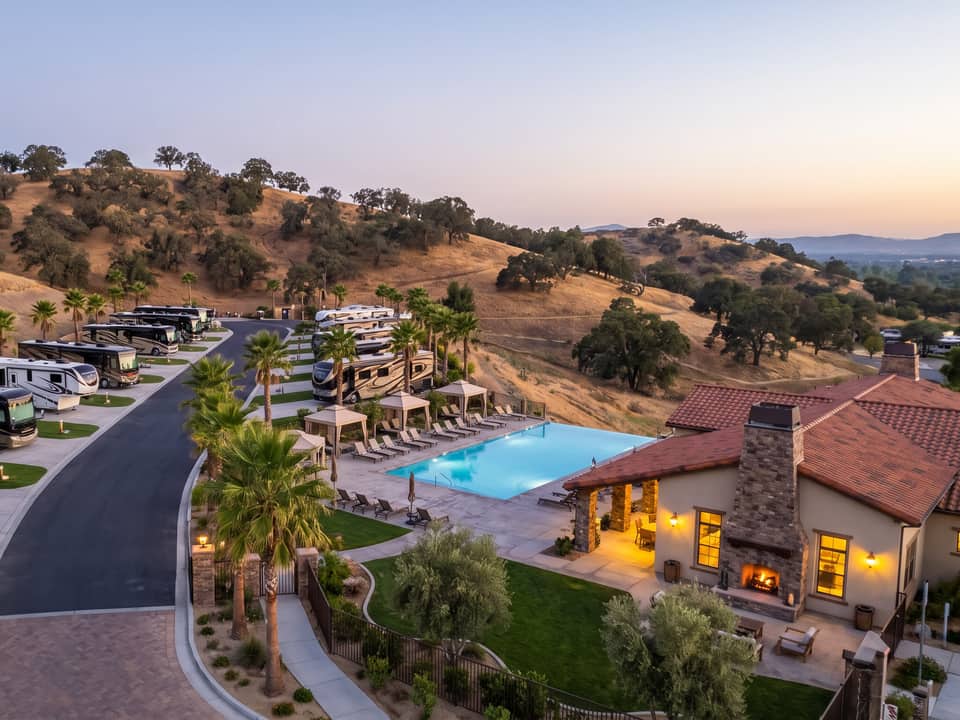
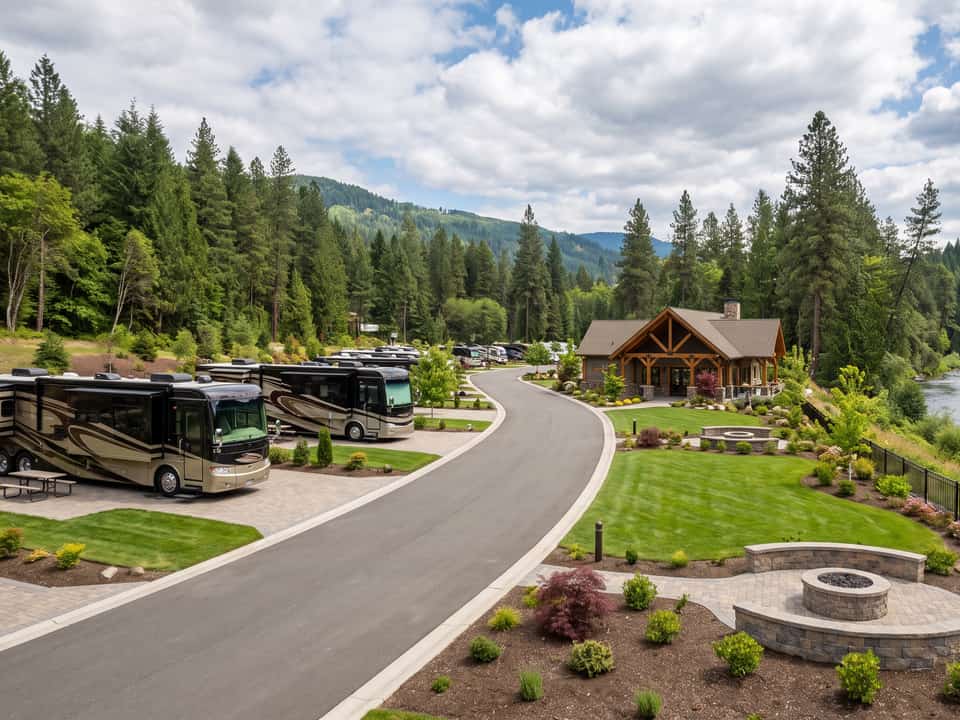
RV resort master plans for developers: the amenity core, cabins and park models, the premium pad mix, phasing, and the water, wastewater, road and floodplain rules that set resort yield, from Texas Hill Country and Sevier County model cases.
Campground site plans for developers: density caps and site sizes by state, cabin treatment, bathhouse ratios, roads and fire access, and the conditional use path, each tied to the code section.
Glamping site plans for developers: how tents, yurts, domes, cabins and tiny homes are classified, spacing and density by tier, utilities per unit, dark sky and wildfire rules, and glamping zoning paths.
Hotel and motel site plans for developers: select-service program, public prototype land and parking data, aerial fire access, setbacks, Tennessee seal rules and the approval path.
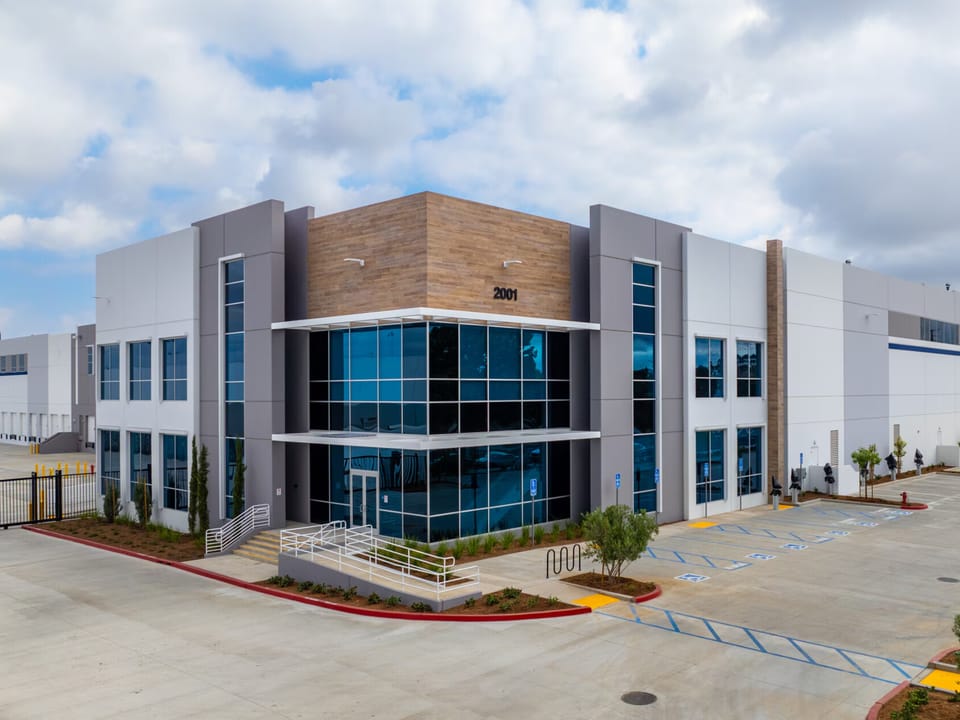
Industrial site planning for developers: zoning tiers, coverage benchmarks, WB-67 truck circulation, fire access, stormwater land take, power, and the industrial outdoor storage yard.
Warehouse and distribution center site planning: truck court depth, dock door ratios, clear height, fire access around a tall box, the unlimited-area yard, ESFR and fire water, the approval path and shell cost benchmarks, with sources.
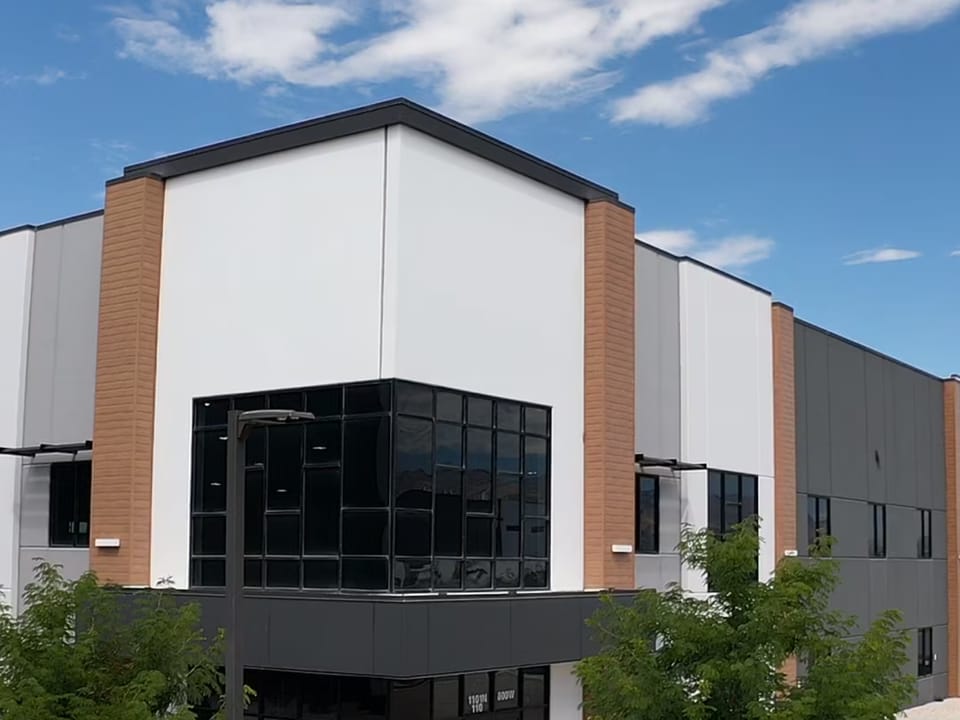
Small-bay flex site planning: building size, office front and rear loading, shared drive aisles, parking, outdoor storage permits and the Grove City, Ohio development plan path, with sources.
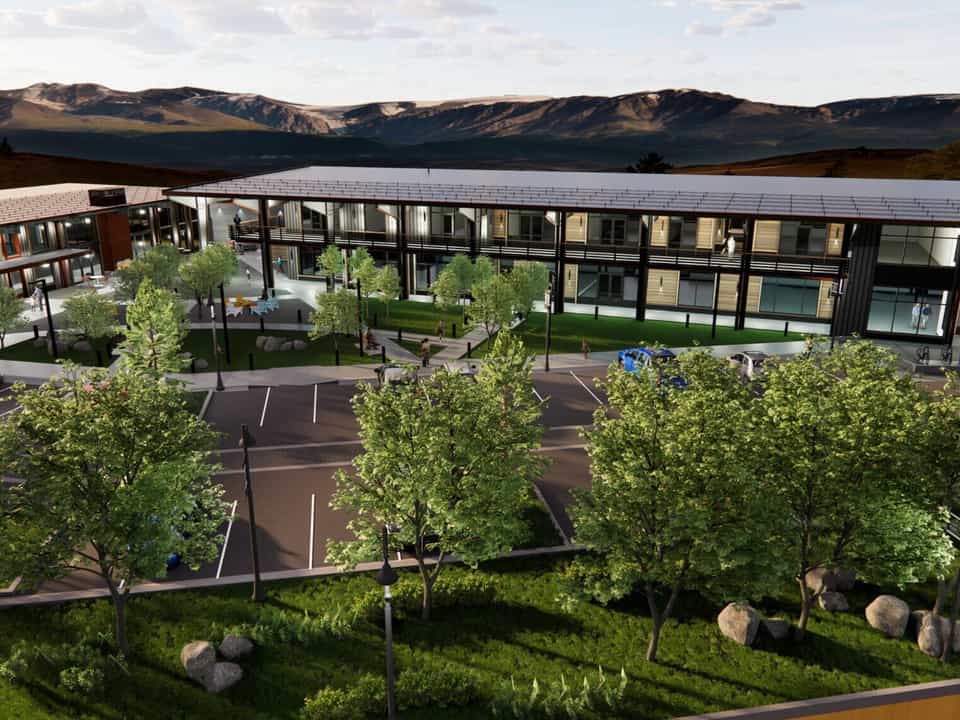
Preliminary site plans for new office, medical office and the re-planning of obsolete office parks: parking ratios, fire access, floorplate and conversion screens, and the re-entitlement path, with cited standards.
Preliminary site plans for strip centers, shopping centers and outparcels: inline depths, bay modules, parking fields, pads and cross-access, drive-thru stacking, loading and the approval rules, with sources.
Multifamily and apartment site plans for developers: garden and podium thresholds, state parking reform, Texas SB 840 and Florida Live Local paths, Knightdale garden standards, seal stages and the approval path.
Mixed-use site plans for developers: ground-floor frontage, depth and transparency rules, shared parking tables from four codes, IBC 510.2 podium separation, aerial fire access, state by-right and parking laws, and the approval path.
IOS yard site plans for developers: tractor-trailer stall modules, screening and storage height rules, paved and gravel surfaces, zoning districts, Arizona dust and stormwater triggers, and the approval paths that accept a concept plan.
Preliminary site plans for express tunnel car washes: manufacturer tunnel layouts, stacking counts by code, vacuum stall geometry, water reclaim and pretreatment rules, dryer noise limits, separation standards and the moratorium wave.
Preliminary site plans for gas stations and convenience stores: IFC and NFPA 30A distances, access rules, canopy lighting caps, separation from schools and homes, state UST programs, EV charging rules and approval paths.
Preliminary site plans for truck stops and travel centers: truck parking and diesel lanes at recent openings, interstate and frontage road access spacing, circulation and fueling geometry, what drives acreage, and approval paths in cities and counties.
Preliminary site plans for RV and boat storage: canopy and open stall layouts, fire access and drainage triggers, screening rules, use classification, and the permit, rezoning and special use paths, with code citations.
Preliminary self storage site plans: drive-up versus multistory layouts, door orientation and active frontage rules, sprinkler and fire access triggers, conditional zoning in Apex and Fuquay-Varina, and 2025 to 2026 moratoria and market evidence, with citations.
Marina site plans for developers: wet slips versus dry stack, the upland program, manatee slip caps, Florida submerged land leases, flood code and the county approval path, drawn from a Lee County, Florida model case.
Preliminary subdivision site plans and yield studies for single-family and townhome developers: density by product, lot sizes, street sections, fire access, open space, ADU and lot-split law and the plat path, with sources.
Senior living site plans for developers: IBC occupancy thresholds for assisted living, state licensing agencies and tiers, aerial fire access, Washington's parking exemption, the unsealed concept stage and the national supply picture.
Boat storage site planning for developers: dry stack rack buildings and open boat yards, when a launch service makes the site a marina, racks counted as slips, parking and screening ratios, height, and the approval path in Lee County, Florida.
Model projects
The case studies are model projects in real jurisdictions: each shows how one jurisdiction's rules shape a site plan for a model program, from the approval path to the site data table.
State pages set out each state's approval layers and seal rules, for example Colorado, Delaware, Georgia and Tennessee; metro pages cover cities such as Atlanta and Nashville. The full list is under service areas. To begin, start a project with the parcel and the program; the way a commission runs is on the process page, the studio is introduced on about, and common questions are answered on the FAQ.
Frequently asked questions
What is a site plan?
A drawing of a parcel as it is to be developed: the buildings, access, parking, circulation and open areas, with the figures that show the layout meets the code. It is what the planning body approves; in New Jersey, approval of a site plan by resolution is a statutory condition for a construction permit (N.J.S.A. 40:55D-37) [3].
Do I need a site plan for a building permit?
For most commercial projects, yes. Murfreesboro, Tennessee requires Planning Commission site plan approval for any development of one or more acres or 5,000 sq ft of floor area in a nonresidential district [20]. New Jersey exempts applications for detached one- or two-dwelling-unit buildings from site plan review [3].
Are site plans certified?
A preliminary site plan is not; the sealed sheets come from the engineer of record, who builds on it. Maine's engineering board rule does not require a seal on documents clearly identified as PRELIMINARY or PROGRESS [21]. Some cities require a seal early: Cedar Rapids, Iowa wants its Preliminary Site Development Plan certified by a registered civil engineer licensed in Iowa [22].
How many RV sites fit on an acre?
The state caps differ in basis. Florida allows 25 RV units per gross acre (64E-15.002(3)(b)) [1]. Colorado allows 25 campsites per acre, excluding roads, buildings and other common use areas [23]. Electrical, wastewater and road rules often bind first.
How many stacking spaces does a car wash need?
It is set locally. Mayfield Heights, Ohio, for example, requires 8 per vehicle entrance (1171.09(e)) [7]. St. Charles, Illinois required 10 for a tunnel wash its Plan Commission reviewed in 2026 [24].
Who draws site plans?
It depends on the stage. Vermont's planning statute, 24 V.S.A. Chapter 117, does not require a purely local site plan to be sealed [25]. On a formal New Jersey site plan, drives, parking layout, pedestrian circulation and access may be prepared by an architect, planner, engineer or licensed landscape architect (N.J.A.C. 13:40-7.3) [26].
25)24 V.S.A. Chapter 117, municipal land use and development review, Vermont General Assembly. Accessed 2026-08-31.
26)N.J.A.C. 13:40-7, Permissible Division of Responsibility in Submission of Site Plans and Major Subdivision Plats, New Jersey State Board of Professional Engineers and Land Surveyors.
Send the parcel, the program and anything you already have: a survey, a sketch, a zoning letter. The studio returns a preliminary site plan your engineer of record can build on.