Market Size and Self-Storage Real Estate Trends
The U.S. storage and warehouse leasing industry (NAICS 53113) – primarily comprising self-storage and mini-warehouse facilities – has grown into a multi-billion dollar real estate sector. Industry estimates of annual revenue vary based on data sources, ranging from about $44.3 billion (per the 2024 Self-Storage Almanac) up to $58 billion in recent analyses. Over the past decade, revenue growth has been steady (roughly +15% total in ten years) despite a temporary surge during the pandemic years. In 2023, self-storage construction spending hit a record $6.99 billion as developers expanded supply. There are now over 50,000 self-storage facilities across the United States, offering more than 2.1 billion square feet of rentable space (about 6–7 square feet of storage per person). Industry profitability is notably high – average profit margins are around 36%, far above the 22% average for all industries. This combination of robust cash flow and resilient demand has established self-storage as an attractive niche within commercial real estate.
Performance trends in the self-storage market have reflected broader economic cycles. During the COVID-19 pandemic, demand spiked as consumers sought extra space for remote work, relocation, and storage needs. Occupancy rates climbed and vacancy fell below 3%, fueling a 40% jump in street rents from mid-2020 to early 2022. By early 2024, as lifestyles normalized and fewer households were moving, vacancy rates reverted to around 8% (a historically typical level) and rents cooled off by roughly 15% from their peak. Even after this correction, the average occupancy remains healthy – about 85% of units filled as of mid-2024 – and rental rates are still above pre-pandemic norms. In short, the sector experienced an unprecedented boom and a gentle pullback, but has now stabilized at a high plateau of demand. Analysts project continued moderate growth: one forecast sees U.S. self-storage revenues reaching $50 billion by 2029, implying a sustainable growth rate of roughly 2–3% annually. Furthermore, usage is expected to deepen over time – currently about 11% of U.S. households rent a storage unit, and this penetration could rise to 15–16% in the coming decade as urbanization and housing trends drive more consumers to seek off-site storage. Overall, the market’s long-term fundamentals appear solid, underpinned by Americans’ propensity to acquire goods and the flexibility that self-storage provides during life transitions.
Financial Metrics and REIT Investment Performance
From an investment perspective, the self-storage industry boasts exceptional financial metrics that have caught the attention of institutional investors. High operating margins and lean staffing needs make the economics compelling – facilities typically break even at occupancy levels as low as ~40–45%, and once stabilized, incremental revenue falls largely to the bottom line. The average profit margin for self-storage operators is ~36%, significantly above the economy-wide average. Major self-storage Real Estate Investment Trusts (REITs) report even higher net operating income (NOI) margins (often 70%+), reflecting efficiencies of scale in marketing and administration. These strong margins, coupled with relatively low construction costs per square foot, lead to attractive returns on investment for well-located projects. In fact, U.S. self-storage has delivered some of the highest total returns of any real estate sector over the past 15+ years. According to NCREIF indices, self-storage properties outperformed all other property types on average annual return since 2005, and even in the listed markets, self-storage REITs have historically been among the top-performing REIT categories. This performance is attributed to the sector’s recession-resistant demand and the ability of operators to quickly adjust rents on a monthly basis, maintaining cash flow even through economic cycles.
REIT involvement in the sector has grown substantially, driving consolidation and providing public market access to self-storage investments. Five large REITs – Public Storage, Extra Space Storage, CubeSmart, National Storage Affiliates, and the storage segment of U-Haul – now own or operate over 37% of all U.S. self-storage square footage. These firms collectively generate billions in annual revenue (for example, Public Storage reported $3.4 billion in 2023 revenue, Extra Space Storage $2.56B, and CubeSmart $1.05B). The REITs have actively used mergers and acquisitions to scale up. In April 2023, Extra Space Storage acquired Life Storage for $12.7 billion, instantly making Extra Space the largest operator with 3,666 facilities – slightly surpassing Public Storage’s 3,533 facilities. This landmark deal highlights the M&A activity in recent years as major players jockey for market share and geographic reach. REITs also benefit from cheaper capital and sophisticated revenue management, allowing them to achieve strong same-store rental growth and funds-from-operations (FFO) yields that appeal to investors. Even amid rising interest rates, the leading self-storage REITs have maintained healthy balance sheets and continue to expand cautiously via both acquisitions and selective new development.
Key financial ratios and performance indicators remain favorable in this industry. Average occupancy nationally hovers in the mid-80s percent (and top operators often run 90%+ full in mature facilities). Rent collections are stable given the month-to-month lease model – operators can quickly lock out units for non-payment, keeping bad debt low. Leverage levels for public storage REITs are generally moderate, and debt service is well-covered by cash flows. Importantly for investors, self-storage cap rates (initial yields) have been compressing over the past decade, reflecting the asset class’s lower perceived risk. Even with a slight uptick in cap rates in 2023 alongside interest rate hikes, investor demand remains strong. Total returns for self-storage properties, which include income and appreciation, hit extraordinary levels during 2021–2022 (unlevered returns of ~32% in 2021 and 16% in 2022, second only to the hot industrial/logistics sector). While returns cooled in 2023 as NOI growth paused, the long-term return profile is still very attractive – since 2010, total returns in self-storage have nearly doubled the broad real estate average. In summary, the self-storage industry’s financial performance has validated its status as a durable, income-generating real estate investment. The entrance of more institutional capital, via REITs, private equity funds, and even crowdstorage platforms, is both a result of and a driver for the strong financial metrics in this sector.
Demand Drivers Fueling Self-Storage Growth
The sustained expansion of self-storage usage is underpinned by several demand drivers that continue to generate new customers. One major driver is the e-commerce boom and the growth of small businesses. The rise of online retail has created many home-based and micro businesses that need affordable storage for inventory and materials. Rather than leasing costly warehouses, these entrepreneurs often turn to self-storage units as flexible mini-warehouses for product stock. This trend, along with the general expansion of the digital economy, has increased demand for storage space from business clients. Another powerful driver is urbanization and demographic shifts. As more people move into cities and high-density areas, living spaces tend to shrink – urban apartments and condos often lack basements, attics, or spare rooms. Self-storage becomes a “pressure valve” for city dwellers who need extra room for possessions. The industry has benefited from the “smaller living” movement, including trends like downsizing, micro-apartments, and multigenerational living, which all create storage needs outside the home. Likewise, the overall mobility of the U.S. population supports storage demand. Americans are a mobile population – whether moving for jobs, education, or lifestyle, people frequently need temporary storage during transitions. In a recent survey, 37% of Americans said they were planning or considering a move in the next year, a jump from 25% earlier, indicating a post-pandemic surge in relocations. Each move is a potential catalyst for renting a storage unit to hold belongings between residences or to help stage homes during sales. The Sunbelt migration is especially notable: states like Texas, Florida, and North Carolina are top destinations for movers, which correlates with heightened self-storage demand in those regions.
Shifting lifestyles and consumer habits also contribute to the industry’s growth. In an era of abundant consumer goods, many households accumulate more possessions than they can comfortably store at home. Seasonal items (holiday decorations, sports gear), recreational equipment, and collectibles all often end up in self-storage. Life events are another consistent demand driver – events such as marriage, divorce, retirement, military deployment, college students studying abroad, or the passing of a family member can all prompt the need for storage space during periods of transition. The industry captures this “4 Ds” of storage demand often cited by insiders: death, divorce, downsizing, and dislocation. Additionally, the aging of the population provides a demand boost: as baby boomers retire and downsize their homes, they frequently use storage for keepsakes and furniture that won’t fit in a smaller residence but aren’t ready to be disposed of. On the flip side, younger consumers (millennials and Gen Z) have shown growing adoption of self-storage as well, often to maintain gear for hobbies or to manage small living quarters; nearly 40% of U.S. self-storage users today are under 40, a share that has risen markedly in recent years. Lastly, growth in small business usage extends beyond e-commerce entrepreneurs – contractors, landscapers, pharmaceutical reps, and other professionals frequently rent storage units to house equipment, files, or inventory. These commercial renters tend to be steady, long-term customers. All these demand factors – e-commerce, urban housing constraints, high mobility, lifestyle transitions, and small business needs – combine to give the self-storage industry a broad and resilient customer base. Even in economic downturns, many of these drivers persist (people still move, families still change, goods still accumulate), which is why self-storage demand has proven relatively recession-resistant. Looking ahead, emerging factors like climate change may introduce new storage needs as well – for instance, families in disaster-prone regions sometimes use storage to keep vital belongings safe, or need storage after events like floods and wildfires. In sum, the secular trends of modern life continue to propel self-storage usage upward, reinforcing the industry’s long-term growth potential.
Geographic Hotspots and Urban Warehouse Investment Opportunities
Although self-storage has a presence in virtually every U.S. city and town, certain geographic markets are experiencing especially high activity in development and leasing – creating hotspots for investment. The Sunbelt region stands out as a focal point for self-storage growth. High-population-growth states such as Florida, Texas, Arizona, and the Carolinas are seeing surges in both demand and new construction. For example, multiple Florida metro areas currently top the lists of emerging self-storage markets. In North Central Florida (e.g. the Ocala-Gainesville region), developers have projects equal to about 25% of existing inventory in the pipeline – some 1 million square feet under construction and nearly 2 million more planned, on a base of ~12 million sqft existing. Similarly, Jacksonville, FL has a very active pipeline (over 20% of existing stock slated for expansion) to keep up with population growth and strong migration to the area. Texas markets are also prominent. Houston ranks as one of the nation’s largest self-storage markets by sheer volume of space and demand – it was the #1 city for self-storage reservations in mid-2024. Other Texas cities like Dallas–Fort Worth, Austin, and San Antonio continue to attract development as their populations swell. Las Vegas, Phoenix, and Charlotte are additional examples of high-growth metros where developers are adding facilities to capture new demand from inbound residents and businesses. The common thread in these regions is favorable economics: strong housing growth, relatively affordable land (compared to coastal cities), and pro-growth business climates encourage self-storage construction. For investors, these Sunbelt and suburban markets offer compelling opportunities – modern facilities in these areas can lease up quickly thanks to the steady inflow of new residents.
At the same time, dense urban centers present their own kind of opportunity – albeit with unique challenges. In places like New York City, San Francisco, Los Angeles, and Seattle, self-storage space per capita is far below the national average, indicating untapped demand. For instance, New York has only around 3-4 square feet of storage per person (versus 6+ nationally), which helps explain why New York City commands the highest self-storage rental rates in the country. A standard 10×10 unit in the NYC metro averages over $300 per month, compared to around $85 nationally. These high urban rental rates translate to excellent potential revenue for any new facility – if it can be built. The challenge in major cities is securing suitable sites and navigating zoning restrictions. Land costs are high and municipalities often scrutinize self-storage projects due to their low employment density. For example, New York City implemented special permit requirements to limit self-storage development in certain industrial zones, aiming to preserve land for job-generating uses. Despite such hurdles, some developers are successfully tapping big-city markets by going vertical and creative – building multi-story facilities on small footprints or converting existing warehouses into storage centers. The payoff for overcoming urban barriers is significant: once open, urban facilities tend to enjoy high occupancy and pricing power thanks to the scarcity of competition.
Investors pursuing “urban warehouse” investment opportunities are focusing on infill locations near dense neighborhoods, often employing innovative designs to maximize rentable space (such as multi-level structures with elevator access). In addition, secondary cities and fast-growing suburbs are on the radar. Markets like Raleigh-Durham, Nashville, and Denver have strong economies and population inflows, but still moderate self-storage penetration, making them ripe for new projects. It’s worth noting that self-storage development tends to be highly localized – supply and demand can vary neighborhood by neighborhood. Thus, astute investors analyze trade-area demographics carefully. College towns, for instance, can be excellent sub-markets due to the seasonal student demand. Military towns often have strong storage usage as personnel deploy or relocate. And in coastal areas with many boat and RV owners (e.g. Florida or the Great Lakes region), storage facilities that accommodate vehicles are in high demand. Overall, the geographic landscape of the storage industry in 2025 shows two parallel trends: an ongoing building boom in high-growth Sunbelt and suburban markets (chasing population and housing trends), and a targeted push into undersupplied urban cores (where consumer need is high but projects are complex). Both avenues offer opportunity – suburban projects provide easier development and immediate growth, while urban projects offer long-term monopolistic advantages – and companies are allocating capital to wherever the gap between storage supply and demand is most favorable.
Sustainability and Green Building Initiatives in Storage Facilities
Sustainability has become an increasingly important focus in the self-storage industry, influencing both the construction of new facilities and the operation of existing ones. Green building initiatives are being adopted not only out of environmental responsibility but also for their economic benefits. Modern self-storage developments are often designed with features to improve energy efficiency and reduce their environmental footprint. For example, many new facilities incorporate solar panels on rooftops, high-efficiency HVAC systems for climate-controlled units, LED lighting throughout the property, and smart energy-management systems. These features can significantly cut utility costs and even generate on-site renewable energy, improving the facility’s profitability over the long run. In fact, sustainable self-storage facilities typically enjoy lower operating costs and can even command higher rental rates, as an increasing segment of customers (and investors) value eco-friendly practices. Green building certifications, such as LEED (Leadership in Energy and Environmental Design), are now being pursued in this sector – with some companies proudly achieving LEED-certified self-storage projects as proof of their high-performance, energy-efficient design. Enhanced insulation, reflective roofing, and rainwater harvesting for landscape irrigation are additional green tactics seen in new storage construction.
Beyond new builds, existing storage operators are also implementing sustainability upgrades. One major trend is adaptive reuse of older structures, which is inherently eco-friendly. Rather than demolishing and building from scratch, companies like Public Storage have been repurposing warehouses and other large buildings into multi-level self-storage facilities. This approach cuts down on construction materials needed and keeps tons of demolition waste out of landfills. According to architects, retaining an existing building’s shell can eliminate 50–80% of the greenhouse gas emissions that new construction would produce. Public Storage has cited examples where it converted an old factory or cold-storage warehouse into a storage center, thereby saving not only embodied energy but also capitalizing on solid “bones” that can support heavy loads. In urban areas, this reuse strategy has the double benefit of preserving local heritage buildings and overcoming the challenge of finding open land – it’s a sustainable win-win that more operators are exploring. Inside the facilities, companies are upgrading to LED lighting and motion sensors (to ensure lights are only on when needed), installing high-efficiency HVAC and dehumidifiers to manage climate control with minimal energy, and even using cool roofing and better insulation skins to regulate temperatures naturally. These improvements not only reduce electricity consumption (cutting the carbon footprint) but also protect customers’ stored goods by maintaining stable conditions.
Some storage operators are also embracing sustainability through community and social initiatives. Examples include providing e-waste recycling drop-offs at storage sites, offering units free of charge to nonprofits or disaster relief storage needs, and implementing water-saving landscaping (like xeriscaping) around facilities. On the regulatory side, certain jurisdictions are beginning to mandate greener building practices for commercial projects, and self-storage developers are adapting to meet those codes. In California and other states with strict energy codes, new self-storage buildings often include solar-ready infrastructure and electric vehicle charging stations in their parking lots to comply with or get ahead of regulations. The industry is finding that being proactive on ESG (Environmental, Social, Governance) metrics can pay dividends: not only do efficient buildings lower costs and possibly earn tax incentives or faster permit approvals, but they also appeal to the growing set of investors focused on sustainability. The bottom line is that green building is no longer an afterthought in self-storage – it’s becoming a core part of the development and operations strategy. Expect to see more facilities with solar panels, battery backups for critical systems, electric gate vehicles, and even carbon-neutral ambitions in the coming years as the storage industry aligns with broader real estate sustainability trends.
Technology Integration and Smart Warehouse Architecture
Hand in hand with sustainability, the self-storage industry is rapidly integrating new technologies to create “smart” storage facilities. These tech advancements aim to improve security, streamline operations, and enhance customer convenience – all of which ultimately boost profitability. One of the most visible changes has been the adoption of digital platforms for rentals and lease management. These days, a customer can find, reserve, and rent a storage unit entirely online or via a mobile app, often within minutes. Self-storage operators have invested in robust websites and smartphone apps that handle everything from unit selection and online bill payment to digital lease signing and account management. This digital lease management means renters no longer need to visit an office to fill out paperwork – they can “move in” to a unit remotely, receiving an access code or smart lock assignment through their phone. Such frictionless renting meets modern consumer expectations and expands the customer pool (for example, someone relocating from out of state can secure storage before they even arrive).
Inside the facilities, a wave of automation and IoT (Internet of Things) technologies are making storage units smarter and more secure. Many new facilities feature keyless entry systems – electronic smart locks on unit doors that tenants unlock via a mobile app or Bluetooth fob instead of padlocks and keys. This not only offers convenience (no lost keys) but also provides operators with digital logs of every entry to each unit, enhancing security monitoring. Facilities are also implementing automated access control for gates and buildings: tenants punch in a code or use an app to open gates, elevators, or doors, allowing 24/7 access without on-site staff. IoT sensors are being deployed to monitor conditions within storage units in real time. For example, wireless sensors can track temperature and humidity in climate-controlled units and send alerts if thresholds are out of range – critical for customers storing sensitive items like antiques or electronics. Some high-tech facilities even use motion detectors in units (to detect any unauthorized access) and smart cameras with AI to detect unusual activity on the premises. Advanced security systems are a selling point in this industry: modern storage sites typically have HD CCTV camera coverage across all hallways and entry points, often monitored remotely, along with alarm systems on units that notify managers of any breaches. For customers, these features provide peace of mind that their belongings are safe in a “smart warehouse” environment.
Operators are also leveraging data analytics and software to optimize performance. Sophisticated property management software can dynamically adjust pricing for units based on occupancy levels (a practice known as revenue management or yield management, akin to how hotels or airlines adjust prices). The best operators use analytics to fine-tune move-in specials and rent increases – for instance, offering promotional discounts to attract new tenants, then applying regular rent hikes to existing tenants over time as usage sticks. Machine learning algorithms now help analyze local supply-demand trends, helping companies decide when to build new facilities or expand. Some companies are even experimenting with AI-driven chatbots on their websites to handle customer inquiries and rentals without human intervention. On-site, automation is reducing labor needs: unmanned or remotely-managed storage facilities are now feasible, where one central call center or management hub can oversee multiple locations, with staff only visiting occasionally for maintenance. Self-service kiosks at facilities allow walk-in customers to rent a unit or make payments through a vending-machine-like interface any time of day. All these tech integrations contribute to what could be termed “smart warehouse architecture” in mini-warehouses – essentially, storage facilities designed from the ground up to incorporate digital infrastructure. For example, architects now plan for robust Wi-Fi or cellular coverage throughout concrete storage buildings to ensure all IoT devices and customer apps work seamlessly. Some designs include automated elevators and lift systems that can be controlled via app, making multi-story facilities easier for customers to navigate without staff. In sum, technology is transforming self-storage from a relatively low-tech real estate product into a modern, connected service. Customers benefit from greater convenience and transparency (renting a unit is as easy as booking a hotel room online, and you can monitor your unit’s access logs or climate conditions remotely), while operators benefit through lower staffing costs, enhanced security, and data-driven marketing. Embracing these digital tools is now seen as a key competitive advantage – many companies advertise their “smart” storage features like app entry or digital surveillance as differentiators in attracting tech-savvy renters. As this trend continues, we can expect self-storage to further integrate with the broader smart building and IoT ecosystem, potentially even linking with smart home platforms (imagine your home inventory app reminding you what’s in your storage unit, or allowing deliveries directly to your unit via one-time access codes). The facilities of the near future will likely be even more automated and connected, truly earning the moniker of “smart warehouses” on a mini scale.
Competitive Landscape and Major Players
The competitive landscape of the U.S. self-storage industry is a mix of fragmentation and consolidation. On one hand, the sector remains quite fragmented with tens of thousands of independent operators – many of them mom-and-pop businesses with just one or a handful of facilities. By count of facilities, about 64% of facilities are run by small operators (outside the top 100 ownership groups). These local operators often compete on location and personal service in their communities. On the other hand, the big are getting bigger: a wave of consolidation over the past decade has led to a situation where the top 5-10 companies control an outsized share of the market by square footage. As noted, five public companies own ~38% of all self-storage space in the country, and the top 100 operators together control roughly 60% of space. The major players include the publicly traded REITs and a few private operators with national reach. Public Storage (PSA) – long the industry leader – has a coast-to-coast portfolio and a well-known brand (the orange doors) with over 3,500 facilities and a market cap in the tens of billions. Extra Space Storage (EXR), based in Utah, vaulted into the #1 spot for facility count after acquiring Life Storage in 2023, and now operates around 3,600 sites. CubeSmart (CUBE), National Storage Affiliates (NSA), and U-Haul (Amerco) round out the top five, each managing well over 1,000 locations. These big firms are present in most major metros and along highway corridors, and they invest heavily in marketing and technology – for example, their national call centers and online reservation systems capture a large share of inbound leads.
Competitive dynamics in the sector revolve around several factors: location, customer service, pricing, and amenities. Location is often said to be the most critical factor – a storage facility generally draws customers from a 3-5 mile radius (depending on urban density), so being situated in a convenient, visible spot with easy access is a huge advantage. This means competition is very localized; even a top REIT’s facility might not affect a mom-and-pop facility across town if they serve different neighborhoods. However, when new development occurs, it can temporarily upset the equilibrium – a wave of new facilities in a city can drive down rental rates and occupancy until demand catches up. This happened in many markets in the late 2010s when capital flooded into self-storage construction. Now, developers and operators are more cautious, studying market supply ratios closely before building (industry rule of thumb: aim for areas with <7 square feet of storage per capita, which indicates room for more supply). In terms of pricing competition, the REITs have sophisticated revenue management and can afford to offer move-in incentives (like “1st month free”) to grab market share, something small operators might struggle to match. Yet, smaller operators can compete by building customer relationships, offering flexible terms, or catering to niche needs in their community.
The industry does have some barriers to entry, but they vary by locale. In many suburban and rural areas, the barriers are relatively low – if land is available and zoning allows, a newcomer can build a facility with modest staff and start operating. This is why you see independent owners and regional players thriving in smaller markets. Barriers become higher in saturated or highly regulated markets. Zoning is a key hurdle: many municipalities have started to restrict new self-storage development, either by requiring special permits (as in parts of New York City) or by excluding storage from prime commercial zones. Community pushback can also be an issue – local residents sometimes resist new storage projects under the perception that they are not attractive or don’t create many jobs. Developers have responded by improving facility aesthetics (more on that in the next section) and stressing that self-storage is a low-traffic, quiet neighbor. Another barrier is the capital requirement: while not as expensive as building high-rise offices, a modern climate-controlled storage project can still cost several million dollars to develop. The big players certainly have an advantage in accessing capital cheaply. Additionally, scale brings marketing clout – national operators benefit from brand recognition and can invest more in Google ads, sparefoot referrals, and other lead generators, making it harder for a lone facility to compete online. Despite these factors, entrepreneurial newcomers do enter the market regularly, often by finding underserved pockets or by specializing (for example, focusing only on boat/RV storage, or only on student storage). The ongoing consolidation suggests that many independent owners eventually sell their facilities to larger firms or to self-storage REITs once they’ve stabilized – a typical exit strategy that fuels the portfolios of the giants.
It’s worth noting the competitive role of alternative storage models as well. In recent years, startups offering “valet storage” (on-demand pickup and delivery of stored items, such as MakeSpace or Clutter) emerged, aiming to disrupt traditional self-storage. While these services gained some traction in dense cities, they have not significantly dented the core self-storage industry and some have even partnered with or sold units to established operators. Similarly, portable storage (PODS) is another adjacent service – renting containers that customers fill and then have stored off-site. This has its own niche (especially for temporary moving/storage), but again, many traditional self-storage operators now offer truck rentals or work with container providers to cover that segment. Thus, the competitive landscape includes both intra-industry competition (storage facility vs. storage facility) and inter-model competition (traditional storage vs. valet/portable models). As of 2025, the traditional self-storage model remains dominant due to its cost efficiency and widespread consumer adoption.
The major players continue to jockey for leadership: Public Storage, Extra Space, and CubeSmart each invest in expanding their footprints and improving same-store performance. Public Storage, for example, launched an expansion and modernization program – adding climate control to older facilities and leveraging technology (like their “PS Smart” app) to stay competitive. Extra Space’s merger with Life Storage not only added scale but also an invaluable tenant data trove and expanded presence in the Midwest and Northeast. CubeSmart has carved out a strong position in urban markets and pairs with developers on mixed-use projects to integrate storage in high-value locations. Companies like U-Haul bring a slightly different model, integrating truck rentals and storage (and even hitch sales) for a one-stop moving and storage offering. Meanwhile, National Storage Affiliates grows through partnering with regional operators in an affiliate structure, showing another path to consolidation that leverages local operator expertise. Overall, the competitive landscape can be summarized as many players, but a widening gap between the top-tier operators and the rest. Scale and sophistication give the top companies advantages in cost and marketing, yet the industry’s local-service nature ensures that well-run independent facilities can still thrive. Going forward, we are likely to see further consolidation – more acquisitions of mid-size operators by the REITs – and the continued push of big operators into technologies and services that differentiate them from the pack. At the same time, barriers to entry from zoning and community factors are rising in certain areas, which might actually protect incumbents in those markets from new competition. This dynamic adds to the attractiveness of owning existing facilities in constrained markets (high-moat assets) while making new development easier in fast-growing, regulation-light regions. In short, competition in self-storage is vigorous but increasingly stratified, with the industry leaders setting the pace in innovation and growth.
Key Success Factors and Future Growth Strategies
As the storage and mini-warehouse industry evolves, several key success factors distinguish the top-performing companies. First and foremost is location and accessibility. A conveniently located facility (near residential areas, just off a highway, etc.) with good visibility and easy ingress/egress will attract more customers. Successful operators carefully choose sites based on demographics and often cite the adage: “rooftops = rentals” – meaning proximity to households is crucial. Another key factor is maintaining high occupancy levels through effective marketing and customer service. Many storage businesses aim for stabilized occupancies in the 90% range; achieving this requires savvy marketing (both online SEO/SEM to capture search traffic and on-the-ground signage and local outreach) and competitive pricing strategies. Facilities that keep their units occupied generate the cash flow needed to cover fixed costs and then some – given the high margins, every point of increased occupancy can significantly boost profit.
Revenue management is also a core success factor. Industry leaders employ dynamic pricing, regularly adjusting rates for new customers based on demand, and they implement scheduled rent increases for existing tenants. Customers often move in on a discounted rate, but smart operators gradually raise rents (usually 6-12 months later) to market levels – many tenants will accept reasonable increases rather than undertake the hassle of moving out, which increases lifetime customer value. The ability to push rent while retaining customers is a hallmark of high-performing companies, and is increasingly enabled by data analytics and customer relationship management. In fact, sophisticated operators use advanced analytics to determine optimal promotion lengths and rent hike timings, maximizing income without spiking churn. On the expense side, cost control and operational efficiency are key. Successful storage companies keep a tight lid on operating expenses by leveraging technology (as discussed) and carefully managing staffing, security, and maintenance. Many facilities run with only 1-2 full-time employees, and some remote-managed sites operate with “boots on the ground” only as needed. Keeping utilities and maintenance costs down through energy-efficient upgrades (LED lighting, solar power, etc.) also contributes to better net income.
Another success factor is providing differentiated amenities and superior customer service. While storage might seem like a commodity (a 10×10 unit is similar across town), operators differentiate through features like climate-controlled units, drive-up access, 24-hour access, and strong security systems. Offering a mix of unit sizes and types can capture a broader customer base – for instance, having some locker-sized units for students or large garage-sized units for businesses and RV owners. Ancillary services add to the appeal: truck rentals, on-site packing supply sales, and tenant insurance are common revenue boosters and conveniences for customers. Some companies partner with moving labor providers or offer referral deals to make moving items in and out easier for renters. Essentially, the companies that position themselves as a one-stop solution for storage and moving needs tend to win customer loyalty. Excellent customer service – whether it’s a friendly on-site manager, a responsive call center, or a user-friendly app – also sets brands apart and drives positive reviews, which are important in online marketing.
Looking toward the future, companies are positioning for growth in several strategic ways. One approach is continued industry consolidation: large operators will keep acquiring single facilities or small chains, especially in markets where they want presence. We’re likely to see more mergers or portfolio acquisitions as the REITs and big players extend their dominance (the recent Extra Space–Life Storage merger is a prime example). Another growth strategy is expanding product offerings. Many firms are increasing the proportion of climate-controlled units, since customers with valuable or temperature-sensitive items are willing to pay premium rents. For instance, facilities in very hot/cold climates or ones targeting higher-income clientele are being retrofitted or built with full climate control to attract those tenants. Companies are also exploring niche markets: some have created specialty wine storage sections, others have upscale hobby storage (for example, classic car storage with electrical hookups for trickle chargers, or indoor boat storage condos). Vehicle storage (boats, RVs, autos) is a segment expected to grow quickly as sales of those big-ticket items have risen – many self-storage businesses now include outdoor parking or enclosed units for vehicles as an additional revenue stream.
Embracing technology and “smart storage” features is another future-proofing tactic. Firms that implement the latest tech (mobile access, online rentals, automated kiosks) not only cut costs but also appeal to younger, tech-oriented customers. We can expect wider adoption of smart locks, sensor-based monitoring, and perhaps integration with smart home systems, as companies strive to offer the most convenient service. Marketing and branding will continue to be a battlefield – companies are investing in SEO, social media, and even TV/radio ads to build brand awareness. In a business where many customers just choose the closest facility, being top-of-mind or top-of-Google search results is vital. That’s one reason REITs spend on national marketing campaigns and why even small operators ensure they have an informative website and online reservation capability.
Crucially, leading companies are aligning with customer trends and feedback. They know that customers value clean, well-lit, secure facilities, so they ensure properties are impeccably maintained (which also fends off competition). Customer surveys show that price, location, cleanliness, and security are top considerations for renters. Thus, future growth will favor operators who can keep prices competitive (through efficiency) while providing top-notch security and upkeep. Many firms are also offering more flexible terms – recognizing that nearly 80% of storage customers need space for less than 6 months, some operators are fine-tuning their lease terms and pro-rating policies to be more accommodating for short-term users, which can attract more college students or seasonal users.
In terms of long-term positioning, the self-storage industry is starting to view itself through an institutional lens. Expect more attention to Environmental, Social, and Governance (ESG) criteria: we’ve discussed green initiatives (environmental), and on the social side, companies are training staff for better customer interaction, and even looking at community engagement (such as charity storage auctions benefiting nonprofits). Governance for many is improving under REIT structures. All these make the sector more palatable to large investors and municipalities, which in turn facilitates growth (e.g., easier financing, smoother permitting if a project is seen as community-friendly). The industry trade organizations (like the Self Storage Association) and major players are actively lobbying and educating to ensure fair zoning laws and to dispel myths (for example, highlighting that modern storage facilities do contribute to local economies and provide needed services).
Ultimately, future growth will come from a combination of strategies: consolidation (more mega-operators acquiring smaller ones), development in under-served markets, continual technological enhancement, and improved customer experience. Key success factors like location, occupancy, and operational excellence will remain the fundamentals, but those will be augmented by innovations in service and design. As the market leader of tomorrow might say, “We’re not just leasing boxes, we’re delivering peace of mind and convenience.” Companies that internalize that ethos – focusing on customer needs, whether that’s climate control, 24/7 access, or digital ease – are positioning themselves to capture outsized share in the next wave of industry growth. The consensus in the industry outlook is optimistic: by adapting to technology, embracing sustainable and customer-centric designs, and strategic expansion, self-storage firms aim to continue the sector’s trajectory of stable, profitable growth for years to come.
Architectural Innovations: Vertical Design and Urban Integration
While self-storage facilities have traditionally been simple single-story rows of garages on the outskirts of town, architectural trends are transforming the look and functionality of modern mini-warehouses. As the industry expands into urban and high-value areas, developers and architects are employing innovative designs to support scalability, blend into city landscapes, and maximize energy efficiency. One prominent trend is the rise of multi-story self-storage facilities in urban and dense suburban environments. When land is scarce or extremely expensive, the solution is to build upward. Today’s new urban facilities are often 3 to 5 stories tall (and in some cases even taller, pushing up to 6–10 stories with special construction techniques). These vertical storage centers allow owners to increase rentable square footage on a small footprint, making projects feasible on sites that would be too small for traditional sprawling layouts. Multi-story designs come with elevators, spacious loading areas, and advanced fire-suppression and security systems to ensure customers on any floor have the same ease of access and safety as they would in a single-story facility. For customers in cities – many of whom do not have personal vehicles – placing multi-story facilities near transit hubs or dense residential clusters is a key advantage, and architects often plan for ground-floor retail or office space in these projects to comply with mixed-use zoning and add community value. In fact, some new developments integrate self-storage above or behind street-front retail, effectively hiding the storage and activating the street with shops or cafes. This kind of urban integration makes storage more palatable to planners and neighbors, and it provides a supplementary revenue stream.
Architects are also paying close attention to aesthetics and neighborhood fit. Gone are the days of simply erecting blank concrete boxes; in many cities, self-storage facilities now feature attractive facades, landscaping, and architectural elements that echo local design themes. For instance, a multi-story storage building might be designed with a brick exterior and windows (sometimes faux windows with backlighting to mimic an office building) to blend into a historic district. In other cases, facilities use bold modern designs with glass and colorful panels, presenting self-storage as a sleek, clean facility rather than an eyesore. These efforts can even increase neighborhood property values by turning an empty lot or blighted warehouse into a polished, useful building. Community feedback is often solicited in the design phase, and developers incorporate features like improved lighting, minimal signage, and operating hours that respect the community’s character. All of this falls under the umbrella of making self-storage a good neighbor in urban settings.
Another architectural innovation aimed at scalability is the use of modular design and prefabricated building components. Some companies are employing pre-engineered metal building systems or modular unit partitions that can be added or reconfigured as needed. This allows a facility to open with a certain number of units and then easily adapt or expand as demand grows – essentially “plug-and-play” expansion within the shell of the building. Modular construction can also speed up build times and reduce costs, which is especially useful in urban projects where labor and time are at a premium. In dense metro areas, sites may have irregular shapes or other constraints; architects respond with creative layouts (like L-shaped or vertical stacking of units) to utilize every cubic foot efficiently. Some urban facilities use automated retrieval systems – a technology more common in warehouses – where customers’ units are actually palletized and retrieved by a machine from a high-bay rack system. While not widespread in the U.S. yet, such systems exist overseas and could find a niche in extremely space-constrained cities (imagine a fully automated 10-story storage tower where customers drive in and their unit is delivered to a loading bay via robotic lift).
Energy efficiency is now a standard consideration in storage facility design, as mentioned earlier. Architects are incorporating high R-value insulation, cool roofs, and solar panels into designs from the outset, rather than as aftermarket additions. Many multi-story facilities have window-like architectural features which can also allow natural light into corridors, reducing the need for artificial lighting during the day (and creating a less claustrophobic atmosphere for users). The use of durable, low-maintenance materials is another focus – for instance, polished concrete floors and metal or fiber-cement siding that can last decades with minimal upkeep – aligning with sustainability and cost-efficiency goals.
A particularly notable architectural strategy in cities is the adaptive reuse of existing structures into self-storage. As mentioned, Public Storage and others have turned former factories, big-box retail stores, and warehouses into storage facilities. From an architectural perspective, this can be complex – it involves retrofitting older buildings with new elevators, fire systems, and hundreds of individual units. But the payoff is big: it can be cheaper and faster than new construction and often bypasses certain zoning hurdles (an existing structure might be grandfathered in ways raw land is not). Architecturally, preserving an older building’s façade or general form can also earn goodwill from the community and officials. In one example, a massive early 20th-century cold storage warehouse in Jersey City was converted to self-storage; the developers kept the historic exterior, satisfying preservationists, while gutting and modernizing the interior for storage use. These retrofits highlight how flexible and scalable the mini-warehouse concept can be – you can carve self-storage into any unused or under-used volume of building space.
Lastly, with the push into urban areas, there’s an architectural trend of vertical mixed-use: incorporating self-storage within larger mixed-use developments. For example, a high-rise project might include a few floors of self-storage above a parking garage or behind retail, essentially hiding the storage component while providing convenience to residents and local businesses. Some developers work with apartment complexes to include a storage facility on-site (offering discounted units to building residents, and renting the rest to the public). This kind of integration not only solves the urban land puzzle but also can be pitched as an amenity – “storage as a service” – in otherwise space-crunched developments.
In summary, the architectural evolution of self-storage is about building up, building smart, and building in harmony with the surroundings. Multi-story construction, clever use of modular and prefab systems, adaptive reuse of existing buildings, and sustainable design features are all key trends. These innovations support the industry’s expansion into high-demand urban markets and meet the challenges of limited land and stricter aesthetics or environmental standards. The result is a new generation of storage facilities that are more efficient, attractive, and integrated than the stark facilities of the past. For investors and developers, these architectural strategies enable self-storage projects to be feasible and profitable in places that previously might have been off-limits. And for the community and end-users, they deliver storage that is accessible, safe, and even visually appealing – truly an evolution of the mini-warehouse into the modern citys.
Conclusion
The U.S. self-storage and warehouse leasing industry has matured from a niche real estate segment into a dynamic, institutionally recognized asset class poised for continued growth. By examining its market size, financial performance, demand drivers, regional trends, sustainability efforts, technological advancements, competitive makeup, and architectural innovation, we see an industry adapting and thriving in the face of change. Self-storage has proven to be resilient and adaptable – whether adjusting to economic cycles, embracing new technology, or redesigning its facilities for the 21st-century city. For institutional investors, the sector offers compelling fundamentals: steady cash flows, high margins, and diversification benefits, backed by secular demand from America’s evolving lifestyle and business needs. For developers and operators, success will hinge on marrying real estate savvy with customer-centric services – choosing the right locations, deploying smart designs, leveraging tech and sustainability for efficiency, and maintaining the trust and security that keep renters coming through the door.
In the coming years, expect self-storage to become even more ingrained in urban and suburban infrastructure, serving as an essential extension of how people manage space in modern life. Trends like urbanization, remote work (needing space at home), and the ever-increasing value of convenience will bolster the industry’s relevance. Major players will likely continue to consolidate and innovate, using their scale to set high standards in operations and environmental design. Yet, there remains room for entrepreneurial ventures and new ideas – whether it’s integrating storage with e-commerce logistics, offering boutique specialized storage (for art, wine, etc.), or harnessing AI to optimize every square foot. The NAICS 53113 industry, once simply about leasing extra garage space, is now at the intersection of real estate, technology, and service.
As we’ve seen, from “urban warehouse investment” opportunities in booming metros to “smart warehouse architecture” redefining facility design, self-storage is both pragmatic and forward-looking. Companies that balance the tried-and-true basics (location, security, customer service) with strategic innovation (green building, digital integration, creative expansion) are positioning themselves for robust future growth. In a landscape of rising consumer expectations and competitive pressures, the storage industry’s leaders are those treating their facilities not just as static real estate, but as a service business catering to modern needs. With strong demand drivers and prudent management, the U.S. self-storage sector is set to remain a stable haven for investors and a vital resource for millions of customers, packing away a bright future one unit at a time.
Sources:
SpareFoot Storage Beat – U.S. Self-Storage Industry Statistics, 2024-2025
Neighbor – 2024 Self Storage Industry Statistics
CBRE Investment Management – Self Storage Investing: Unpacking a Sector on the Move (2024)
Forge Building Co. – Self Storage 2025 Investment Forecast
Inside Self-Storage – Green Building and Sustainability in Self-Storage
Public Storage News – Eco-Friendly Building Initiatives
Multi-Housing News – Top Emerging Self-Storage Markets 2025
MainStreet Competes – NAICS 53113 Industry Trends
SpareFoot Almanac – Industry Ownership and Market Snapshot
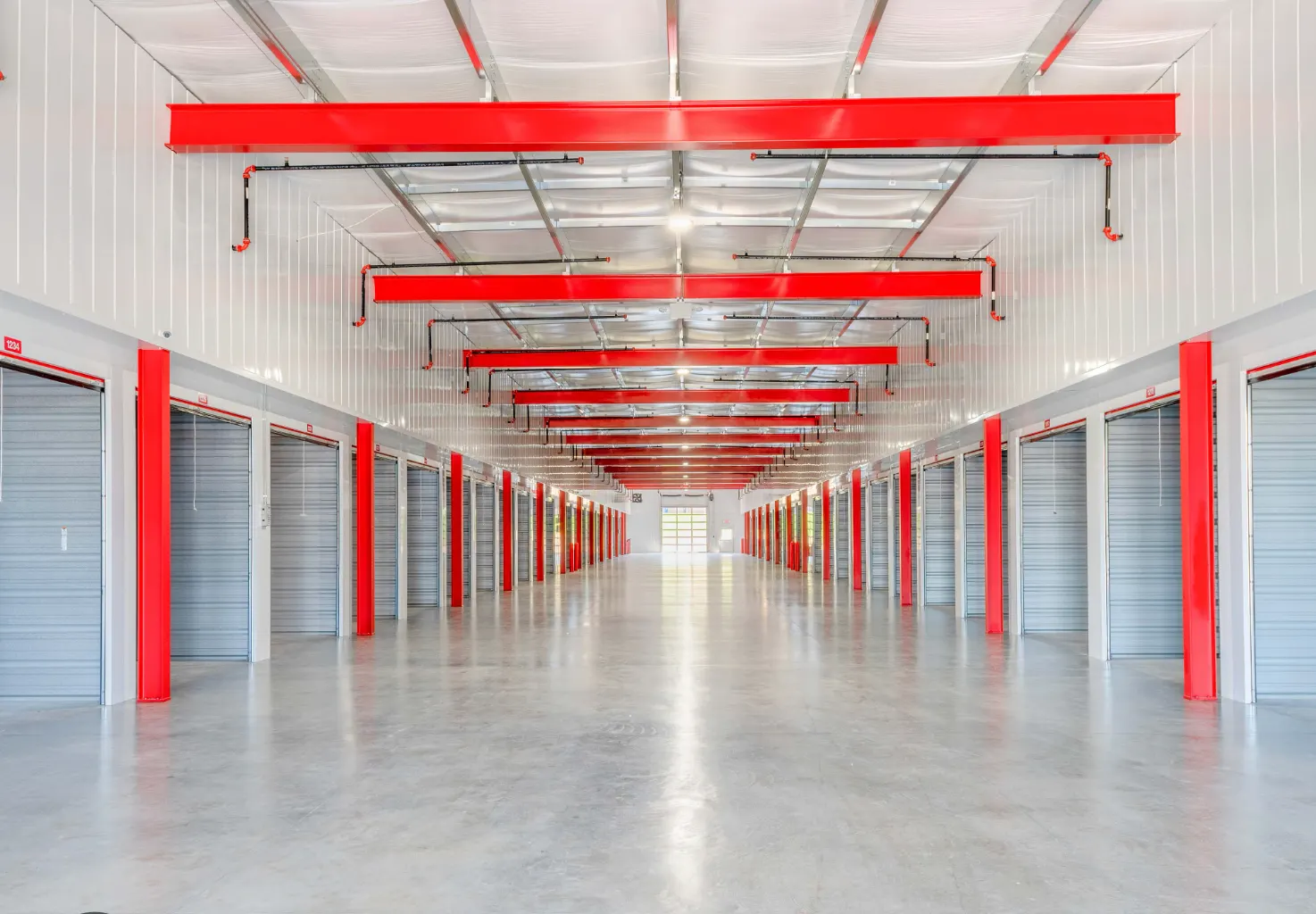
Big modern warehouse