The US Real Estate Sales & Brokerage industry is navigating a post-boom landscape in 2025, marked by shifting market dynamics and evolving strategies. Investors and developers are closely watching this industry’s financial performance, competitive moves, and regulatory changes to inform their decisions. This comprehensive overview examines the industry from financial, strategic, regulatory, and market-driven perspectives, drawing on the latest 2025 IBISWorld report. The goal is to provide a professional yet accessible analysis – from industry maturity and revenue trends to the impact of design and technology – and encourage further exploration of real estate insights.
Industry Maturity and Market Structure
The real estate brokerage sector in the US is a mature industry, deeply entrenched in the economy. It makes a significant contribution to GDP and operates under well-established regulations and professional standards. Rather than experiencing explosive new growth, the industry tends to adopt incremental innovations and efficiency improvements (like using AI tools or virtual reality tours) within an established framework. This focus on gradual innovation – as opposed to disruptive change – is a hallmark of a mature industry. Another sign of maturity is consolidation: recent years have seen large brokerage firms merge or acquire competitors to gain market share and economies of scale.
Despite its maturity, the industry is far from saturated. Ongoing population growth, urbanization, and migration trends continue to create fresh demand for real estate services across different regions. In other words, new housing developments, emerging cities, and shifting demographics keep opening opportunities for brokers and agents, preventing the market from becoming completely saturated. The market structure remains highly fragmented – thousands of brokerage offices and independent agents operate nationwide – yet the presence of franchise brands and big-name firms indicates an interesting dual nature. Overall, the industry stands as a large, established marketplace that is competitive and dynamic, requiring players to be both strategic and adaptable to thrive.
Revenue Performance and Profitability Trends
After the roller-coaster of the early 2020s, the industry’s revenue performance has settled into modest growth. Total industry revenue in 2025 is estimated at $241.3 billion, reflecting a compound annual growth rate (CAGR) of about 0.8% over the 2020–2025 period. This subdued growth rate is partly because the boom years of 2020–2021 (fueled by record-low mortgage rates and a home-buying frenzy) have been offset by a recent cooldown in sales. In fact, 2025’s revenue is expected to increase only about 1.0% from the prior year, as the market grapples with higher interest rates and limited housing supply. The industry also experiences high revenue volatility, with rapid swings in housing market activity directly impacting brokerage fees.
Profitability has been a mixed picture. Industry-wide profit margins are around 20% of revenue in 2025, which is a healthy figure but notably lower than the average for the broader real estate sector (where margins are closer to 30%). The cooldown in home sales after 2021 has put downward pressure on broker profits. The post-pandemic housing boom quickly gave way to a slump: existing home sales fell in 2022 and 2023, shrinking the pool of transactions from which brokers earn commissions. According to the National Association of Realtors (NAR), only about 4.06 million existing homes were sold in 2024 – a nearly 30-year low in volume. With fewer deals to go around, brokerage revenues and profits have dipped from their 2020 peaks. This volatility underscores the industry’s exposure to the housing cycle: when sales surge, brokers prosper, but when sales dry up, incomes tighten quickly. In short, the profit trend has been one of feast and famine, and maintaining stable earnings is an ongoing challenge.
Competitive Landscape: Fragmentation and Technology Disruptors
One of the defining characteristics of real estate brokerage in the US is its highly fragmented competitive landscape. There are low barriers to entry in becoming a real estate agent (typically just a state licensing exam and sponsorship by a brokerage), which means new agents and small offices constantly join the fray. In fact, about 88% of Realtors operate as independent contractors rather than traditional employees. Many agents hang their license with nationally franchised brokerage brands (like RE/MAX, Keller Williams, or Coldwell Banker), but they essentially run their own small businesses. This structure keeps formal market concentration very low – even the largest brokerage companies hold only a small slice of total industry revenue. Franchise networks might handle a large share of transactions, but that revenue is split among countless independent agents, diluting the market share of any one firm.
Competition is intense at both the local and national levels. The pandemic housing boom of 2020–2021 enticed a surge of new entrants into the profession, increasing the number of licensed agents and upping competitive pressure in many markets. Established brokerages have had to fight harder to maintain market share and profits as these new agents crowd the field. To stand out, firms large and small are employing aggressive marketing and differentiation strategies. Some traditional brokerages emphasize full-service, personalized transaction support, while newer models compete on technology and pricing.
Technology-driven disruptors have further fragmented the market and altered competitive dynamics. For example, iBuyer companies like Opendoor and Offerpad introduced models where homes are bought and sold rapidly using algorithmic valuations – providing sellers an alternative to the traditional agent listing process. Likewise, listing platforms and hybrid brokers such as Zillow, Redfin, and Compass have challenged the status quo. These companies leverage online tools, big data, and consumer-friendly apps to attract clients, often with discounted commissions or salaried agents. Their rise means traditional brokers now compete not just with each other, but with proptech platforms that offer instant home value estimates, virtual tours, and streamlined digital transactions. The entry of tech-savvy players – for instance, Compass targeting upscale, data-driven marketing, or Redfin with its lower-fee model – has pushed the industry to innovate and adapt.
At the same time, the competitive landscape is seeing some consolidation trends typical of a mature industry. Larger brokerage enterprises have been merging or acquiring smaller independents to expand their geographic reach and client base. Well-known national brands (often franchises) are vying to build stronger presence in key markets through these acquisitions. The overall picture is a fragmented industry with thousands of players, where no single company dominates, yet pockets of concentration are forming as major firms scale up. For investors and developers, this means brokerage services can be highly localized – relationships with top local brokers matter – even as a few big names provide coast-to-coast coverage for multi-market needs.
Market Segments: Residential vs. Commercial Real Estate
Real estate brokerage spans multiple segments, primarily divided between the residential and commercial markets. Each segment has its own dynamics in the current environment:
- Residential Real Estate: Residential brokerage (home sales and rentals to individuals) is the largest segment by far, accounting for roughly three-quarters of industry revenue (about $177.8 billion of the total). This includes existing single-family homes, condos, townhouses, and smaller multi-unit properties sold to individual owners. In 2023–2024, the residential market experienced a significant slowdown. In fact, 2023 saw the fewest existing home sales in almost 30 years, and 2024 continued at a similar sluggish pace. NAR reported just 4.06 million homes sold in 2024, slightly below 2023’s volume and a historic low point. The causes were clear – high mortgage rates and soaring home prices, combined with a limited supply of homes for sale, priced many buyers (especially first-timers) out of the market. With fewer transactions, residential brokers have had to compete fiercely for listings. Homes that do sell are often at record-high prices, but the lack of volume has been the larger issue. Buyer behavior has shifted as well: many younger or first-time buyers are delaying purchases, while a growing share of sales activity comes from all-cash buyers or investors taking advantage of high rents. Notably, many existing homeowners have been reluctant to sell because they’re locked into ultra-low mortgage rates from prior years – they don’t want to trade a 3% loan for today’s 6–7% rates. This “lock-in” effect has further reduced mobility in the housing market.
- Commercial Real Estate: The commercial segment (brokering sales and leases of office buildings, retail properties, apartment complexes sold as investments, industrial facilities, etc.) went through a tough period during the height of the pandemic but is showing signs of recovery. Work-from-home trends dealt a blow to office space demand in 2020–2021, and many urban retail locations also struggled. By 2024, however, commercial activity is gradually rebounding. Office attendance and usage have begun to rise as big employers push for a return to the office. For instance, Amazon and other corporate giants implemented return-to-office policies in 2024/25, which helped normalize the office market closer to pre-pandemic levels. Brokers specializing in office and retail spaces have benefited from this uptick in demand for Class A offices and prime commercial locations. Even so, commercial sales and leasing volumes in 2024 remained a bit **below their pre-2020 highs】, as the sector recovers lost ground. There are bright spots: multifamily apartment buildings have been in high demand as rental markets stay strong (driven by those would-be homebuyers who are renting instead), and niche sectors like industrial warehouses, data centers, and cell tower sites are booming thanks to e-commerce and tech growth. These areas have kept commercial brokers busy even while offices and shopping centers regroup. Commercial brokerage often involves larger, more complex transactions (sometimes taking months to close), but successful deals can mean substantial commissions. In the current market, investor interest in income-generating properties – from big apartment complexes to logistics facilities – has provided a steady flow of business for commercial brokers.
It’s also worth noting an emerging hybrid trend: Build-to-Rent (BTR) developments. These are new residential communities (sometimes entire subdivisions of single-family homes or large multifamily complexes) built specifically for rental use, often by institutional investors. The rise of BTR projects has blurred the lines between traditional residential and commercial segments, since selling a whole BTR community can resemble a commercial transaction (with an investor buyer) even though the assets are homes. Brokers and agents are increasingly getting involved in marketing and transacting these BTR deals, which have gained momentum as rental demand stays high. The interplay of such trends means brokers must be versatile – one day they might be helping a family buy a suburban house, the next day brokering a multi-million-dollar sale of a rental housing portfolio.
Macroeconomic Influences: Impact of Mortgage Rates on Home Sales
The broader economic climate – especially interest rates, home prices, and construction costs – has a profound effect on real estate brokerage activity. Over the past two years, the impact of mortgage rates on home sales has been dramatic. As the Federal Reserve aggressively raised interest rates in 2022 and 2023 to combat inflation, borrowing costs for home loans skyrocketed. The average 30-year fixed mortgage rate, which bottomed out around 2.65% in 2021, climbed above 6.5% by 2023, reaching levels not seen in over a decade. According to Zillow, the jump in rates nearly doubled the average mortgage payment on a typical U.S. home compared to 2020. This rapid rise in financing costs crushed affordability for many buyers and deterred home purchases, particularly in the entry-level and mid-tier housing markets. Higher interest rates also discouraged existing homeowners from selling, since moving could mean forfeiting their current low mortgage rate for a much higher one on a new home. The result was a sharp contraction in home sales – a major reason 2023–2024 sales volume was so low.
Home prices themselves form the other side of the affordability coin. Despite the drop in sales, home prices have stayed high (and even continued rising in many areas) due to tight supply. Nationally, home prices have climbed roughly 47% since the start of 2020. Realtor forecasted another 3.7% increase in home sale prices in 2025. The combination of high prices and high rates created an affordability squeeze that forced numerous would-be buyers to remain renters. It also meant that those who did buy a home often had to stretch their budgets significantly or put more money down. For brokers, rising prices have a silver lining – commissions are typically a percentage of the sale price, so higher prices can mean larger commission per transaction. However, that benefit has been outweighed by the drop in the number of transactions. Essentially, volume dried up even as prices stayed strong, which has challenged brokers to find creative ways to generate business.
A critical factor behind lofty home prices is the lack of housing inventory for sale. By early 2025, the nationwide inventory of homes on the market was equivalent to only about a 3.5-month supply at the current sales pace. For context, a 6-month supply is considered a balanced market between buyers and sellers, so we are well below that threshold. This scarcity is fueled by multiple factors: homeowners staying put longer (on average, people now live in their homes nearly twice as long as they did in the mid-2000s), hesitant sellers, and a slow rate of new listings. In a January 2025 survey, more than one-third of U.S. homeowners said they “would never sell” their homes, highlighting how entrenched the inventory crunch has become. Fewer homes for sale means more competition among agents for the listings that do exist, and it contributes to continual home price appreciation as buyers bid up what little is on the market.
Looking ahead, interest rate movements will remain a key swing factor for the industry. There is some hope that mortgage rates may ease in late 2024 and 2025 if the Federal Reserve begins to cut benchmark rates (as some forecasts predict a couple of rate cuts in 2025). Even a moderate decline in mortgage rates could unleash pent-up demand from buyers who have been sitting on the sidelines. Conversely, if rates stay “higher for longer,” brokers might continue to focus on clients less sensitive to rates (such as all-cash buyers, investors, or trade-down buyers) to keep sales moving.
Construction costs and broader economic trends also play a role. The cost of building new homes has surged in recent years due to inflation in materials like lumber, steel, and concrete, as well as labor shortages. Higher construction costs inevitably mean higher prices for newly built homes, which in turn make existing homes more attractive bargains for buyers. This dynamic has influenced brokerage strategy: agents understand that if new construction in a market is very expensive, they may steer buyers toward resales, and they use that in marketing. Additionally, limited new construction (partly due to costs and partly due to land and zoning constraints) has concentrated buyer demand on existing homes, which boosts business for brokers dealing in resales.
On the policy front, there have been calls to loosen regulations and increase housing supply – for example, initiatives to ease zoning rules or open up more land for development. Any successes on that front (at local or federal levels) that lead to more homebuilding could gradually help inventory levels. The Congressional Budget Office projects housing starts will strengthen to about 1.68 million units annually from 2025 to 2029, up from recent years. If that holds true, by the later 2020s there may be somewhat more balanced conditions, with increased supply easing home price growth and stimulating more sales (a scenario that would benefit brokers). In the near term, though, brokers must contend with an environment of high rates, high prices, and low inventory – a challenging trio that puts a premium on skillful marketing and client guidance.
Architectural and Urban Development Trends Shaping Brokerage
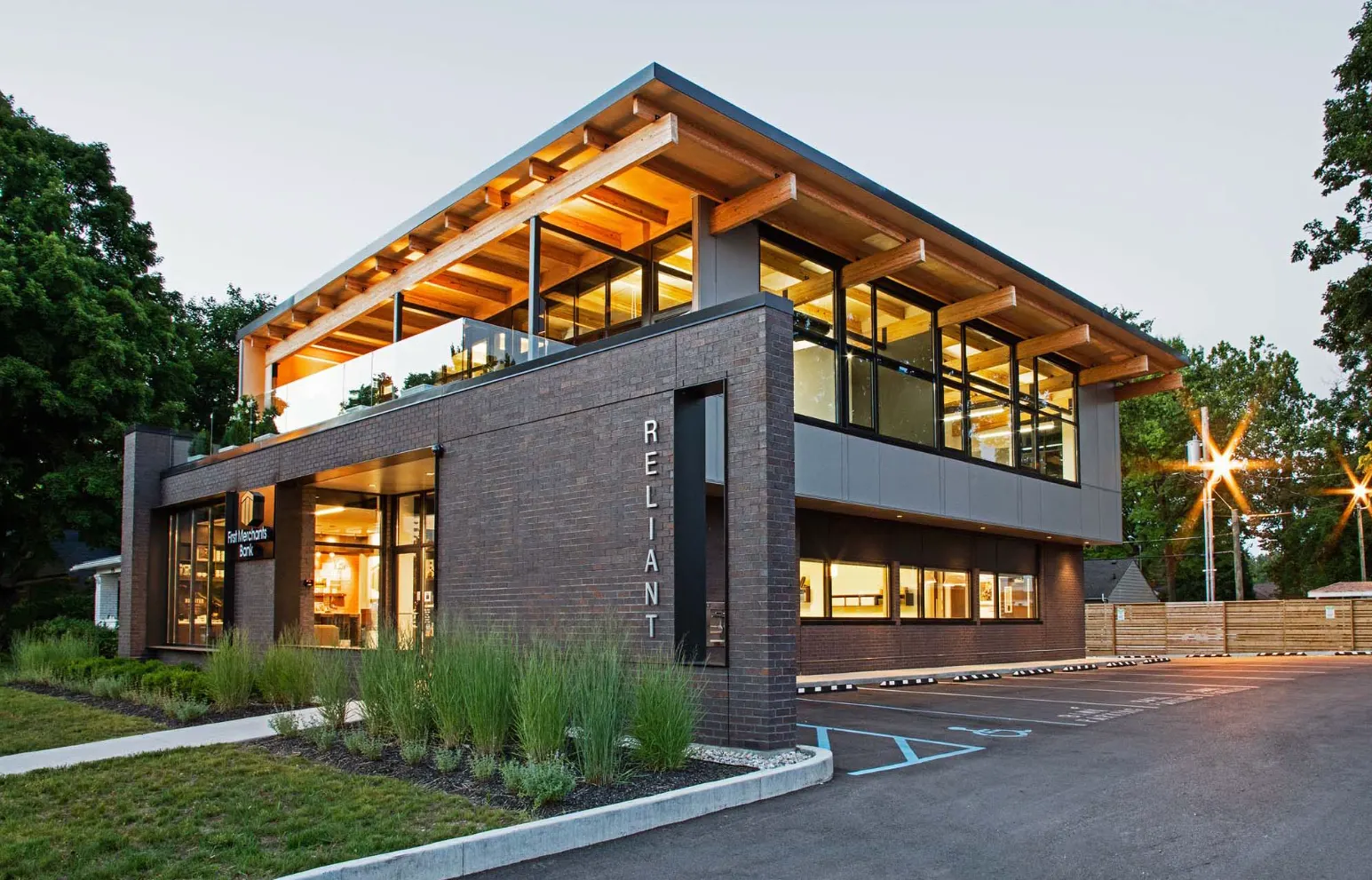
Beyond economics, architectural and urban development trends are subtly reshaping the brokerage business. One notable trend is a preference for high-quality, modern commercial spaces – notably Class A office buildings. In the wake of the pandemic, many companies downsized their office footprints, but they also prioritized quality over quantity: demand has picked up for premium offices with top-notch amenities, advanced air systems, and attractive designs that can lure employees back to the workplace. This has meant that brokers who handle office leasing/sales are focusing on modern Class A buildings and newly renovated spaces, which are seeing healthier demand than older Class B/C offices. As the office market recovers, cities with state-of-the-art office towers in prime locations are experiencing increased transactional activity. The IBISWorld report noted that despite high office vacancy rates overall, demand is strongest for high-quality assets like Class A spaces, and brokers are leveraging this by aggressively marketing those properties to tenants and investors. With limited new office construction in the pipeline, much of this activity revolves around trading and repurposing existing buildings – a trend that plays to brokers’ strengths in connecting sellers and buyers for trophy assets. For developers and investors, it signals opportunity in retrofitting or upgrading buildings to Class A standards, knowing brokers can find eager occupants for top-tier space.
In the residential realm, design and development trends are responding to the housing affordability crisis and lifestyle shifts. One big movement is the growth of Build-to-Rent (BTR) communities, as mentioned earlier. These are often suburban subdivisions of single-family homes or clusters of townhomes that are built with the intention of being rented, not sold to individual homeowners. The design ethos here is to offer the feel of a traditional home (with a yard, etc.) but operated like a rental – providing flexibility to tenants. Brokerages are increasingly involved in BTR by helping large investors acquire these properties or by advising developers on what rental tenants seek (since that affects the eventual sale value of the whole project). Architectural trends in BTR and multifamily also emphasize amenities and quality-of-life features: from co-working spaces and gyms (acknowledging work-from-home needs) to energy-efficient designs that lower utility costs. All these factors influence how brokers pitch properties. For instance, an agent might highlight that a new apartment building has sustainable design certifications or that a build-to-rent home comes with smart home technology – features that resonate with modern renters and therefore with investors valuing future tenant demand.
Urban development patterns also dictate brokerage focus. Sun Belt cities and fast-growing metros have seen a lot of new development (both commercial and residential), which keeps brokers busy with new inventory to sell or lease. In contrast, some high-cost urban areas are emphasizing redevelopment – converting obsolete office buildings into apartments, or repurposing malls and warehouses – which brokers must understand to market these converted spaces effectively. The ability to navigate zoning changes, historic building renovations, and mixed-use developments has become part of the skill set for commercial brokers in particular.
Finally, design trends in real estate marketing have changed how brokers showcase properties. High-end properties now often involve architectural storytelling – emphasizing design pedigree, sustainability features, or unique urban design elements – to appeal to buyers’ and investors’ tastes. For example, a Class A office broker might highlight a building’s “touchless entry systems and open-floorplan collaboration spaces” as selling points reflecting post-pandemic design priorities. A residential broker might play up a home’s architectural style (modern farmhouse, mid-century modern revival, etc.) to connect with buyer preferences. In all, while architectural trends might not be the central narrative in brokerage, they form a critical backdrop that influences what inventory is available and how that inventory is positioned in the market. Brokers who stay abreast of these trends – be it the popularity of remote-work-friendly home designs or the demand for green-certified buildings – can better advise clients and close deals.
Technology Transforming Real Estate Brokerage
Technology’s role in the real estate brokerage industry has expanded enormously, turning what was once a paper-driven, face-to-face business into a tech-augmented service. From artificial intelligence (AI) to automated valuation models (AVMs), new tools are transforming how brokers operate and deliver value to clients.
One of the most impactful advancements has been the rise of AVMs for property valuation. AVMs use AI algorithms and vast datasets (recent sales, property characteristics, neighborhood trends, tax assessments, etc.) to instantly estimate home values. These models have become increasingly common and accurate, providing a quick baseline price for properties. Brokerages use AVMs to help recommend listing prices to sellers or to advise buyers on competitive offer amounts. Mortgage lenders and appraisers also use them for faster underwriting. The net effect is a speeding up of transactions – tasks that used to take days waiting for a human appraiser’s report can sometimes be done in minutes with an AVM. That said, top agents combine these automated valuations with their local market expertise to fine-tune pricing (often an AVM can’t account for a unique feature or the “feel” of a neighborhood like a human can). Still, embracing AI-driven valuation is now a key competitive advantage, as it reduces human error and gives clients data-backed confidence in pricing.
Virtual reality (VR) and digital tours are another tech trend making waves. Especially accelerated by the pandemic, virtual home tours and 3D walk-throughs have become mainstream for listings. Brokerages deploy high-definition 360° cameras and VR software to create immersive online tours, allowing buyers to “walk through” a property remotely. This not only widens the pool of potential buyers (including out-of-town or international investors) but also saves time by filtering serious interest – clients can eliminate unsuitable options without an in-person visit. Some forward-thinking firms are even using augmented reality (AR) to let clients visualize renovations or staging changes on the fly.
On the transaction side, digital transaction management platforms (such as DocuSign, Dotloop, or blockchain-based systems) have streamlined the once-cumbersome process of paperwork, escrow, and closing. Many brokers now offer secure client portals where buyers and sellers can log in, view documents, check deal status, and communicate, creating a more transparent and efficient experience. Blockchain technology and smart contracts are being tested in some places to handle things like title transfers and escrow in a tamper-proof digital ledger, which could become more prevalent in coming years. While these haven’t replaced traditional methods yet, the industry is incrementally adopting such innovations to reduce transaction friction.
It’s important to note that, as IBISWorld observes, these tech changes have been evolutionary rather than revolutionary. Technology is largely being used to enhance the existing brokerage model, not upend it. For example, AI tools help streamline processes and improve efficiency, but buying or selling a home often still benefits from human judgment, negotiation, and emotional intelligence. Many clients use online platforms to search listings, yet they still turn to real estate agents for expertise in pricing, local market conditions, and handling the complexity of deals. In that sense, technology has shifted brokers into more of an advisory and analytical role, handling the nuanced tasks that algorithms can’t.
In the competitive arena, brokers who are early adopters of tech have gained an edge. Firms like Compass have built their brand on offering agents superior data analytics and marketing tools (e.g. using algorithms to identify likely movers and target marketing). Traditional firms have also upped their tech game, partnering with proptech startups or developing in-house apps for their agents. Meanwhile, disruptors like Zillow and Redfin have leveraged technology to offer consumers different service models – Zillow with its ubiquitous home search portal and pricing “Zestimates,” and Redfin with a heavily online platform and salaried agents at lower fees. These models use tech to cut costs or attract eyeballs, forcing the industry incumbents to respond in kind.
Finally, Artificial Intelligence in marketing has emerged – from AI-driven ad targeting to chatbots that handle initial customer inquiries on brokerage websites. Some agents use AI to automatically follow up with leads or to predict which past clients might be ready to move again based on life events. The consensus in 2025 is that tech integration is no longer optional; it’s a key success factor (discussed below) for brokerage businesses. Those who leverage AI, big data, and digital platforms effectively are more likely to capture the new generation of clients who expect on-demand information and seamless digital experiences in their real estate transactions.
Key Success Factors for Brokers and Agencies
In such a fragmented and competitive industry, certain key success factors distinguish the top-performing brokerages and agents. These factors span marketing, operational excellence, and strategic positioning:
- Strong Marketing & Branding: Successful brokers excel at effective product promotion, making their services and listings stand out in a crowded marketplace. This means investing in advertising campaigns – from traditional yard signs and direct mail to savvy social media and search engine marketing. A strong brand (personal or company) helps instill trust. High-visibility marketing, such as maintaining a polished website with virtual tours and active Instagram/Facebook pages showcasing sold homes, can create a steady pipeline of client leads. In short, those who market well often capture disproportionate attention (and listings) in their local markets.
- Licensing & Professional Expertise: Real estate is a regulated industry, so ensuring proper licensing and credentials is fundamental. Top agencies not only have all their agents fully licensed, but also encourage additional certifications (e.g. REALTORS® membership, specialist designations like CRS or CCIM for commercial). This commitment to professionalism goes hand-in-hand with keeping up-to-date on laws, contracts, and ethical standards. In an era of increasing legal scrutiny (for example, recent commission regulations and antitrust lawsuits have prompted changes in how brokers disclose fees), being knowledgeable and compliant is a key differentiator. Clients and investors gravitate to brokers who demonstrate expertise and integrity in their practice.
- Local Presence & Networks: Geographic proximity to key markets and a strong local network can make or break a brokerage. Real estate is inherently local – each city or neighborhood has its own dynamics. Successful brokers make sure to operate in high-demand areas (or have teams covering various regions) to be close to the action. They often maintain an office in a high-visibility location (e.g. a busy downtown street or prominent storefront) to attract walk-in clients and boost brand visibility. Additionally, building relationships in the community is crucial: top agents cultivate networks of past clients, local business owners, and referral partners. Satisfied clients become advocates who refer friends and family, feeding the broker’s business through word-of-mouth. For developers and investors, choosing brokers with deep local insights and connections can significantly speed up finding the right deals or buyers.
- Adaptability & Diversified Services: The real estate market can turn on a dime, so adaptability is a key trait of long-term winners. This includes diversifying into multiple segments or services. Many resilient brokerages handle both sales and rentals, residential and commercial, or offer related services (property management, consulting) to smooth out cycles. For example, if home sales are slow, an agent might shift focus to brokering rentals or helping investors find income properties. In 2023–25, we’ve seen agents pivot to new construction sales and build-to-rent deals as existing home listings dried up. Embracing technology is also part of adaptability – those who quickly learned to host Zoom open-houses or use electronic signatures kept deals flowing during disruptions. Essentially, success comes from not relying on a single trick: the best brokers continuously learn and adjust strategies to capitalize on whatever segment is active, ensuring they can serve the market’s current needs.
- Skilled Negotiation & Client Service: At its heart, brokerage is a people business, and soft skills matter. Top producers tend to be excellent communicators and negotiators. They build strong relationships with clients, which often leads to repeat business and referrals. Whether it’s negotiating a price, soothing a nervous first-time buyer, or providing savvy advice to a seasoned investor, the human touch distinguishes great brokers. Many successful agents position themselves as trusted advisors rather than just salespeople. They offer responsive, concierge-level service – for instance, guiding a client through staging and prepping a home for sale, or providing detailed market analysis to help a buyer make an informed decision. In an age where online information is abundant, the personal guidance and negotiation acumen of a skilled broker becomes a primary value-add. Those who cultivate these skills and a reputation for honesty, tenacity, and customer care often dominate their local markets (regardless of which firm they’re with).
By focusing on these key success factors – marketing, professionalism, location, adaptability, and service quality – brokers and agencies can enhance their competitiveness. Investors and developers evaluating broker partners should consider these factors as well, looking for professionals who check all these boxes to ensure their real estate transactions are handled effectively.
Industry Outlook: Investment Trends and Future Opportunities
Looking forward, the outlook for the US real estate sales and brokerage industry is one of cautious optimism with a moderate growth trajectory. According to IBISWorld’s projections, industry revenue will rise at a CAGR of roughly 2.3% from 2025 to 2030, reaching about $270.8 billion by 2030. This suggests a steady if unspectacular growth rate, reflecting an expectation of gradually improving market conditions. We are unlikely to see the frenzy of 2020-2021 return in the short term, especially with mortgage rates expected to remain higher than the rock-bottom levels of that period. However, as inflation comes under control and interest rates potentially stabilize or inch down, many real estate investment trends could turn positive:
- Residential Market Rebound: There is significant pent-up demand for homeownership. Many younger households delayed buying during the past two years due to costs; they could re-enter the market if mortgage rates dip to more affordable levels. Even a small improvement in interest rates or a plateau in prices could unlock more sales. Additionally, if housing inventory increases (through more construction or more listings from existing owners), it would likely lower home prices and boost sales volumes, directly benefiting brokers. Broadly, the demographic tailwinds (Millennials and Gen Z entering peak homebuying age) and continued immigration suggest housing demand will persist. The industry may thus see a return to healthier transaction volumes in the coming years, though probably not a wild boom.
- Commercial Real Estate Brokerage Outlook: The commercial side faces a nuanced future. Sectors like industrial and multifamily should remain strong, as they are underpinned by e-commerce and housing needs. The office sector is more uncertain – much depends on the trajectory of hybrid work. But if the economy stays robust and companies continue pushing at least partial return-to-office, we could witness a gradual absorption of vacant office space and even a revival of office construction in key markets. Retail real estate is evolving (with more focus on experiential retail and mixed-use developments), which could create new brokerage opportunities in repurposing properties. Commercial real estate brokerage is expected to pick up momentum as investors seek deals in a higher-interest-rate environment – often, commercial assets trade more when investors can buy at lower prices or higher cap rates, which is starting to happen. This could mean an uptick in commercial property sales and refinancing transactions, keeping brokers in demand.
- Continued Fragmentation vs. M&A: The industry will likely remain fragmented, but we can expect ongoing consolidation efforts. Well-capitalized brokerage firms (including some backed by private equity) will continue to acquire smaller boutiques to expand their footprints. At the same time, many independent agents may choose to join larger teams or networks for leads and support. The net effect might be a slightly higher market share for the top 10 firms by 2030 than today, but given the sheer number of agents in America, the industry should still be quite fragmented. For investors, this means you’ll have plenty of brokerage options, but the scale and resources of who you work with can vary widely.
- Technology and Innovation: By 2030, technology’s role will be even more pronounced. We may see AI-driven analytics advising investors on which properties to buy/sell, or more widespread use of blockchain for property transactions. Virtual transactions could become normal – imagine a future where an investor in New York buys a commercial property in Texas after touring it via VR and signing contracts on a blockchain platform, all orchestrated by a tech-enabled broker. Such efficiencies could reduce transaction times and costs, potentially squeezing traditional commission structures. Brokers might shift to more consultative roles, charging for their expertise in complex deals or portfolio strategy, rather than purely as transaction intermediaries. The ones who embrace and lead with technology are likely to capture a larger share of the high-end market.
- Regulatory Environment: The regulatory landscape will also shape the outlook. Recently, there have been antitrust lawsuits and settlements aiming to reform how residential agent commissions are handled (for instance, moves toward requiring buyers to pay their brokers directly, rather than via a split of the seller-paid commission). If such changes take hold industry-wide, it could upend the traditional 5–6% commission model and introduce new fee structures (flat fees, hourly consulting fees, etc.). Brokerages will need to adapt their business models – possibly by demonstrating more tangible value to justify fees, or by becoming more efficient to operate on thinner margins. On the positive side, any regulatory efforts to boost housing supply (e.g. zoning reform for higher density) would eventually increase transaction volumes, providing a lift to brokerage activity.
In summary, the US real estate sales and brokerage industry is poised for sustainable growth and transformation. It’s moving past the extreme highs and lows of the early 2020s into a phase of recalibration. Investors and developers can expect a market where interest rates and inventory largely dictate the tempo of sales. Commercial and residential segments will both offer opportunities, though in different forms – residential in serving the evolving needs of homeowners and renters, commercial in helping reimagine the post-pandemic urban landscape. Importantly, success in this industry will hinge on strategic agility: brokers (and their clients) must be ready to pivot with market signals, adopt new technologies, and leverage both financial savvy and local market knowledge.
For readers looking to stay ahead in this space, continuing to monitor industry analyses and expert commentary is crucial. By understanding the factors outlined above – from macroeconomic influences like mortgage rates to emerging trends in real estate investment and technology – investors and developers can make more informed decisions and capitalize on the opportunities in America’s ever-evolving real estate brokerage landscape.
Sources:
Primary Source
- IBISWorld (2025). Real Estate Sales & Brokerage in the US – Industry Report – The backbone of the article, covering financial performance, industry structure, competitive forces, and forecasts.
Key Industry Associations & Data Providers
- National Association of Realtors (NAR) – Data on existing home sales, homebuyer trends, commission structures, and membership profiles.
- Federal Reserve (FOMC projections, Mortgage Rate Data) – Interest rate decisions, mortgage rate impacts, and macroeconomic outlook.
- Realtor – Forecasts on housing prices, affordability studies, and homebuyer surveys.
- Zillow Research & Zillow Home Value Index – Housing price trends, mortgage payment estimates, and inventory analysis.
- Redfin Data Center – Housing supply, demand, and buyer activity trends.
- Moody’s Analytics / MSCI Real Assets – Commercial real estate vacancy rates, sales volumes, and pricing trends.
- CommercialEdge & CBRE Research – Office and commercial property market reports, including Class A vs. B/C demand.
- Colliers & JLL Research – Insights on office and retail leasing, rent rates, and regional performance.
Government & Regulatory Sources
- U.S. Census Bureau – Demographic trends, migration data, and housing starts.
- U.S. Department of Housing and Urban Development (HUD) – Housing policy, affordability initiatives, and market research.
- Consumer Financial Protection Bureau (CFPB) – Rules on Automated Valuation Models (AVMs) and lending standards.
- Department of the Interior / Bureau of Land Management (BLM) – Land-use and federal land release policies that affect housing supply.
- Congressional Budget Office (CBO) – Forecasts for housing starts and broader economic projections.
Architectural & Design Trends (supporting the “architectural point of view”)
Urban Land Institute (ULI) – Trends in office conversions, mixed-use developments, and Class A office demand.
American Institute of Architects (AIA) Market Trends Reports – Sustainable design, build-to-rent housing, and adaptive reuse.
National Association of Home Builders (NAHB) – Data on construction costs, housing starts, and design trends shaping residential development.
Modern Class A office building exterior / facade