Robust Rental Demand in 2025 Driven by Demographics
Even as economic growth moderates, rental demand for multifamily housing remains robust going into 2025. Key demographic forces are at play: Millions of Gen Z and younger Millennial adults are aging into prime renting years, boosting household formation. In fact, Americans born in the 1980s–2000s have formed households at a rapid clip – Gen Z alone created 8.1 million new households from 2017 to 2022, most of which became renter households. Additionally, high immigration levels and sustained job growth are contributing to new rental demand. Another major driver is the affordability gap between renting and owning. With mortgage rates near 7% and home prices high, owning a home costs about 25% more per month than renting on average, a spread not seen in 15 years. The record high cost of homeownership – alongside a shortage of homes for sale – is forcing many young adults to remain renters, or even encouraging former would-be buyers to stay in the rental market. All these factors create demographic tailwinds that are expected to keep apartment demand resilient in 2025 and beyond. Industry experts are bullish that favorable demographics, job growth, and the high cost of single-family housing will sustain strong rental demand for the next few years.
This solid renter demand has been evident in recent absorption data. Apartment move-ins have far outpaced move-outs through 2024, even in the face of economic uncertainty. For example, nearly 102,000 net units were absorbed in Q1 2025, a 12% increase over the prior year, marking one of the strongest periods of leasing in recent history. Similarly, in the third quarter of 2024, net absorption hit its highest level since 2021, as 176,000 more units were leased than vacated nationwide. This robust demand helped push occupancy rates up slightly in late 2024, despite the headwinds of record new construction. Overall, U.S. multifamily occupancy remains in the mid-90% range, reflecting a healthy tenant pool and need for rentals even amid economic headwinds. Renters are not only plentiful – they’re also financially solid: industry data shows delinquencies on rents have stayed near historic lows through 2024, indicating that most renters can meet their housing costs even as rents rose. In short, the fundamental demand picture for apartments is strong heading into 2025, underpinned by demographics, the tight single-family housing market, and steady employment gains.
Wave of New Supply Pushes Vacancy to Decade High
While demand is vigorous, the supply side of the equation is also surging. In the aftermath of the pandemic housing boom, developers ramped up apartment construction to levels not seen in decades. New multifamily completions hit a 35-year high in 2023, and 2024 delivered the most new units in roughly 40 years. According to CoStar data, around 636,000 multifamily units were on track to open in 2024 – an astonishing wave of inventory that even exceeded the annual deliveries of the 1980s construction boom. Major Sun Belt metros like Dallas, Phoenix, Houston, Atlanta, Orlando, and Austin led the nation in new apartment construction, accounting for a large share of the 2024 delivery pipeline. Nationwide, rental inventory expanded roughly 17% in 2023 alone as this surge of projects came online.
The consequence of this supply influx has been a notable rise in vacancy rates. After hitting historic lows around 2.5% in 2021, apartment vacancies have steadily climbed as new units outpaced demand in some markets. By late 2024, the national multifamily vacancy rate reached approximately 7.8% – the highest level in about a decade. This is a marked change from the ultra-tight rental market of just a few years ago. Industry reports confirm that vacancies have inched up amid the record deliveries, even though underlying demand is strong. For instance, Apartments (a CoStar Group division) data showed nationwide vacancy at 7.8% as of Q3 2024, up from roughly the mid-5% range a year prior. One market observer noted that “if not for the record deliveries coming online, the apartment market would be experiencing fantastic rent growth given the well above-average demand” – underscoring how the supply glut has temporarily outstripped even robust demand. In many cities, 2024’s new apartments caused vacancies to rise to their highest since the early 2010s, with MultiHousing News reporting a 5.8% vacancy in Q3 2024 – the highest since 2011.
Crucially, this oversupply situation is concentrated in certain regions and property classes. Sun Belt metros and luxury Class A buildings have borne the brunt of rising vacancies, because disproportionate new construction has been aimed at high-end apartments in fast-growing Southern and Western cities. For example, Austin, TX saw rents drop ~5% year-over-year in late 2024 as the metro struggled to digest an onslaught of new units, sending its vacancy rate into double digits. Other high-supply markets like Raleigh, Jacksonville, Phoenix and Atlanta likewise experienced rent declines of 2–4% and elevated vacancies in 2023–2024. By contrast, markets with less new construction (especially in the Midwest and Northeast) have maintained tighter occupancy and even continued rent growth. This pattern shows that supply-demand dynamics are highly local – cities that avoided the construction frenzy or have slower growth (e.g. many in the Midwest) are seeing much healthier fundamentals than the overbuilt Sun Belt markets.
The good news for property owners is that 2024 likely represented the peak of the supply wave. Housing starts for multifamily projects have fallen sharply due to higher financing costs and construction expenses; by late 2023, new multifamily starts were down ~30% year-over-year. Industry forecasts suggest that deliveries will begin to pull back in 2025 and drop even more steeply by 2026. Yardi Matrix, for instance, projects a significant decline in new apartment completions after this year, with 2025 seeing fewer deliveries and 2026 even fewer. This means the temporary glut of units should be a short-term issue. In the meantime, the market is in a period of “frictional” excess supply that is keeping vacancies higher and rent growth lower in the very near term. Renters are benefitting from more choices and even some concessions (move-in specials) creeping back in certain cities as landlords compete for tenants. But as demand slowly catches up to the new supply, vacancy rates are expected to stabilize and even inch back down by late 2025, assuming the economy stays on track. Indeed, some analysts predict the national vacancy rate will improve to around 5% by the end of 2025 as the construction pipeline shrinks and absorption remains above average. In short, 2025 represents a turning point where the record construction of recent years begins to taper off, allowing the strong underlying demand to reduce the vacancy overhang.
Rent Growth Slows but Remains Positive
The push-and-pull between surging supply and strong demand has translated into much slower rent growth in the multifamily sector, compared to the red-hot gains seen earlier in the decade. After an unprecedented spike in 2021 (when rents nationally jumped around 15% year-over-year at the peak of the post-pandemic frenzy), rent growth decelerated sharply through 2022 and 2023. By mid-2023, annual rent increases had cooled to roughly 1% or less, a far cry from the double-digit growth of two years prior. In fact, one analysis found national multifamily rents were up only about 1% from April 2023 to April 2024, essentially flat. Another data source showed that by late 2024 the national median rent was actually slightly belowits level one year earlier (-0.6% year-over-year), reflecting minor declines in some markets. Simply put, rent growth hit the brakes in 2023–2024 under the pressure of new supply. Landlords in markets like Austin and Phoenix have had to offer discounts or hold rents steady to fill new units, leading to flat or negative rent trends in oversupplied locales. Even on a national basis, effective rents dipped modestly in some quarters of 2023 (e.g. the U.S. median rent fell 0.6% in December 2024).
However, it’s important to note that rent growth has not turned deeply negative at the national level – it has simply normalized to a low single-digit pace. Many markets (especially in the Northeast and Midwest) continued to see moderate rent increases in 2023, offsetting the declines in Sun Belt markets. For instance, cities like Washington D.C., Richmond, VA, and Detroit posted annual rent gains around 3.4–3.5% in Q3 2024, topping the national charts. Overall, rents have essentially plateaued after the huge run-up of 2021–2022, and in some segments even slipped from the peak – as of late 2024 the national median rent was about $50 lower than its all-time high in 2022. This plateau is giving renters some breathing room; combined with wage growth, it has slightly improved affordability. Indeed, after years of outpacing incomes, rent growth fell below wage growth in 2023, meaning renting became a bit more affordable relative to earnings. This dynamic is a welcome relief to renters, though it may be temporary as the market finds a new equilibrium.
Looking ahead, experts forecast that rent growth in 2025 will stay positive but modest. Multiple industry forecasts **converge around the 2% range for national rent increases in 2025. Freddie Mac’s multifamily outlook, for example, projects about +2.2% rent growth in 2025, which is slightly below the long-term average of ~2.8%. Similarly, CBRE’s base case predicts around 2.6% rent growth in 2025 as the market rebalances. In other words, landlords can likely expect rents to rise a bit faster than inflation, but nothing like the surge experienced in 2021. This level of growth is in line with historical norms and reflects the tug-of-war between strong demand and the tail end of the supply spike. With vacancy rates still above normal, property owners will be incentivized to prioritize occupancy over aggressive rent hikes, capping the pace of rent increases. In fact, revenue growth (rent times occupancy) for landlords is forecast to be only around 2% in 2025, since any rent upticks may be partially offset by slightly higher vacancy on average.
By late 2025 and beyond, there is potential for rent growth to accelerate again once the excess supply is absorbed. As noted, new construction is set to decline, which could spark a new round of rent growth in 2026 when fewer new units are competing with existing properties. Some analysts are cautious for 2025 (with Yardi Matrix predicting only +1.5% rent increase for the year), but most agree the direction is upward thereafter. Markets with limited supply pipelines – often in the Northeast and Midwest – should continue to see above-average rent gains, while high-supply Sun Belt metros may lag until their glut is worked off. On the whole, 2025’s rent growth is expected to be below the long-term trend but still in positive territory. For renters, that means leasing costs won’t skyrocket, but they likely won’t drop much further either, barring a major economic downturn. And for owners, modest rent inflation coupled with steady demand should keep income streams growing, if slowly. The era of double-digit rent surges is over for now, but the multifamily sector is forecast to experience stable if unspectacular rent increases in the coming year.
Investment Trends: Higher Rates Reshape Valuations
On the investment and finance side of the multifamily sector, the past two years have brought a significant market reset. With the Federal Reserve’s interest rate hikes pushing borrowing costs to their highest since the Global Financial Crisis, apartment investors have had to adjust to a new capital markets reality. Perhaps the biggest impact of rising interest rates has been on property valuations and cap rates. After peaking in early 2022, apartment property values have fallen by roughly 20–25% on average nationwide. One industry analysis noted that multifamily asset values were down about 26% from their all-time highs as of 2024. This decline is a direct result of cap rates (the yield an investor expects from a property) expanding in response to higher financing costs. Cap rates for multifamily deals, which hit record lows around the 4% range in 2021, have now risen into the 5%–6% range on average. In fact, national cap rates increased by an estimated 83 basis points in 2022–2023, and a further ~30 bps in early 2024, according to CoStar data. This roughly 1.1%+ jump in cap rates (from ~4.5% to ~5.6% on average) accounts for the corresponding drop in prices. Investors today simply demand higher yields to compensate for more expensive debt and a less frenzied market environment.
The spike in interest rates (and resulting hit to values) led to a sharp pullback in transaction activity in 2022–2023. Commercial real estate sales volume in 2023 was down about 50% from 2022’s pace, and multifamily was no exception. Many sellers were unwilling to accept lower prices, and buyers faced challenges obtaining financing at reasonable rates. The result was a stalemate in which deal volume plummeted. Multifamily investment sales totaled around $340 billion in 2022 (a banner year), but dropped to roughly $200 billion or less in 2023, according to market estimates. However, heading into 2024 and 2025, there are signs that the investment market is finding its footing again. Property price declines began to moderate in late 2024 as sellers adjusted expectations and interest rates showed signs of stabilizing. Even though rates remain elevated, cap rates have largely flattened out by early 2025 – meaning values are approaching a new equilibrium. With pricing resets mostly taken into account, some opportunistic investors are coming off the sidelines. In 2024, a few high-profile multifamily acquisitions signaled renewed confidence: for example, KKR’s purchase of 5,200 apartments for $2.1 billion and Blackstone’s $10 billion takeover of a REIT that owns thousands of units. These big deals suggest that institutional investors believe rent growth and values will soon start rising again, so they are positioning to ride the recovery.
Market forecasts reflect a cautious optimism for investment in 2025. Freddie Mac expects multifamily transaction volume to pick up to about $320 billion in 2024 and reach $370–$380 billion in 2025, regaining a substantial portion of the ground lost in 2023. Likewise, CBRE’s investor surveys indicate multifamily remains the most preferred real estate asset class for 2025, thanks to its solid fundamentals. One reason is that rental demand is viewed as structurally durable (people always need housing), and there’s a persistent housing shortage longer-term (more on that below). Additionally, many expect the interest rate environment to improve by late 2025, which could provide upside to those who buy now. The Federal Reserve has signaled it may start cutting rates in 2025, and bond market forecasts suggest the 10-year Treasury yield could fall to around 4% by end of 2025 (from ~4.5% in late 2024). If financing costs ease, cap rates might compress again – indeed, Forbes reported that cap rates may actually fall in 2025 if interest rates decline, especially in high-growth markets. Lower cap rates would mean rising property values, rewarding investors who bought during the 2023–24 downturn. That said, any cap rate compression could be limited if rent growth remains subdued.
In the development arena, high interest rates and tighter credit have also put a damper on new construction starts, as mentioned earlier. This is constraining the future supply pipeline, which paradoxically bodes well for owners of existing assets – less new competition down the road should help support occupancy and rent growth. In the meantime, developers are facing higher costs of capital, so many projects have been paused or canceled until financing becomes more favorable. Construction costs themselves had been elevated (labor and materials inflation), though they are stabilizing now. The net effect is that after the current wave of projects completes, we could enter a period of under-building, which would tighten the market again in a few years. Savvy investors are taking note of this cycle: plenty of capital is sitting on the sidelines (estimated near record-high dry powder) waiting for the right moment to jump into multifamily deals. The expectation of eventual interest rate cuts and improving market conditions has many private equity funds and institutional investors preparing to re-enter aggressively. Indeed, multifamily is still considered a very attractive long-term bet, given the chronic housing shortage and consistent renter demand. As one industry executive summarized, “structural tailwinds, such as the cost of homeownership and demographics, make multifamily an investor favorite”, even if the sector faces short-term headwinds. In short, 2025’s investment outlook is one of cautious optimism: higher interest rates have re-priced the market and slowed activity, but the sector’s fundamentals and a potential easing of rates are setting the stage for a rebound in both values and deal-making in the coming years.
Architectural Design Trends in Multifamily Housing
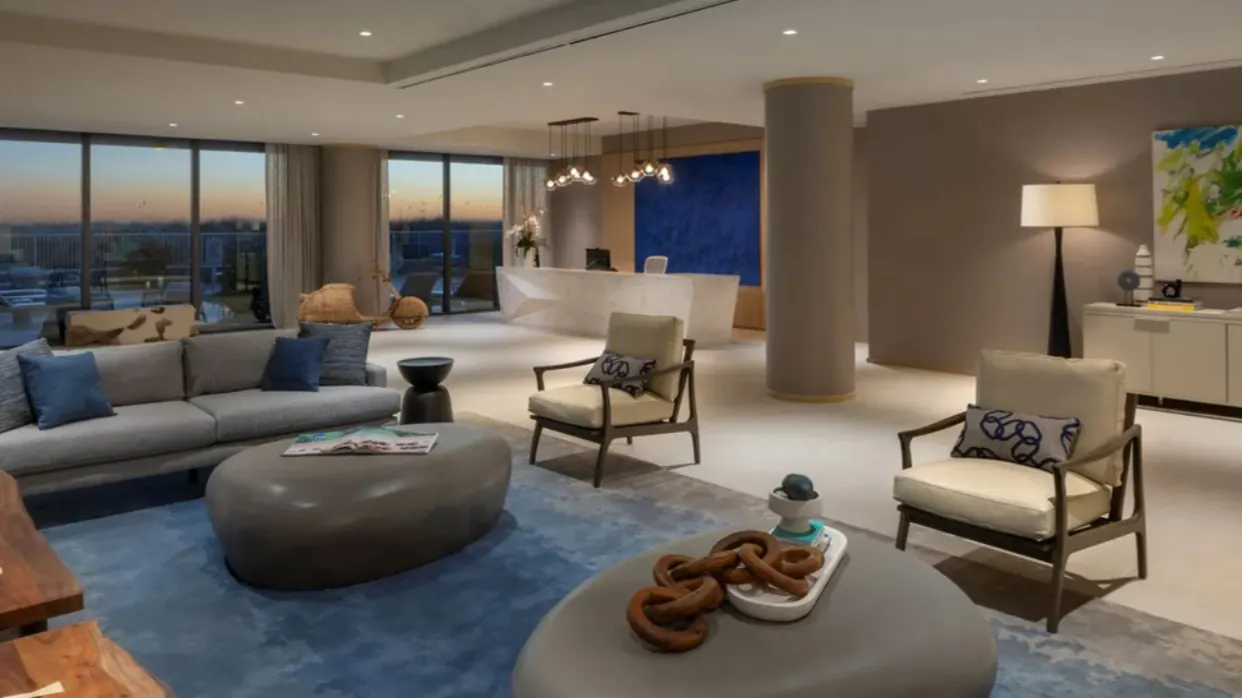
Modern multifamily architecture emphasizes stylish, community-oriented amenity spaces, such as this oceanfront apartment lounge, to attract renters in a competitive market.
In tandem with the financial trends, the architectural and design aspects of multifamily housing are evolving in response to market conditions and tenant preferences. With abundant new supply increasing competition, developers and architects are leveraging design as a key differentiator to attract renters. Amenities and layout innovations have become crucial selling points, especially as properties strive to offer a lifestyle that justifies rent premiums. Below are some of the key multifamily design trends shaping 2025 from an architectural perspective:
- Community and Co-Working Spaces: A clear trend is the inclusion of flexible common areas for socializing and remote work. Developers are prioritizing amenity spaces that foster community building and accommodate work-from-home needs. This means co-working lounges, business centers, and private conference/zoom rooms are now standard in many new apartment buildings. High-speed internet, ergonomic seating, and even soundproof phone booths are being provided to support residents’ productivity in these shared work areas. Likewise, inviting social spaces – such as clubrooms, rooftop terraces, and outdoor grilling areas – are designed to encourage interaction and create a sense of community among residents, which has become a major draw.
- Health, Wellness, and Pet-Friendly Amenities: Today’s renters place high value on health and lifestyle amenities, so architects are integrating facilities like fitness centers, yoga studios, meditation rooms, and even spa-like features into multifamily projects. There’s also a notable rise in pet-friendly design: many new communities now boast dog parks, pet washing stations, and pet play areas to cater to the large share of renters with pets. These features, which were rarer a decade ago, have become expected in Class A properties due to the surge in pet ownership since the pandemic. Outdoor spaces and green areas are another wellness-oriented trend – courtyards, rooftop gardens, and walking paths give residents access to fresh air and relaxation, supporting mental health and work-life balance.
- Flexible and Multi-Functional Interiors: Inside the units themselves, flexibility is a key design theme in 2025. Architects are responding to the remote-work era by creating apartments with adaptable layouts. For example, a den or alcove that can serve as a home office is highly desirable. In-unit spaces are being designed to easily convert between uses – a nook for working by day might double as a guest sleeping area when needed. Sliding partitions, murphy beds, and modular furniture systems are being employed to maximize utility in smaller floor plans. The goal is to allow residents to customize their living space for work, entertaining, or relaxation on demand, an acknowledgment of how lifestyles have changed. Even storage and furniture are being made flexible; for instance, movable islands or fold-out tables to adapt to different needs. This user-centric, adaptable design approach makes units more attractive to modern renters who often desire both a home office and comfortable living quarters in one.
- Sustainability and Smart Technology: Green building and energy efficiency have become top priorities in multifamily architecture, not only for ethical reasons but also as a marketable amenity. New developments are increasingly built to high sustainability standards – incorporating energy-efficient HVAC systems, LED lighting, smart thermostats, and even on-site renewable energy (like solar panels). Many buildings are pursuing LEED certifications or similar, showcasing features like enhanced insulation, low-flow water fixtures, and high indoor air quality (often with advanced filtration systems). Smart home technology is also pervasive: today’s renters enjoy app-based controls for climate and lighting, smart locks, and integrated security systems. These tech features not only improve convenience but can optimize energy usage (for example, automated window shades that adjust to the sun, reducing cooling costs). Embracing sustainability provides a twofold benefit – it meets tenant demand for eco-friendly living and gives owners a marketing edge (plus long-term savings on utilities). In a competitive leasing environment, highlighting a building’s lower carbon footprint and high-tech comforts can sway decisions.
- Personalization and Aesthetics: Interestingly, personalization has emerged as a selling point in multifamily design. Developers are offering renters more choices to make their apartment feel like home. Some communities allow customizable finishes – for instance, residents might choose from a few color schemes for accent walls, or select hardware/fixture styles before move-in. Even where full customization isn’t offered, units are being designed with neutral yet modern palettes that residents can easily personalize with their own décor. In model units and common areas, the latest interior design trends blend bold and warm elements: designers are using rich, saturated colors (mustard yellows, deep blues, terracotta) balanced with warm, cozy textures and natural materials. The result is an environment that feels contemporary and vibrant yet comfortable. We also see a mix of luxury and organic materials – e.g. sleek metals and quartz alongside reclaimed wood and rattan – reflecting a trend toward approachable luxury in apartment interiors. All of this caters to residents’ desire for apartments that are not just generic white boxes, but rather have character and can reflect their personal style.
- Adaptive Reuse and Urban Revitalization: From an architectural standpoint, one of the most interesting trends is the conversion of underutilized commercial buildings into multifamily housing. Faced with both a housing shortage and a glut of obsolete office space post-COVID, developers and cities are increasingly looking at adaptive reuse projects – especially turning old office towers into apartments. Real estate analysts note that roughly 30% of older office buildings in major U.S. cities could be suitable for residential conversion, potentially adding billions of square feet of housing in supply-constrained urban cores. In fact, over 6,200 office buildings across 10 big cities have been identified as candidates for conversion to multifamily, particularly those built before 1990 with smaller floor plates that better fit apartments. Such conversions are an architectural challenge – requiring creative re-design of building cores, facades, and layouts – but they represent a promising solution to revitalize downtown areas while easing housing shortages. Cities like New York, Los Angeles, Chicago, and San Francisco are already seeing increased interest in office-to-residential projects. For renters, these adaptive reuse buildings can offer unique layouts and locations (often right in central business districts), sometimes at more affordable rents than new ground-up luxury high-rises. For architects, conversion projects demand clever design adaptations (e.g. cutting light wells into deep office floor plates, adding amenities to older structures) and thus showcase innovation in the field. In 2025 and beyond, we can expect more of these mixed-use transformations, as stakeholders recognize the dual benefit of addressing housing needs and repurposing vacant commercial space.
Overall, the architectural outlook for multifamily housing in 2025 is one of innovation aimed at enhancing resident lifestyle and sustainability. In a competitive market, design has become a critical aspect of the product – beautiful, amenity-rich, green, and flexible apartment communities are likeliest to attract and retain tenants. Developers and architects are listening closely to what today’s renters value (from pet amenities to home-office space to eco-friendly design) and are crafting buildings that meet those expectations. This human-centered design approach not only benefits residents but also contributes to the properties’ financial success through higher occupancy and tenant satisfaction. In summary, 2025’s multifamily architecture trends are all about adding value – in quality of life, community, and sustainability – to complement the strong demand fundamentals of the sector.
Conclusion: Navigating the 2025 Multifamily Market
As we enter 2025, the U.S. multifamily housing sector finds itself at an inflection point. The past few years brought extraordinary swings – from soaring rents and tight supply in 2021, to rapid construction and cooling rents by 2023. Now, 2025 is poised to be a year of stabilization and gradual recovery. Rental demand remains historically high, bolstered by favorable demographics, immigration, and the unrelenting affordability challenges of homeownership. New supply, while still elevated in the near term, is expected to peak and then recede, allowing vacancies to ultimately trend back down. Thus, many analysts anticipate that the current soft patch in fundamentals will be short-lived. Rent growth in 2025 should stay positive (on the order of 2% or so), and could accelerate beyond 2025 once the market absorbs the surplus new units. In the investment arena, higher interest rates have re-priced assets and tested owners’ resolve, but the reset also presents opportunities – especially if financing costs ease going forward. Multifamily real estate continues to attract capital as a long-term play, given that America’s housing shortage is far from resolved. (Indeed, the National Multifamily Housing Council estimates the U.S. needs to add 4.3 million more apartments by 2035 to meet demand, underscoring the structural need for more housing supply.)
In short, the outlook for 2025 is cautiously optimistic. The sector will likely navigate a few more quarters of higher-than-normal vacancy and muted rent growth, especially in pockets of oversupply. Yet the consensus is that the worst of the softening is behind us, barring an unexpected economic downturn. As one industry expert put it, **“with this cycle’s wave of development wrapping up, vacancies are due to fall in the near term, resulting in improved fundamentals and a better outlook for rent growth”**c. Strong job markets and demographic trends continue to fill apartments at a healthy clip, which will help work off the new inventory. By the latter half of 2025, we could see occupancies strengthening and rent growth ticking up once again. From a design standpoint, the multifamily communities that thrive will be those that offer what modern renters seek – convenience, community, and quality. Developers who adapt to these preferences (while maintaining financial discipline amid higher interest rates) are likely to be rewarded with robust leasing and investment returns.
Ultimately, multifamily housing remains a cornerstone of the U.S. real estate landscape, and its long-term prospects are sound. The interplay of demographics, economics, and design innovation will shape a dynamic 2025. Investors and developers who navigate the current challenges with an eye on those underlying fundamentals should find that apartments continue to be a resilient and compelling asset class. After a decade-high vacancy blip and a period of cooling, the apartment market is set to regain balance. With demand drivers intact and supply moderating, the multifamily sector is gearing up for what could be a brighter post-2025 horizon, making 2025 a pivotal year of adjustment and opportunity in this ever-evolving market.
Sources:
1. Rental Demand & Demographics
- Source: Freddie Mac
- Title: 2024 Multifamily Outlook
- Insight: Strong demographic drivers of rental demand; Gen Z and Millennial household formation trends
- Date: January 2024
2. Vacancy Rate and New Supply
- Source: CBRE
- Title: U.S. Multifamily Q4 2024 Quarterly Report
- Insight: Vacancy reaching ~7.8% in 2024 due to historic new unit deliveries
- Date: January 2025
3. Rent Growth Forecasts
- Source: Yardi Matrix
- Title: Multifamily National Report – June 2024
- Insight: Projected 1.5%–2.5% national rent growth in 2025; regional rent trends
- Date: June 2024
4. Investment Trends & Cap Rates
- Source: Marcus & Millichap
- Title: 2024 U.S. Multifamily Investment Forecast
- Insight: Cap rate expansion (~100bps); pricing down 20–25%; investor sentiment
- Date: February 2024
5. Development Pipeline and Supply Tapering
- Source: RealPage
- Title: 2025 Multifamily Supply Outlook: What's Ahead
- Insight: 2024 was peak delivery year; major slowdown expected in 2025–2026
- Date: March 2025
6. Multifamily Architectural Trends
Source: Urban Land Institute (ULI)
Title: Emerging Trends in Real Estate 2025 – U.S. & Canada
Insight: Emphasis on amenity-rich, sustainable, flexible design and adaptive reuse
Date: October 2024
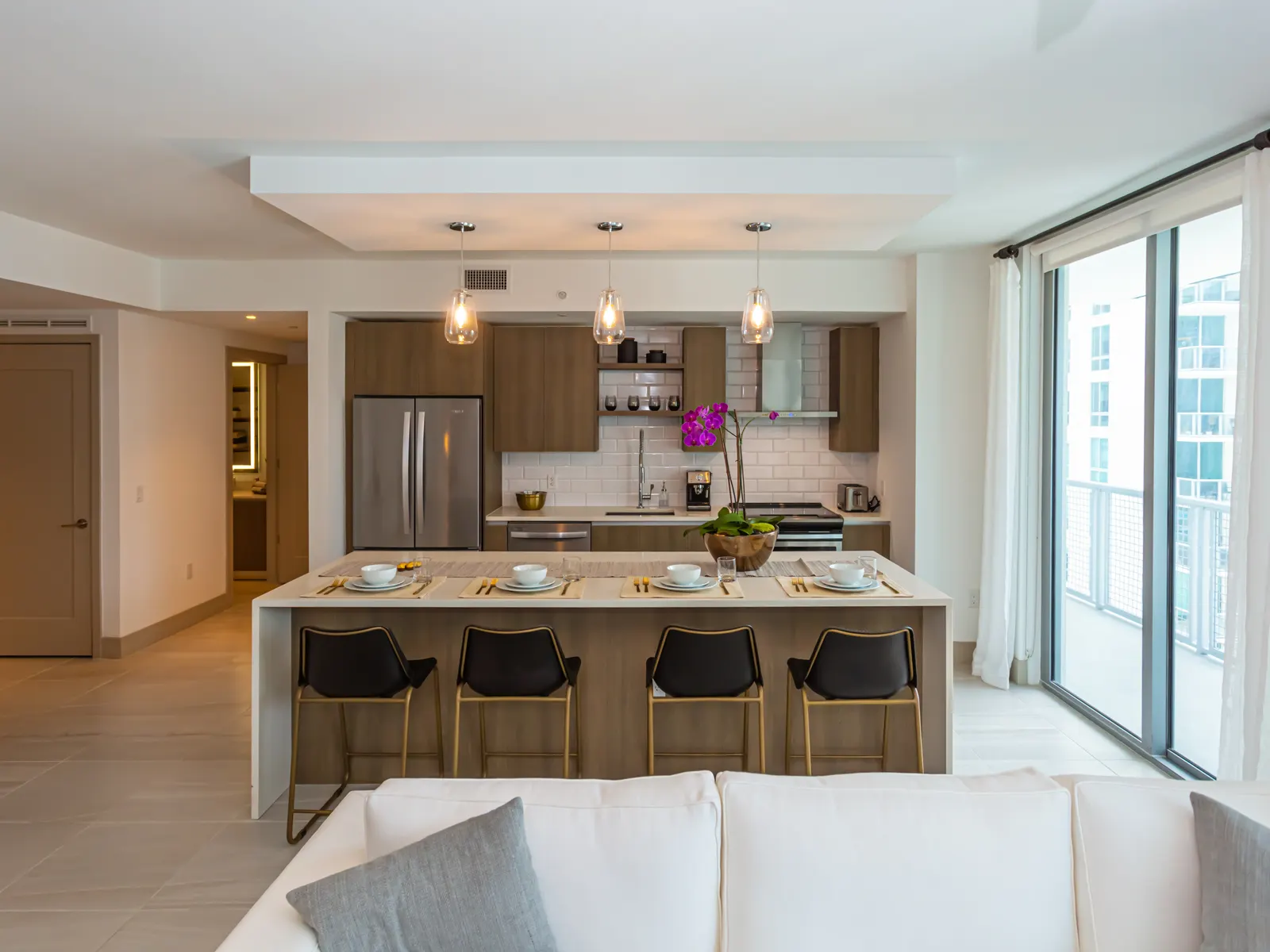
5 Star Hi-Rise Apartments