Architectural Design & Spatial Layout Efficiency
Exterior of La Jolla Commons Tower III (4727 Executive Drive) – a newly constructed 11-story Class A office building in San Diego’s UTC submarket. La Jolla Commons Tower III (LJC3) was completed in 2023 as the third high-rise in the La Jolla Commons campus. Designed by Skidmore, Owings & Merrill, the tower embodies a modern glass-façade design with an emphasis on openness and natural light. The structural core is placed to one side (a side-core configuration), which frees up the rectangular floor plates for nearly column-free office layouts. Each office floor offers approximately 20,000 SF of rentable area with minimal interior columns interrupting the space. This design not only enhances planning flexibility and efficiency, but also ensures sunlight penetrates deep into the floors, aided by continuous floor-to-ceiling vision glass around the perimeter. The typical slab-to-slab height is 13’‑9”, a generous floor-to-floor dimension that allows for high open ceilings and modern HVAC distribution. Notably, the building was engineered to enable tenants to create dramatic multi-level spaces within their suites – for example, a tenant occupying two adjacent floors can carve out a two-story “loft” space with a 28-foot ceiling as an interconnecting collaborative hub. This kind of vertical flexibility is a forward-looking feature, reflecting a trend toward more dynamic, amenity-rich workplace design.
In terms of vertical stacking, the tower’s ground level is dedicated to the lobby and shared amenities, while office tenants occupy floors 2 through 11. The top floor (11th) is slightly smaller in area than the mid-rise floors, partly to accommodate an outdoor terrace and possibly some mechanical penthouse functions. The facade design contributes to the stacking expression – a crisp glass curtain wall wraps the tower, with the entrance lobby enclosed by a 25-foot-tall structural glass wall that creates a striking transparent base. This ultra-clear glass lobby façade uses a specialized fin-free structural glazing system to achieve a 25’ clear span with minimal supports. The result is an open, light-filled entrance that blurs indoor and outdoor space, establishing a grand sense of arrival. Overall, the tower’s architecture balances aesthetic transparency with functional efficiency: the side-core placement consolidates elevators, stairwells, and utilities along one edge, which maximizes contiguous open office area on each floor and facilitates easy space planning. Large floorplates with ~45-foot column-free spans from core to glass allow tenants to configure workstations, private offices, or collaborative zones with little obstruction. Even with subdivisions (the building can demise a single floor for multiple smaller tenants), the layouts remain efficient – as evidenced by the spec suites on the 4th floor, which have been demised into four units (ranging ~3,500–7,500 SF) without sacrificing the usability of the space. In short, LJC3’s design reflects contemporary Class A office trends: big, flexible floorplates; a side-core for maximum layout efficiency; and expansive glass bringing in natural light and views from every direction.
Workplace Flexibility & Technical Infrastructure
From an occupier’s standpoint, 4727 Executive Dr was purpose-built to accommodate a range of office space uses – from traditional single-tenant floors to multi-tenant divisions and even coworking operations. The nearly column-free floors allow companies to densify or create open collaborative environments as needed. For example, the third floor is operated by Industrious as a coworking space, taking advantage of the open plan to offer everything from small team suites to drop-in desks. (Industrious leases the entire 3rd floor ~20,500 SF and has built it out into a flexible workspace center.) Larger corporate tenants can take full floors or multiple consecutive floors and even create internal inter-floor connections; the building’s structural design anticipated this by permitting floor openings for interconnecting stairs or multi-level atriums. The floorplate dimensions (roughly 150 feet by 140 feet) strike a balance: large enough to fit ~100–200 employees per floor in open plan, yet not so deep as to compromise natural light at the core. Because the core (with elevators, restrooms, and mechanical shafts) is off to one side, a tenant could even split a floor and still have reasonable access and identity – though the design is ideal for single tenants per floor for maximum efficiency.
The technical infrastructure is on par with modern Class A standards. The tower’s slab-to-slab height of 13’‑9” allows for ample plenum space above ceilings to run advanced HVAC and electrical systems. This translates to comfortable ceiling heights (often ~10–11 feet clear in finished spaces) and the ability to handle specialized tenant improvements (such as drop ceilings for labs or taller ceilings for open offices). The HVAC system is likely a state-of-the-art VAV (variable air volume) system with efficient chillers – given the building’s LEED Gold design target, the mechanical systems would incorporate high-efficiency equipment and robust air filtration. Additionally, operable or customizable controls and higher fresh air exchange rates may be part of the wellness-focused features (especially in a post-2020 environment prioritizing indoor air quality). Power and IT infrastructure are equally robust: as a new construction, the building would have abundant fiber connectivity options and modern electrical capacity to handle high densities. Tenants benefit from multiple fiber providers and a high-capacity electrical system typical of new builds – ensuring support for everything from dense tech trading floors to biotech offices with lab equipment (though LJC3 is an office tower, not lab-spec, it’s built with the expectation of heavy tech and computing loads). The parking structure (shared across the La Jolla Commons campus) provides a parking ratio around 3.3 per 1,000 SF (approximately 700 spaces for this tower), including ample EV charging stations as noted among amenities. Vertical transportation is handled by a modern bank of high-speed elevators (likely grouped in the side core) that efficiently move tenants despite the building’s relatively modest height (11 stories). The side-core design means elevators open directly onto tenant space on each floor, which is ideal for a single-tenant floor layout but also manageable for multi-tenant, a common corridor can be created along the core wall to access suites if needed. Life-safety and backup systems are up-to-date, including full sprinkler coverage, emergency power for life-safety systems, and likely some standby generator capacity for tenant use (important for mission-critical operations – though specifics would depend on the base building provisions by ownership).
One hallmark of LJC3’s flexibility is how it caters to various leasing arrangements: traditional direct leases, subleases, and coworking licenses. In fact, since opening, the building has seen a mix of all three. For instance, tech firm PTC leased 8,149 SF on the 2nd floor in early 2024, but that suite is now being offered as a sublet through 2031 at ~$48/SF + electric – indicating PTC secured a long-term lease but later decided to downsize or relocate, putting their brand-new space on the sublease market【1†cursor】. Such a scenario underscores the building’s adaptability: even if a direct tenant doesn’t fully occupy, the high-quality space can be repurposed for subtenants without difficulty. Similarly, multiple speculative suites on the 4th floor (ranging from ~3,500 to 7,500 SF) are being built out by ownership with turn-key interiors (private offices, conference rooms, break areas, etc.). These spec suites are timed for availability in late 2025, targeting smaller tenants or those seeking plug-and-play space. And on the flexible end, Industrious’s coworking floor (Suite 300) allows small users to take as little as a single desk (the listing advertises availabilities from 60 SF up to the full 20,000 SF floor for larger enterprise suites)【1†cursor】. This breadth of offerings – from a few desks on a shared floor to a full 20k SF floor for a single company – demonstrates how LJC3’s architecture and infrastructure support a wide spectrum of tenant types.
Notably, the building’s base building systems are designed to meet the needs of modern knowledge-economy companies. The electrical system likely provides a high wattage per square foot for tenant use (to handle dense loads of computers or trading desks), and the presence of an on-site central plant or advanced energy system is hinted by the campus’s sustainability pedigree. (The earlier phase of La Jolla Commons included one of the nation’s largest fuel-cell powered net-zero office buildings, and LJC3 is built to achieve LEED Gold and Fitwel healthy building certifications. Although LJC3 itself isn’t advertised as net-zero, it likely taps into some of the campus-wide sustainable infrastructure and employs efficient glazing and HVAC to significantly reduce energy use.) For tenants, this means lower operating costs and the ability to meet corporate ESG goals by locating in a green building. Floor load capacities are standard for office use but could accommodate heavier uses in certain areas if needed (e.g. file rooms or server rooms), and there is dedicated space in the side core for tenant IT closets and possibly support for in-suite supplemental AC units (for server rooms) or labs. In summary, behind the sleek façade, 4727 Executive Dr offers a state-of-the-art backbone – high ceilings, ample power, advanced HVAC, fiber connectivity, and flexible floorplates – that can support everything from a traditional law firm layout to a cutting-edge tech hub or coworking environment.
Amenities, Wellness Features & Design Trends
A key selling point of La Jolla Commons III is its rich amenity offering, both within the building and across the La Jolla Commons campus. The development was envisioned as a mixed-use office campus that elevates the workplace experience, aligning with “flight-to-quality” trends where tenants seek out hospitality-caliber amenities and wellness features in their office buildings. Within LJC3, tenants have access to a state-of-the-art fitness center that spans indoor and outdoor workout areas. This gym is fully staffed and equipped with locker rooms and showers, enabling tenants to fit in exercise and wellness routines during the workday. Also on-site is a new farm-to-table restaurant (part of the acclaimed Cohn Restaurant Group) with an outdoor dining patio. This restaurant serves not just as an eatery for lunch or after-work socializing, but also as a unique amenity that can cater events or client dinners, enhancing the building’s appeal as a business destination. Additionally, a modern café and coffee bar is located in the building, offering casual grab-and-go options and barista service for tenants in need of a caffeine fix or informal meeting spot. For more formal functions, LJC3 features conference and training facilities that tenants can reserve – these shared meeting spaces are outfitted with the latest AV technology, useful for large meetings, all-hands gatherings, or seminars that exceed a single tenant’s internal conference rooms.
Beyond the building’s walls, campus amenities create a truly differentiated environment. The La Jolla Commons campus includes numerous outdoor lounges and recreational elements. Employees can step outside to find landscaped open-air courtyards with lounge seating and fire pits, providing a relaxing atmosphere for breaks or casual discussions. There are also sport courts on-site – including a basketball half-court and likely spaces for activities like pickleball or yoga – plus a putting green for golf enthusiasts to practice their short game. These amenities encourage employees to get outside, be active, and socialize, which aligns with wellness-oriented design and the concept of the workplace as a destination that supports mental and physical health. In fact, the inclusion of things like foosball tables, outdoor ping-pong or basketball, and even foosball per the coworking provider’s notes is aimed at making work fun and engaging. Biophilic design principles are evident in the campus landscaping – plenty of greenery, outdoor air, and views are integrated into daily work life. The building’s large windows not only provide views of the La Jolla/UTC skyline and the distant ocean, but also reduce the need for artificial lighting and keep occupants connected to the diurnal cycle (important for well-being). The project pursued Fitwel certification in addition to LEED, underscoring its focus on occupant health (Fitwel evaluates features like walkability, healthy food access, daylight, etc.).
Another trend manifested in LJC3 is the concept of hybrid-use amenity floors. While all floors can technically house offices, the developers strategically allocated certain spaces for amenities. The ground floor, for instance, is not just a pass-through lobby; it’s a multi-purpose level that houses the café, likely some lounge/coworking space for tenants, and possibly an entry to the fitness center. The 11th floor’s terrace is another example – it acts as an informal outdoor workspace and event venue. According to JLL, the 11th floor includes a large outdoor common patio that can be used for impromptu meetings or company gatherings, taking advantage of San Diego’s mild climate. This kind of amenity – essentially a rooftop deck – has become highly attractive for companies wanting indoor-outdoor work settings and places for employees to decompress. LJC3’s terrace, coupled with its 11-foot tall windows and 14-foot interior ceiling heights on the top floor, creates a very open, airy environment that differentiates it from older, low-ceiling offices. It’s no surprise that JLL, in choosing this building for its own San Diego headquarters, highlighted features like “abundant natural light, sweeping views, outdoor space, and wellness facilities” as major draws. These elements exemplify the “flight to quality” trend: in a post-pandemic era, companies are gravitating to buildings that offer employees a compelling experience – one with amenities and ambiance that make the commute worthwhile.
Finally, sustainability and wellness considerations in LJC3’s design not only align with trends but also provide functional benefits. The high-performance glass façade, efficient HVAC, LED lighting, and possibly on-site renewable energy (earlier La Jolla Commons phases included innovative energy solutions) all reduce operating costs and carbon footprint. The extensive natural light and outdoor access tie into biophilic design, which has been shown to improve employee well-being and productivity. Amenities like bike storage, EV charging, and proximity to transit (the UTC area is served by the San Diego Trolley extension and multiple bus lines) encourage green commuting and are often demanded by today’s tenants. In summary, 4727 Executive Dr’s amenity and design package – from the club-quality gym and outdoor recreation zones to the garden patios and on-site dining – reflects the latest in office development philosophy: buildings must offer a lifestyle, not just a place to work. LJC3 effectively brings a campus feel to an office high-rise, integrating work, wellness, and leisure, which is exactly what top-tier tenants in 2025 are seeking.
Tenant Roster & Leasing Activity
Since its delivery in mid-2023, La Jolla Commons III has gradually attracted a mix of high-profile tenants and innovative space users, though the lease-up has been deliberate. As of mid-2025, the building is approximately 28.5% leased (roughly 60,000 SF out of ~212,800 SF) – meaning about 71.5% of the space remains available for lease. This current occupancy includes four notable tenants:
- JLL (Jones Lang LaSalle) – the global commercial real estate services firm – signed a lease in March 2025 for the entire 11th floor (15,869 SF). JLL is relocating its San Diego headquarters into this space, vacating an older building in the submarket for this new top-floor presence. JLL’s lease is significant not only because of the square footage, but because they are a major brokerage firm effectively “voting with their feet” by choosing LJC3 for their own offices. They are expected to take occupancy by January 2026 after building out a showcase office with an open layout, collaborative areas, and direct access to that 11th-floor terrace. JLL’s commitment brought a prestigious name to the tenant roster and underscores the appeal of the building’s quality – as JLL’s San Diego director noted, “this new location offers a more efficient footprint and a first-class workplace designed to inspire collaboration and support the well-being of our team.” JLL was also granted prominent exterior signage atop the building facing La Jolla Village Drive, giving them brand visibility in the UTC skyline.
- Industrious – a leading coworking and flexible office operator – leased the entire 3rd floor (~20,494 SF) in late 2024. Industrious at UTC (the name of this location) opened in July 2025 and offers coworking desks, private offices, and meeting rooms to individuals and companies on short-term or flexible agreements. This was a strategic move by the landlord to activate the building: having a coworking provider on-site generates foot traffic and offers an amenity for other tenants (who might rent overflow space or use conference rooms via Industrious). For Industrious, taking a full floor in a brand-new trophy building allows them to attract clients who want a high-end workspace without committing to a long-term lease. Their space is fully built out with stylish interiors and even provides services like daily breakfast and networking events. The presence of Industrious effectively makes LJC3 a hub for innovation and startup activity in addition to traditional leases – a selling point for tech-oriented tenants who like the idea of rubbing shoulders with a vibrant coworking community in the same building. Notably, Industrious likely negotiated a management agreement or a premium lease, reflecting confidence that there is demand for flex space in UTC. Their floor will also serve as a showroom of the building’s capabilities (high ceilings, natural light, etc.), since prospective tenants touring LJC3 can see the bustling coworking space as an example of how the raw floors can be transformed.
- PTC – a global software company (known for CAD, PLM and IoT platforms) – took a 2nd floor space of 8,149 SF in early 2024. This lease was one of the first in the building, suggesting that PTC chose the location for a regional office or R&D hub. The suite (Suite 200 on the 2nd floor) was delivered fully built-out, potentially as a spec suite that PTC signed onto. However, interestingly, PTC’s space is currently available on the sublease market【1†cursor】. The company listed the 8,149 SF for sublet (through November 2031, per marketing materials) at an asking rent of about $48/SF (plus electric) – which is a sign that PTC may have downsized or decided not to occupy after all. It’s possible PTC’s decision was influenced by a corporate shift to remote work or consolidating offices elsewhere. In any case, the fact that this brand-new suite is being offered for sublease means another tenant could step into PTC’s shoes and benefit from a high-quality buildout at a discount. The sublease space is marketed by Cushman & Wakefield and can be taken over relatively quickly, since it’s already built and furnished. If subleased, that space would keep the building’s occupancy technically the same (PTC is still on the hook as the primary lessee) but would increase the utilization by bringing in a new user. For now, PTC remains on the roster as a tenant-of-record, albeit one looking to exit their space.
- Advanced TRT Clinic – a local healthcare clinic specializing in testosterone replacement therapy – leased 2,500 SF on the 6th floor (likely a small suite) around December 2023. This was the very first lease signed in LJC3 (commencing in early 2024) and is a relatively small transaction, indicative of the challenging office market at the time of opening. The clinic’s presence in a high-end office tower is somewhat unusual (given most tenants are professional services or tech firms), but it suggests the landlord was open to a diverse tenant mix. Advanced TRT Clinic likely chose this building for its prestige and location – perhaps aiming to attract clientele in the affluent La Jolla/UTC area by being in a Class A environment. Their 2,500 SF suite might be a partial section of the 6th floor, built out for medical office use (exam rooms, etc.). The lease to a medical user underscores the building’s adaptability (standard office floorplates can indeed accommodate light medical or clinic uses). It’s worth noting, however, that CoStar continued to list the entire 6th floor as available (20,494 SF shell) even after this lease, implying that Advanced TRT’s footprint is small enough that the remainder of the floor (nearly 18,000 SF) is still vacant and can be leased or even combined with other floors. If more small tenants like this come in, the landlord may further subdivide floors to suit them.
In addition to the above, there is mention in local deal forums of a 6,000 SF restaurant lease at La Jolla Commons III (likely the ground-floor restaurant space was leased to the Cohn Restaurant Group). This would not appear in the office occupancy tally but is an important part of the tenancy – confirming that a signature restaurant (perhaps a high-end concept given the Cohn Group’s involvement) is committed to the site. The restaurant deal likely closed around 2024, aligning with the building’s completion and the fit-out of the dining space.
Lease terms for these tenants vary. JLL’s lease is reported to commence in late 2025 with occupancy in Jan 2026, and given the scope, is probably a long-term commitment (potentially 7–10 years). Industrious likewise likely has a multi-year lease or management contract (coworking operators often secure 5-10 year terms with revenue-sharing). PTC’s lease runs through 2031 (implying about a 7-year initial term), while Advanced TRT’s term might be around 5 years. Asking rents for direct space in the building are quoted around $4.00/SF per month NNN (approximately $48/SF/year plus electricity) for available spaces, which is at the top of the market for San Diego. In fact, CoStar’s analytics estimate that new Class A space like this could command effective rents in the $75–92/SF full-service range (though landlords are likely giving significant concessions in this market). The high rental rates reflect the building’s 5-star amenities and construction, but also pose a challenge for leasing – tenants can find cheaper rates in older buildings, so LJC3 must justify its premium with quality.
Looking at leasing velocity, the pattern so far has been that smaller tenants and a flex operator leased space early on, while large full-floor leases have been slower to materialize. The first year saw only modest deals (a 2,500 SF clinic and an 8,149 SF tech suite), which left over 90% of the building vacant through 2023. Activity picked up in the second half of 2024 with Industrious taking a full floor – a notable win, but still essentially an amenity play. It wasn’t until spring 2025 that a marquee office tenant (JLL) committed to a floor. Which floors leased first? Interestingly, the lower floors and a mid-level floor went first (2nd floor partial, 3rd floor, part of 6th), while the coveted upper floors remained empty until JLL grabbed the top floor. This is somewhat contrary to the expectation that top floors (with the best views) lease first – but it likely came down to economics and timing. Early on, many large tenants were hesitant to relocate or expand, given market uncertainty. The landlord may have prioritized filling some lower-floor space with spec suites and small users to create momentum (hence the deals on 2 and 6). The third floor’s coworking lease served to activate the building and offer flexibility to indecisive tenants. When the market did start to see activity, JLL – which has an eye for real estate opportunities – swooped in to take the signature top floor, perhaps at favorable terms. Potential drivers for JLL choosing the 11th floor were clear: unparalleled views, the exclusive outdoor terrace, and the ability to put their name on the building. They likely wouldn’t have settled for a mid-level floor without those perks. For Industrious, the draw was the ability to retrofit an entire floor to their needs and entice clients with a premier address. For the smaller early tenants (Advanced TRT, PTC), the driver might have been aggressive deal incentives – they could get brand-new space, built to spec, possibly with significant rent abatement periods or tenant improvement packages that made the high face rent more palatable.
In terms of rent differentials, one can speculate that the landlord offered relatively lower rates or higher concessions on the lower floors to get initial deals done. The 2nd floor, being close to the lobby, might be slightly less desired (more foot traffic noise, no view), so PTC’s effective rent on that sublease may be lower than upper floor asking rents. Conversely, the upper floors (8, 9, 10, 11) enjoy panoramic views and thus are being held for higher rents – which could be why they stayed vacant longer. Indeed, the views and prestige of the high floors are a selling point that ownership likely didn’t want to “discount” early on. The bet paid off once JLL came on board for the 11th. We can anticipate that with JLL’s lease inked, other tenants may now show increased interest in the remaining upper floors, since the building has gained credibility (nothing validates an office tower more than a major brokerage firm choosing it for their HQ).
The leasing momentum at LJC3 also reflects broader market conditions. Over 2024–25, many companies in San Diego have been rightsizing or hesitating on real estate decisions, so leasing any large blocks of new space was challenging. In that context, signing ~60,000 SF of leases within ~18 months of delivery (and engaging a coworking operator to backfill flex demand) is a respectable pace, if not lightning-fast. The landlord’s proactive steps – building out spec suites on the 4th floor for 2025 delivery, for instance – suggest they are now targeting mid-sized tenants to accelerate absorption. We might soon see announcements of, say, a 20,000 SF tenant taking one of the mid-rise floors, or a collection of 5,000 SF users filling out another floor, especially as those spec suites are completed.
Occupancy Context: Building vs. Submarket vs. Market
At roughly 28.5% occupancy, La Jolla Commons III is far less occupied than the broader UTC submarket average, illustrating the challenge of leasing up a brand-new speculative office tower in the current climate. The UTC submarket (University Town Center, which includes La Jolla/University City) is one of San Diego’s premier office hubs, known for its high-end inventory and proximity to UCSD and biotech companies. Class A office space in UTC generally has an occupancy in the mid-80% range as of 2025, meaning vacancy around 15%naisandiego.com. Indeed, across San Diego’s top-tier (4 & 5-Star) office buildings, the **vacancy rate is about 16% and the availability (including sublease space) around 24–25%**naisandiego.com. By comparison, LJC3’s vacancy is over 70%, which stands out as an outlier. Part of this discrepancy is simply because new supply takes time to lease – when LJC3 opened, it added ~213,000 SF of fresh space all at once. In fact, a market report noted that this “third tower at the 5-star La Jolla Commons delivered in mid-2023 and [came] fully available for lease”, with asking rents among the highest in the regionn. It’s not unusual for a new building to be mostly empty upon delivery; however, absorption has been slower than ideal, reflecting cautious demand.
When comparing to the overall San Diego office market, LJC3’s current ~29% lease rate is also well below the metro average. San Diego’s countywide office vacancy hovered around 11–14% in late 2024 (depending on the source and whether subleases are counted). Even with a wave of new construction in UTC and Downtown pushing availability up, the metro’s availability rate was on the order of 16–20%. For instance, by mid-2024 San Diego’s total office availability (direct + sublease) was about **16.5%**naisandiego.com, and an Axios report noted the metro’s office vacancy hit 21.1% in 2024 (likely including sublease space). In either case, the region’s occupancy is roughly 80–85%. Against that backdrop, LJC3’s ~28% occupancy is clearly behind the curve. It’s essentially carrying a large share of the UTC submarket’s vacant space single-handedly. To quantify: UTC is one of the largest office submarkets in San Diego, with roughly 9–10 million SF of inventory. If, say, UTC’s vacancy is ~15%, that’s about 1.5 million SF of vacant space in UTC – and this single building contributes ~160,000 SF of that (over 10% of all vacant Class A space in the submarket is in LJC3). This naturally skews the stats: CoStar’s analytics show the UTC 4–5 Star availability rate jumped in 2023–24, precisely when LJC3 (and a couple of other new projects) delivered space that hadn’t been pre-leased【13†】. The graphs for UTC Class A availability vs. occupancy illustrate a dip in UTC occupancy in 2023 as new supply came online, followed by a gradual recovery as leasing catches up. For LJC3’s own trajectory, the building’s availability rate started at 100% in mid-2023, then declined to ~75% by mid-2025 as leases were signed (seen as the orange line in the chart)【13†】. Forecasts suggest its occupancy will improve over the next few years, but that depends on successful lease transactions.
It’s important to note that UTC remains a comparatively strong submarket – its desirability has kept its vacancy lower than Downtown San Diego’s (where vacancies have exceeded 20% and even 25% in older towers). UTC benefits from newer construction, ample parking, and proximity to talent in North County and coastal areas, so demand for quality space here is still present. The flight-to-quality trend is particularly evident in UTC: tenants are consolidating into the best buildings and shedding older ones. This means Class B/C offices in UTC might be struggling more (higher vacancy) while Class A like LJC3 should in theory lease up quicker. However, as market reports point out, price sensitivity is a factor – many tenants want quality but are not willing to pay a huge premium for brand-new construction if a slightly older Class A building is offering a deal. With LJC3 asking among the top rents in the market, it has to justify that delta with its amenities and features. The current UTC Class A asking rents are in the high $3/sf/month range (high-$30s to low-$40s per SF/year) for many buildings, whereas LJC3 is quoting effectively ~$4.00/sf and above. That gap may be narrowing as landlords of older buildings concede more in free rent and TI packages, whereas LJC3’s landlord (American Assets Trust) might hold firmer on rates but give generous build-outs. The high availability in LJC3 also slightly inflates UTC’s overall availability percentage, but the submarket is still healthy relative to others.
Market trend data from CoStar (shown in the charts) indicates that UTC’s occupancy rate for top-tier offices is expected to slowly climb over the next few years, approaching the upper-80% range by 2026–2027【13†】. If that holds true, LJC3 will need to secure several more tenants to align with the submarket norm. The building reaching, say, 85% leased would likely require signing another ~120,000 SF – which could be 6 floors at 20k SF each, or a mix of mid-size leases. It’s a tall order in the current environment, but not impossible if the flight-to-quality plays out and competitors hold off on new construction. The current UTC Class A availability of ~20–25%naisandiego.com signifies that tenants still have abundant options, so LJC3 is effectively in competition with not just older UTC buildings, but also other new or renovated spaces. Notably, there are other high-profile availabilities in UTC like One La Jolla Center (a nearby tower), The Campus at Horton (downtown, competing for large tenants), and some repurposed life science space – all vying for tenants.
In summary, La Jolla Commons III’s 28.5% occupancy vs. roughly 80–85% in its submarket and market highlights both the opportunity and the hurdle: it has a lot of room to grow. The low current occupancy is not due to any flaw in the building itself (which is a top-notch asset), but rather timing – it opened into a soft market. As the office market stabilizes, one would expect LJC3’s leasing to accelerate, gradually bringing it in line with the submarket’s occupancy levels. The UTC submarket’s overall strength (with many corporate HQs, law firms, and life science companies that prefer the area) bodes well for LJC3 in the long run, assuming the economy and office demand continue to recover in the coming years.
Outlook: La Jolla Commons III in the Evolving San Diego Office Market
La Jolla Commons Tower III stands as a case study in the “flight to quality” era of office real estate. In the wake of the pandemic and the rise of hybrid work, companies have become much more discerning about the quality and configuration of office space they lease. San Diego’s office market, like many across the U.S., has experienced elevated vacancy and a bifurcation between the haves and have-nots: newer, amenitized buildings (the “haves”) are capturing the bulk of leasing activity, while older commodity offices (the “have-nots”) see tenants ebb away. Within this context, LJC3 is positioned on the favorable side of that divide – it is exactly the kind of next-generation, Class A+ product that should draw tenants looking to upgrade and entice employees back to the office. The building offers the environment, amenities, and flexibility that align with post-2020 tenant priorities: healthy building features, outdoor spaces, on-site conveniences, and the ability to adapt space to new ways of working. JLL’s decision to relocate there is a prime example: they explicitly cited the tower’s natural light, outdoor patio, and top-tier amenities as rationale, tying it to their effort to “invite employees and build a strong, connected culture”. In essence, LJC3 enables a “workplace as experience” approach, which is increasingly what tenants want to offer to lure workers from home offices.
However, the road ahead for LJC3 – and the San Diego office market broadly – is not without challenges. Overall office demand in San Diego is recovering only gradually, and total vacancy (including subleases) has risen to record highs in some areas (over 20% metro-wide by some measures). New supply like LJC3 initially exacerbates that vacancy, creating a tenant’s market. Landlords across the region are competing fiercely, often by offering significant concessions (free rent, larger TI packages) rather than cutting face rents dramatically. We see this dynamic at LJC3: the asking rents remain ambitious, but the spec suite build-outs and likely generous improvement allowances are being used to attract tenants who might be on the fence. The NAI report insight that *“while much has been made about flight to quality, pricing may play a larger role in securing new demand”*naisandiego.com rings true – even the best building must be cost-competitive in a soft market. Therefore, LJC3’s success will depend on finding that sweet spot where tenants feel they are getting a great value for a top-notch space.
One factor working in LJC3’s favor is the slowdown of new office development. As noted in market analyses, developers in San Diego have largely paused speculative office projects; beyond LJC3 and a couple of UTC projects (and some life-science conversions), there isn’t another wave of shiny new office towers about to flood the market. This means LJC3 has a window of opportunity to lease up before any new competition arrives. With its sibling towers (La Jolla Commons I & II) and peers in UTC mostly stabilized or build-to-suits, large tenants shopping for modern space have a limited set of choices – and LJC3 is one of the prime options. We may see “flight to quality” relocations where companies in older UTC buildings move into LJC3 to take advantage of the efficiency and amenities (for example, a company in a 1980s building might consolidate space and move into 4727 Executive for roughly the same cost per employee, once you factor in space efficiency and concessions). Additionally, some tenants currently based in Downtown San Diego might migrate to UTC for the same flight-to-quality/workforce reasons, and LJC3 could capture those migrants.
The flip side is the question of post-pandemic office utilization. Many firms are downsizing their footprints due to hybrid work – meaning they might opt for less total space, albeit higher-quality space, than before. This trend benefits top buildings but also means even at 100% leased, LJC3 is supporting fewer workers on-site than a building of its size might have pre-2020 (due to lower daily attendance). Owners like American Assets Trust are thus also focusing on “experience per square foot” – making each SF more impactful. The rich amenity package of LJC3 is an attempt to deliver that value. If successful, tenants will justify keeping (or even expanding) space here because it truly contributes to employee satisfaction and productivity (something hard to achieve with remote work alone).
In the broader San Diego Class A office market, a theme emerging is “flight to quality, fight for tenants.” LJC3 exemplifies the quality, and now it’s in the fight. The building’s performance in the next 12-24 months will be a bellwether: should it lease a significant portion of its space, it will signal that top-tier demand in San Diego is alive and well. If it struggles, it may indicate even trophy buildings can’t escape the gravity of a changed office landscape. Given current signs – a major brokerage HQ commitment, a leading flex-space operator in place, and active interest in spec suites – the outlook leans optimistic for LJC3. The UTC submarket’s office occupancy is expected to improve gradually as the economy grows and companies seek to upgrade their environments【13†】. As that happens, La Jolla Commons III is poised to capture outsized attention, effectively aligning with the “flight to quality” movement. In a city where sunshine and innovation define the culture, this glassy newcomer with its terraces and tech-ready design is well-aligned with the evolving demand for Class A office space – a demand that prizes quality over quantity, experience over mere expense, and long-term value over short-term expediency.
Sources:
CoStar/LoopNet property data for 4727 Executive Dr (La Jolla Commons III)
City of San Diego Planning Commission Report (Project description)
Sentech Architectural Systems – La Jolla Commons III project overview (design and technical specs)
JLL San Diego press release (June 24, 2025) – JLL to Relocate in San Diego; Signs New Lease i**n UTC
NAI San Diego Office Market Report (Q2 2024) – CoStar analytics on vacancy and new deliveries
Brevitas Market Overview (May 2025) – San Diego office trends and flight-to-quality context
Industrious at UTC – location details and amenities (Industrious website, 2025)
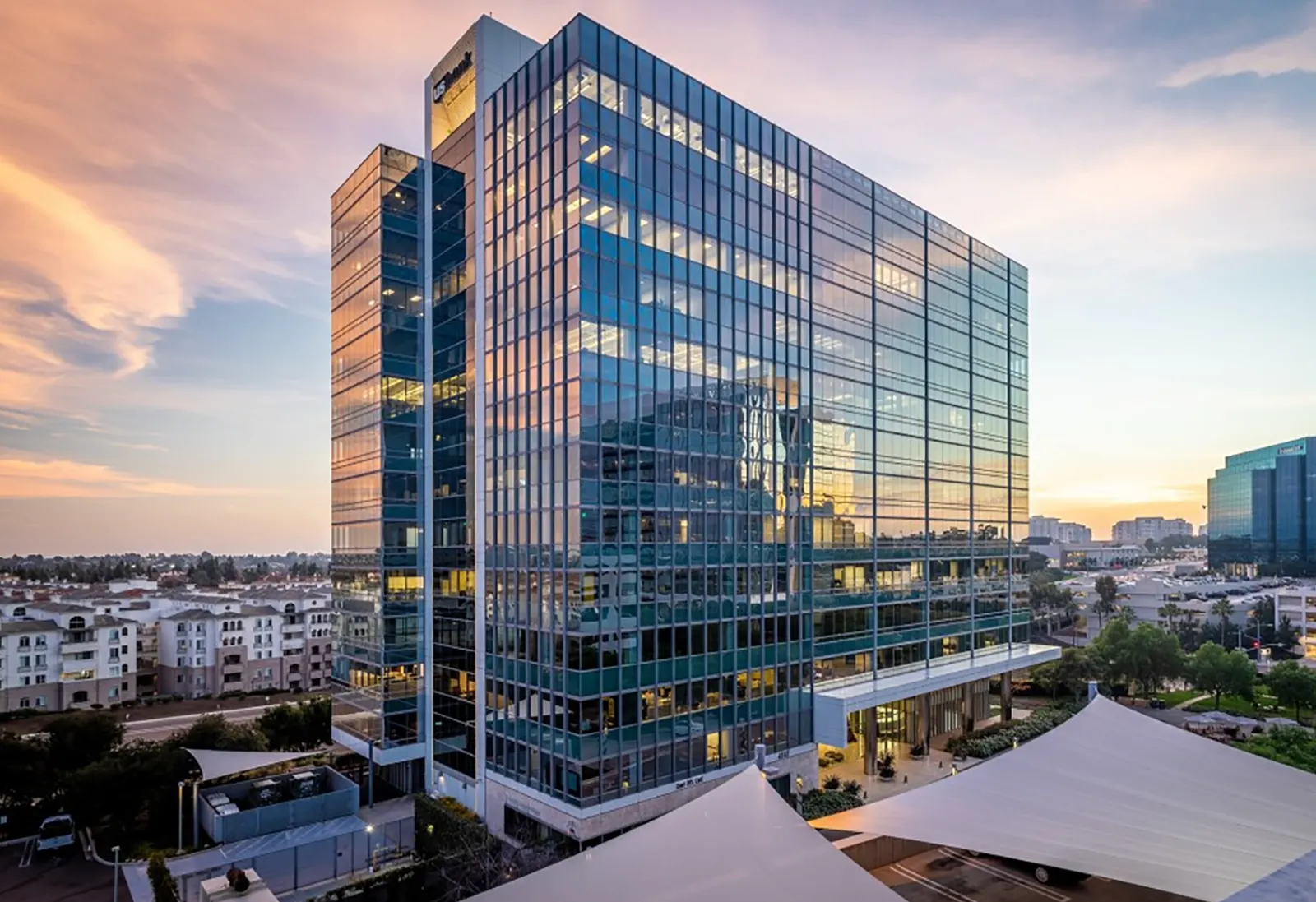
One of two existing office buildings at San Diego's La Jolla Commons